Xperia-Tech-Logo

XperiaTech

  • Home
  • About
  • Services
  • Projects
  • Blog
  • Contact
  • Call: 918089494204
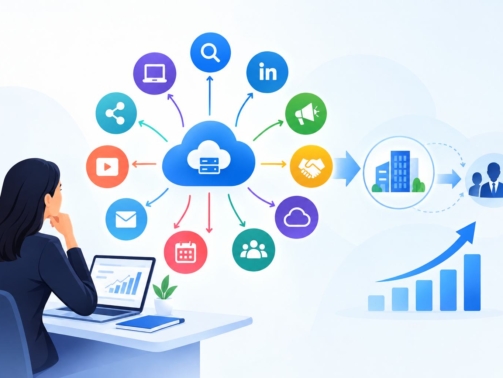
What is Product marketing team collaborating on B2B SaaS and startup go-to-market strategy with analytics, laptops, and planning documents in a modern office.
by Hiba Thasni

What Is Product Marketing? The Complete 2026 Guide to Strategy, Framework, Process & Real-World Examples

How to Position a New Product in a Competitive Market
by Anshidha Sherin

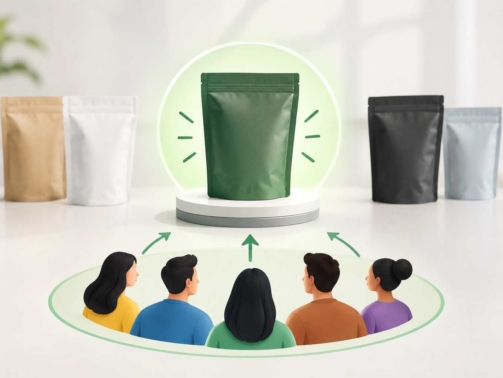
How to Position a New Product in a Competitive Market

How Many Buyer Personas Should a Business
by Fidha Sheri

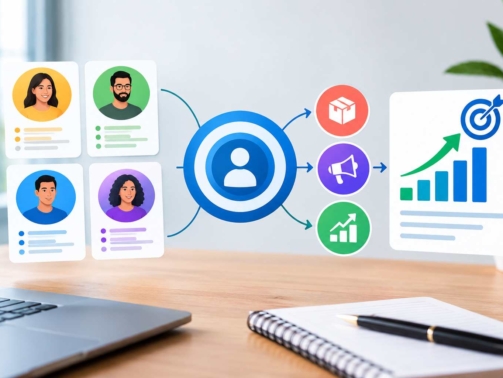
How Many Buyer Personas Should a Business Have? (The 2027 Strategic Guide)

GTM Strategy for Startups A Complete Guide to Building, Launching & Scaling-compressed
by Safa Sherin

GTM Strategy for Startups: A Complete Guide to Building, Launching & Scaling

Buyer Persona vs ICP vs Target Audience
by Fidha Sheri

Buyer Persona vs ICP vs Target Audience: The Complete 2027 Guide [Free Framework]

Product Positioning Framework Step-by-Step Guide, Examples & Template
by Anshidha Sherin

Product Positioning Framework: Step-by-Step Guide, Examples & Template

What Is Buyer Persona Development
by Fidha Sheri

What Is Buyer Persona Development? (An Informational Guide)

# How to Create a Go-To-Market Strategy: A Step-by-Step Guide A product can be well designed, competitively priced, and genuinely useful—and still struggle to gain traction if the right customers never understand its value or cannot find a convenient way to buy it. That is where a **go-to-market strategy** becomes essential. A go-to-market (GTM) strategy defines how a company will introduce a product or service to a specific market, reach its ideal customers, communicate its value, sell it, deliver it, and measure whether the launch is working. Unlike a marketing campaign, a GTM strategy brings multiple functions together, including product, marketing, sales, distribution, customer success, and leadership. **To create a go-to-market strategy, define your business objective, research the market, identify your ideal customer profile (ICP), analyze competitors, establish positioning, determine pricing, choose the right sales and distribution channels, build a launch plan, align internal teams, define KPIs, and continuously optimize the strategy based on real-world results.** This guide walks through that process step by step, with practical frameworks, examples, a GTM strategy template, KPIs, and common mistakes to avoid. --- ## Quick Answer: How Do You Create a Go-To-Market Strategy? The basic process for creating a go-to-market strategy is: 1. Define your GTM objective. 2. Research and segment the target market. 3. Identify your ideal customer profile. 4. Analyze competitors and alternative solutions. 5. Define your positioning and value proposition. 6. Set pricing and packaging. 7. Choose sales and distribution channels. 8. Build the marketing and demand-generation plan. 9. Create the pre-launch, launch, and post-launch roadmap. 10. Align product, marketing, sales, and customer success. 11. Establish measurable GTM KPIs. 12. Test, measure, learn, and optimize. The important distinction is that a GTM strategy is **not simply a launch checklist**. Each step should answer a strategic question and produce a concrete decision or deliverable. --- ## What Is a Go-To-Market Strategy? A **go-to-market strategy** is a structured plan that explains how a company will bring a product, service, or offer to a defined market and generate customer adoption. It answers questions such as: * Who are we selling to? * What problem are we solving? * Why should customers choose us? * Which market should we enter first? * How should we price the offer? * Where will customers discover and purchase it? * How will marketing generate demand? * How will sales convert prospects? * How will customers receive support? * Which metrics determine whether the launch is successful? A GTM strategy is broader than a marketing campaign because it connects market research, positioning, pricing, sales, distribution, marketing, customer experience, and measurement. Current GTM guidance from Stripe, for example, treats market intelligence, positioning, sales and distribution, launch operations, and risk management as interconnected parts of the strategy. ([Stripe][1]) ### What is the purpose of a GTM strategy? The primary purpose is to reduce uncertainty around a product launch or market entry. Instead of launching first and figuring everything out afterward, a GTM process helps you answer critical questions before significant resources are committed. A well-designed strategy can help you: * Focus on the most promising customer segment. * Clarify product positioning. * Identify competitive gaps. * Choose appropriate acquisition channels. * Align sales and marketing. * Establish realistic launch goals. * Reduce wasted marketing spend. * Create a consistent customer experience. * Measure launch performance. * Identify problems early enough to correct them. --- ## Why Is a Go-To-Market Strategy Important? Launching a product involves more than making the product available. Even a strong product can encounter problems when: * The target market is too broad. * Customers do not recognize the problem strongly enough. * The value proposition is unclear. * Pricing does not match perceived value. * Marketing reaches the wrong audience. * Sales teams do not know how to position the product. * Distribution creates unnecessary friction. * Customer onboarding is poorly prepared. * The company measures traffic instead of revenue or adoption. A GTM strategy gives those decisions a common structure. It also creates alignment between teams. Current GTM education increasingly emphasizes connecting market analysis, customer insights, positioning, channels, budgets, timelines, and success metrics into one market-entry plan rather than treating each activity separately. ([Coursera][2]) --- ## When Should You Create a Go-To-Market Strategy? A GTM strategy is useful whenever you are making a significant market-entry or growth decision. You may need one when: ### Launching a new product A new product needs a defined audience, positioning, pricing, distribution model, and launch plan. ### Launching a new service Professional services, consulting packages, subscriptions, and other offers can also benefit from a GTM strategy. ### Entering a new market Entering a new country, industry, geographic region, or customer segment can introduce new competitors, regulations, customer expectations, and buying behaviors. ### Targeting a new customer segment Your existing product may need a different message, channel mix, pricing model, or sales process for a new audience. ### Repositioning an existing product If customers misunderstand what your product does or why it is valuable, a revised GTM strategy can help reset its market position. ### Changing pricing or packaging A significant pricing change can alter your target audience, sales motion, conversion rates, and perceived positioning. ### Expanding distribution Adding partners, marketplaces, resellers, retail locations, or self-service purchasing can require a new route-to-market strategy. --- # How to Create a Go-To-Market Strategy The following framework turns GTM planning into a sequence of strategic decisions. --- ## Step 1: Define Your Go-To-Market Objective Start with the business outcome—not the marketing channel. A weak GTM objective sounds like: > “We want to promote our new product on social media.” That describes an activity, not a goal. A stronger objective might be: > “Acquire 500 qualified customers in the first six months while maintaining a customer acquisition cost below $150.” Your GTM objective should connect the product, audience, market, business outcome, and timeframe. ### Ask these questions: * What are we launching? * Which market are we entering? * Who is the priority customer? * What business result do we want? * How quickly do we need traction? * What resources are available? * What constraints could affect the launch? ### Examples of GTM objectives **Revenue objective:** Generate $500,000 in new annual recurring revenue within the first 12 months. **Customer acquisition objective:** Acquire 1,000 paying customers within six months. **Market-entry objective:** Establish the product in three priority cities during the first year. **Adoption objective:** Reach 30% adoption among existing customers within six months. ### Your GTM objective template > We will launch **[product/service]** for **[target customer]** in **[market]** to achieve **[business outcome]** by **[date/timeframe]**. This statement becomes the reference point for the rest of the strategy. --- # Step 2: Conduct Market Research Before deciding how to sell a product, determine whether the market is attractive enough to pursue. Market research helps you understand demand, customer needs, market size, competitive pressure, and potential opportunities. ### What should you research? #### Market demand Look for evidence that customers actually experience the problem you are solving. Useful sources include: * Customer interviews * Surveys * Search behavior * Industry reports * Customer reviews * Sales conversations * Support tickets * Community discussions * Competitor reviews * Existing customer data #### Market size Three commonly used concepts are: **TAM — Total Addressable Market:** The theoretical total market opportunity. **SAM — Serviceable Available Market:** The portion of the market your product and business model can realistically serve. **SOM — Serviceable Obtainable Market:** The portion you can realistically capture within your current capabilities and competitive environment. The goal is not to produce an impressive market-size number. The goal is to determine where you have a realistic opportunity to win. Current GTM planning frameworks also use TAM, SAM, and SOM to prioritize market segments based on opportunity and expected return. ([Coursera][2]) ### Identify market trends Look for changes in: * Customer preferences * Technology adoption * Pricing expectations * Distribution * Regulations * Competitor behavior * Purchasing behavior * Economic conditions Then ask: > **Is this market becoming easier or harder to enter, and why?** That question is more useful than simply collecting industry statistics. --- # Step 3: Define Your Ideal Customer Profile One of the most important parts of a GTM strategy is identifying **who is most likely to buy, succeed with, and remain a customer of your product**. That person or organization is your **ideal customer profile (ICP)**. Your target market might contain millions of potential customers. Your ICP identifies the subset you should prioritize first. ### ICP vs target market vs buyer persona These terms are related but different. **Target market:** The broader group you could potentially serve. **Ideal customer profile:** The type of customer that is the strongest strategic fit. **Buyer persona:** A representation of a particular person involved in the buying process. For B2B products, the ICP usually describes the organization, while buyer personas describe individuals within that organization. ### B2B ICP characteristics Consider: * Industry * Company size * Revenue * Geography * Business model * Growth stage * Technology environment * Existing solutions * Budget * Pain points * Buying triggers * Decision-making process ### B2C ICP characteristics Consider: * Age * Location * Income * Lifestyle * Interests * Buying behavior * Preferences * Pain points * Purchase frequency * Price sensitivity * Motivations ### Create an ICP statement > Our ideal customer is **[customer type]** who experiences **[problem]**, has **[relevant characteristic]**, and is motivated to purchase when **[trigger]**. ### Example > Our ideal customer is a growing local retailer with 5–25 employees that struggles with manual inventory tracking and is actively looking for a simpler way to reduce stock errors. ### Identify disqualifiers A strong ICP should also tell you **who not to target**. For example: * Customers without the problem. * Customers with insufficient budget. * Customers outside your service area. * Customers requiring unsupported features. * Customers whose sales cycle is too expensive. * Customers unlikely to retain after purchase. Knowing who not to pursue can make a GTM strategy more efficient. --- # Step 4: Map the Buying Committee and Customer Journey Defining the ICP is only part of the job. You also need to understand **how the customer makes the purchase decision**. This is especially important in B2B markets, where the user, buyer, decision-maker, and economic buyer may be different people. ### Common B2B buying roles * **User:** Uses the product. * **Champion:** Advocates for the product internally. * **Decision-maker:** Approves the purchase. * **Economic buyer:** Controls the budget. * **Influencer:** Shapes the decision. * **Technical evaluator:** Assesses technical requirements. * **Blocker:** Can prevent the purchase. ### Map the customer journey A useful model is: **Awareness → Consideration → Evaluation → Purchase → Adoption → Expansion** At every stage, ask: 1. What does the customer want to know? 2. What objection might they have? 3. What evidence do they need? 4. Which team owns the interaction? 5. What action should happen next? For example: | Stage | Customer Question | GTM Response | | ------------- | ------------------------- | ----------------------------- | | Awareness | Do I have this problem? | Educational content | | Consideration | What solutions exist? | Comparison content | | Evaluation | Is this right for me? | Demo, trial, case study | | Purchase | Can I trust this company? | Proof, pricing, sales support | | Adoption | How do I get value? | Onboarding | | Expansion | What else can this solve? | Cross-sell / upsell | This prevents the common mistake of treating acquisition as the end of the GTM process. --- # Step 5: Analyze Competitors and Alternative Solutions Competitive research should go beyond listing three companies. Your real competition may include: 1. Direct competitors 2. Indirect competitors 3. Substitute products 4. Internal solutions 5. Manual processes 6. Spreadsheets 7. Existing vendors 8. The decision to do nothing That final category matters. If a customer is currently solving a problem manually and sees no urgent reason to change, you are competing against the **status quo**. ### Build a competitive matrix | Factor | Your Product | Competitor A | Competitor B | | ------------------- | ------------ | ------------ | ------------ | | Target audience | | | | | Main problem solved | | | | | Pricing | | | | | Key benefits | | | | | Distribution | | | | | Strengths | | | | | Weaknesses | | | | | Customer complaints | | | | | Positioning | | | | ### Look for gaps Ask: * Which customers are underserved? * Which problems are poorly addressed? * What complaints appear repeatedly in reviews? * Which features are overemphasized? * Where is pricing confusing? * Which segments receive little attention? * What can we communicate more clearly? The goal isn't to copy competitors. It is to find a **credible reason for customers to choose you**. --- # Step 6: Define Your Positioning and Value Proposition Positioning answers: > **Why should this customer choose this product instead of the alternatives?** Your value proposition should connect a customer problem to a meaningful outcome. Avoid positioning based entirely on features. ### Use this progression: **Feature → Benefit → Outcome → Business value** Example: **Feature:** Automated inventory alerts ↓ **Benefit:** Employees know when stock is running low ↓ **Outcome:** Fewer stockouts ↓ **Business value:** More consistent sales and less lost revenue ### Positioning statement template > For **[target customer]** who **[problem/need]**, **[product]** is a **[category]** that **[primary benefit]**. Unlike **[alternative]**, it **[key differentiator]**. ### Example > For growing retailers who struggle with manual stock tracking, our platform is an inventory management solution that provides real-time visibility into stock levels. Unlike complex enterprise systems, it is designed for small teams that need fast setup and simple workflows. ### Build messaging pillars Your GTM strategy should establish three to five core messages. For example: **Message 1: Simplicity** Easy to implement without a technical team. **Message 2: Visibility** Know what is happening across inventory in real time. **Message 3: Efficiency** Reduce repetitive manual work. **Message 4: Growth** Scale operations without adding unnecessary complexity. This keeps marketing, sales, website copy, and customer communications aligned. --- # Step 7: Decide Your Pricing and Packaging Pricing is part of your GTM strategy because it influences who buys, how they perceive the product, and how your sales process works. ### Common pricing approaches #### Cost-plus pricing Price is based primarily on the cost of delivering the product plus a margin. #### Competitor-based pricing Price is benchmarked against similar offerings. #### Value-based pricing Price is connected to the value customers expect to receive. #### Freemium A free version attracts users, while advanced capabilities are paid. #### Subscription Customers pay recurring fees for continued access. #### Tiered pricing Different packages serve different customer segments or usage levels. #### Usage-based pricing Customers pay according to consumption. ### Questions to answer before setting pricing * What value does the product create? * What alternatives are customers currently paying for? * What is the customer's willingness to pay? * What pricing model fits customer behavior? * What price supports sustainable acquisition? * Which features belong in each package? * Where should discounts be allowed? * Does pricing communicate the intended market position? ### Don't optimize only for the lowest price A low price can increase trial or inquiry volume but may also create problems with margins, perceived quality, support costs, and customer fit. Your pricing should support the overall GTM position. --- # Step 8: Choose Your Sales and Distribution Channels Your product needs a practical route from your company to the customer. Possible routes include: ### Direct sales Your sales team sells directly to customers. Best suited to products with: * Higher contract values * Complex buying processes * Multiple decision-makers * Significant implementation requirements ### Self-service Customers discover, evaluate, purchase, and onboard independently. This can work well when: * Product value is easy to understand. * Pricing is straightforward. * Setup is simple. * Customers don't require extensive sales support. ### Partner-led distribution Partners, agencies, resellers, affiliates, or distributors introduce and sell the product. This can provide access to established audiences. ### Marketplace distribution Products are sold through an existing platform or marketplace. ### Hybrid distribution Many businesses combine multiple approaches. ### How should you choose? Evaluate each channel based on: * Audience fit * Buying behavior * Customer acquisition cost * Sales cycle * Required resources * Conversion potential * Scalability * Customer experience A common mistake is choosing a channel because it is popular rather than because your ideal customer actually uses it. --- # Step 9: Build Your Marketing and Demand-Generation Plan Your marketing strategy should support the GTM strategy—not replace it. Once your audience, positioning, offer, and channels are clear, decide how you will create demand. ### Potential GTM marketing channels * SEO * Content marketing * Email * Social media * Paid search * Paid social * Webinars * Events * Partnerships * Influencer marketing * PR * Communities * Referral programs * Outbound campaigns ### Match channels to customer intent A customer searching: > “best accounting software for small business” has a different level of purchase intent from someone scrolling through a general business video. Your channel strategy should therefore consider **intent**, not just reach. ### Funnel-based channel planning **Awareness** Use: * Educational content * SEO * Social content * PR * Partnerships **Consideration** Use: * Comparison pages * Case studies * Webinars * Product guides * Email nurturing **Conversion** Use: * Demos * Free trials * Consultations * Product pages * Sales outreach * Retargeting **Retention** Use: * Onboarding * Customer education * Email * Support * Product communications --- # Step 10: Create Your Launch Plan A GTM launch should have three major phases: ## Pre-launch Before announcing the product: * Validate positioning. * Test messaging. * Recruit beta users. * Prepare the website. * Build landing pages. * Prepare sales collateral. * Train sales teams. * Prepare customer support. * Set analytics. * Establish launch goals. * Prepare content and campaigns. ## Launch During launch: * Announce the product. * Activate marketing campaigns. * Start sales outreach. * Publish launch content. * Activate partners. * Run webinars or demonstrations. * Monitor customer questions. * Track conversion and acquisition data. ## Post-launch After launch: * Analyze results. * Interview customers. * Review objections. * Identify conversion problems. * Improve onboarding. * Optimize campaigns. * Refine messaging. * Reallocate budget. * Improve the product based on feedback. A launch should be treated as a learning period, not merely a single announcement day. Current GTM education also emphasizes integrated launch plans and milestone coordination across product, sales, and marketing. ([Coursera][3]) --- # Step 11: Align Product, Marketing, Sales, and Customer Success A GTM strategy can fail even when the marketing campaign performs well if other teams are not prepared. ### Product team Responsible for: * Product readiness * Feature prioritization * Product documentation * User feedback * Product-market fit ### Marketing team Responsible for: * Positioning * Messaging * Demand generation * Content * Campaigns * Acquisition ### Sales team Responsible for: * Lead qualification * Prospect conversations * Demos * Objection handling * Closing ### Customer success/support Responsible for: * Onboarding * Adoption * Support * Retention * Customer feedback ### Leadership Responsible for: * Strategic direction * Budget * Resources * Goals * Decision-making The customer should experience one coordinated journey—not four departments operating independently. --- # Step 12: Define Your Go-To-Market KPIs A GTM strategy needs measurable outcomes. Don't rely only on vanity metrics such as impressions, likes, or website visits. Instead, connect metrics to the customer journey. ## Awareness metrics * Organic traffic * Branded searches * Reach * Content engagement * Share of voice ## Acquisition metrics * Leads * Marketing-qualified leads * Sales-qualified leads * Cost per lead * Customer acquisition cost ## Conversion metrics * Lead-to-customer rate * Trial-to-paid conversion * Demo-to-close rate * Sales win rate * Landing-page conversion rate ## Revenue metrics * Monthly recurring revenue * Annual recurring revenue * Average deal size * Revenue growth * Revenue per customer ## Retention metrics * Churn * Customer retention * Product adoption * Expansion revenue * Repeat purchases ## Efficiency metrics * CAC * Customer lifetime value * LTV:CAC ratio * Sales-cycle length * Payback period ### Choose KPIs based on your GTM stage A new product may initially focus on: **Validation → Activation → Conversion** A scaling product may focus more on: **CAC → Revenue → Retention → Expansion** The right metric depends on the business model and stage. --- # Step 13: Test, Measure, and Optimize Your GTM Strategy Your GTM strategy should not be treated as a document that is completed once and forgotten. Use a continuous feedback loop: **Hypothesis → Test → Data → Learning → Adjustment → Retest** For example: ### Hypothesis Small business owners will respond better to a time-saving message than a feature-focused message. ### Test Create two landing-page versions. ### Measure Compare qualified conversion rates. ### Learn Determine which message attracts customers who are more likely to purchase. ### Adjust Use the stronger positioning across ads, sales scripts, website copy, and email. ### Retest Continue testing as new customer data becomes available. This approach turns the GTM strategy into an operating system for learning rather than a static launch document. --- # Go-To-Market Strategy Example Consider a fictional company launching an inventory management platform for small retailers. ## Product A cloud-based inventory platform that helps small retailers track stock, receive low-stock alerts, and manage products. ## Business objective Acquire 500 paying businesses during the first six months. ## Target market Small and growing retail businesses with multiple product categories. ## Ideal customer profile Retailers with: * 2–20 employees * Frequent inventory movement * Manual inventory processes * Limited technical resources * A clear need for better stock visibility ## Customer problem Owners rely on spreadsheets or manual processes and struggle to know which products need replenishment. ## Competitive alternatives * Spreadsheets * Manual records * Basic POS systems * Enterprise inventory software * Competitor SaaS platforms ## Positioning Simple inventory management for growing retailers that need better visibility without enterprise-level complexity. ## Value proposition Help retailers reduce manual inventory work and make faster replenishment decisions from one simple platform. ## Pricing Three subscription tiers: * Starter * Growth * Advanced The entry package makes adoption easier, while higher tiers add capabilities for larger operations. ## GTM motion A hybrid model: * SEO and educational content * Paid search * Product demos * Free trial * Partner referrals * Outbound sales ## Launch plan ### Month 1 * Beta testing * Customer interviews * Positioning validation * Website preparation ### Month 2 * Content launch * Paid campaigns * Sales enablement * Partner activation ### Month 3 * Public launch * Webinar * Retargeting * Sales outreach ### Months 4–6 * Conversion optimization * Customer referral program * Expansion campaigns * Retention improvements ## KPIs Track: * Qualified leads * Trial registrations * Trial activation * Paid conversion * CAC * Monthly recurring revenue * Churn * Customer retention Notice that the GTM strategy isn't simply “run Google Ads and post on social media.” Every decision connects: **Customer → Problem → Positioning → Offer → Channel → Sales → Measurement** That connection is what makes the strategy coherent. --- # Go-To-Market Strategy Template Use this template to create your own GTM strategy. ## 1. Product **What are we launching?** [Describe the product or service.] ## 2. Business objective **What result do we want?** [Revenue, customers, market share, adoption, expansion, etc.] ## 3. Target market **Which market will we prioritize?** [Industry, geography, segment, customer type.] ## 4. Ideal customer profile **Who is most likely to buy and succeed with the product?** [Customer characteristics.] ## 5. Customer problem **What urgent problem are we solving?** [Primary pain point.] ## 6. Competitive landscape **What alternatives exist?** [Direct competitors, indirect competitors, substitutes, status quo.] ## 7. Positioning **How will we differentiate?** How to Create a Go-To-Market Strategy A Step-by-Step Guide-compressed
by Safa Sherin

How to Create a Go-To-Market Strategy: A Step-by-Step Guide

Go-To-Market Strategy vs Product Launch What’s the Difference
by Safa Sherin

Go-To-Market Strategy vs Product Launch: What’s the Difference?

How to Create a Product Positioning Strategy A Step-by-Step Guide
by Anshidha Sherin

How to Create a Product Positioning Strategy: A Step-by-Step Guide

ICP vs Buyer Persona What's the Difference
by Fidha Sheri

ICP vs Buyer Persona: What’s the Difference? (2027 Guide)

  • 1
  • 2
  • 3
  • ...
  • 25
  • Next
  • Last
ARE YOU READY FOR

Lets Get Started Your Project

Xperia-tech-Logo

As pioneers in product marketing, we blend strategic insight with creative prowess. Our mission catapulting your brand to unparalleled success.

Useful Links
  • Home
  • About us
  • Services
  • FAQ
  • Privacy Policy
Contact
Chemmad, Kerala-676311
[email protected]

+91 8089494204

Sign Up

Keep me up to date with content, updates, and offers from XperiaTech

© 2026 . All rights reserved.

🚀 Let's Get Started

Fill out the form below and we'll get back to you within 24 hours

Shopping Basket

WhatsApp us