
Table of Contents
Product marketing strategy sits at the intersection of product development, customer understanding, and revenue growth. This guide breaks down exactly how to build one that drives successful launches and sustained market traction.
What Is Product Marketing Strategy?
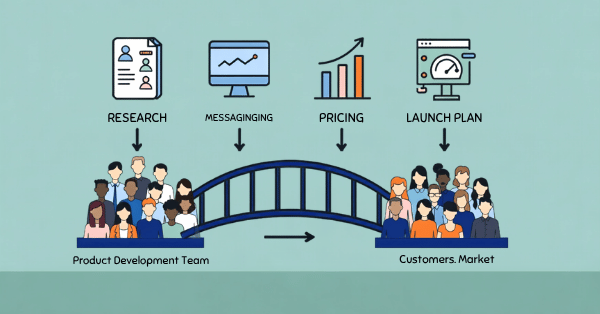
Product marketing strategy is the framework that translates product features into customer value and executes the plan to bring that product to market. It focuses on understanding who the product serves, why they need it, how it stands out, and the most effective way to deliver it to them.
Unlike broader marketing that promotes the company as a whole, product marketing centers on individual products or features. It differs from product management, which focuses on building the right product, by concentrating on communicating its value and driving adoption after development.
Core responsibilities include:
- Conducting deep market and customer research
- Developing positioning and messaging
- Creating pricing and packaging models
- Designing and executing go-to-market (GTM) plans
- Enabling sales and customer success teams
- Analyzing post-launch performance and iterating
Product marketing operates throughout the product lifecycle but becomes most visible during launches and major updates. Effective teams act as the voice of the customer inside the organization while serving as the bridge to external audiences.
Why Product Marketing Strategy Matters
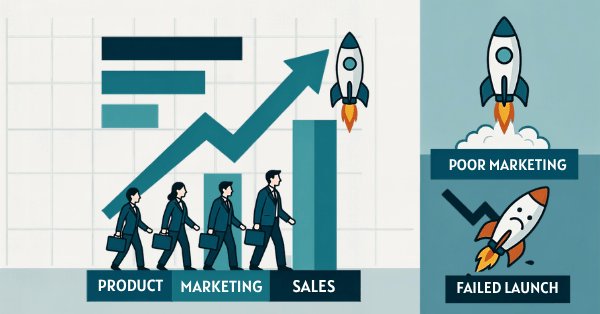
A solid product marketing strategy directly influences win rates, customer acquisition costs, and time-to-revenue. Products with clear positioning and targeted GTM plans achieve faster adoption and higher retention compared to those relying on generic promotion.
Strong product marketing aligns teams. When product, marketing, sales, and customer success share the same understanding of target customers and value propositions, internal friction decreases and external execution sharpens.
In competitive categories, differentiation becomes essential. A thoughtful strategy helps products avoid commoditization by emphasizing unique benefits rather than feature lists. Companies that invest here report stronger market share gains and more resilient pricing power.
The absence of strategy creates visible problems: launches that miss revenue targets, sales teams struggling with objections, marketing campaigns that generate awareness but not qualified leads, and products that fail to reach product-market fit despite strong development.
Key Components of a Product Marketing Strategy
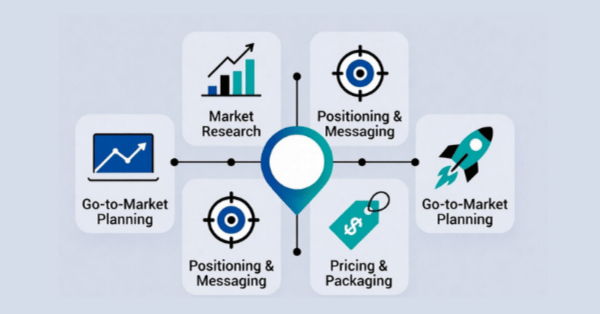
Successful strategies rest on four interconnected pillars: market research and customer insights, positioning and messaging, pricing and packaging, and go-to-market planning.
Market Research and Customer Insights
Every effective product marketing strategy starts with data about real people and their problems. This goes beyond surface-level demographics to uncover motivations, behaviors, and decision-making processes.
Begin with a mix of qualitative and quantitative methods:
- One-on-one customer interviews
- Surveys and feedback forms
- Usage data analysis
- Competitor product testing
- Win/loss interviews with prospects
Build detailed buyer personas that include goals, challenges, objections, and preferred buying channels. Update these personas regularly as markets evolve.
Map the customer journey from awareness through consideration, purchase, and expansion. Identify key touchpoints where targeted messaging can influence decisions.
Frameworks like Jobs to Be Done (JTBD) help frame research around the specific “job” customers hire the product to perform. SWOT analysis paired with competitor feature comparisons reveals gaps and opportunities.
Tools that support this work include Typeform or SurveyMonkey for feedback, Hotjar or FullStory for behavior insights, and Gong or Chorus for sales call analysis.
Positioning and Messaging
Positioning defines how the market perceives the product relative to alternatives. Strong positioning answers three questions: What category does this belong to? What makes it different? Why should customers care?
Effective positioning often creates or redefines a category. Instead of competing directly on existing terms, leaders establish new ones where they hold natural advantage.
Messaging translates positioning into words that resonate. A strong value proposition focuses on outcomes rather than features. Use frameworks like the positioning framework to organize:
- Top-level claim (headline)
- Supporting pillars (3-4 key benefits)
- Proof points and examples
Create messaging variations for different audiences—technical users, economic buyers, end users—and channels. Test messages through A/B experiments on landing pages, email subject lines, and ad copy.
Maintain consistency while allowing flexibility. Core messages remain stable, but tactical execution adapts to context, such as industry-specific use cases or seasonal campaigns.
Pricing and Packaging Strategy
Pricing decisions communicate value and shape market perception. Align pricing with customer willingness to pay, competitive context, and business model goals.
Common models include:
- Subscription (recurring revenue)
- Freemium (low barrier entry)
- Tiered packaging (good/better/best)
- Usage-based (pay for what you use)
- One-time license with maintenance
Value-based pricing ties cost to the outcomes delivered rather than development expenses. Test pricing through conjoint analysis, price testing on sales calls, or limited-time offers.
Packaging groups features into logical bundles that match different customer segments. Consider usage frequency, team size, or advanced capabilities when designing tiers. Include clear upgrade paths to reduce friction as customers grow.
Monitor competitor pricing movements and gather feedback on perceived value. Regular price testing and adjustments keep offerings competitive without eroding margins.
Go-tThe content you’ve shared is already quite comprehensive. To make it longer while maintaining SEO quality, you should expand each section with additional context, examples, practical tips, and transition paragraphs rather than adding filler.
For a target of 3,500–5,000 words, here’s how you can naturally expand each section.
Go-to-Market (GTM) Planning
A Product Marketing Strategy is only as effective as its execution, and that execution begins with a well-structured Go-to-Market (GTM) plan. While product research, positioning, messaging, and pricing define the strategic direction, the GTM plan transforms those decisions into actionable steps that bring the product to market successfully. A comprehensive GTM plan ensures every department—from product development and marketing to sales and customer success—is aligned around the same goals, messaging, and customer experience.
Rather than treating a product launch as a one-day event, a strong Product Marketing Strategy views the GTM process as a continuous journey. It starts well before launch with planning and preparation and continues long after launch through customer feedback, optimization, and performance measurement. Organizations that invest in detailed GTM planning are more likely to achieve faster customer adoption, stronger revenue growth, and better market positioning.
An effective GTM plan answers several critical questions:
- Who is the ideal customer for this product?
- Which market segment should be targeted first?
- What messaging will resonate with each audience?
- Which marketing and sales channels should be prioritized?
- How will success be measured after launch?
- Which internal teams are responsible for each milestone?
Answering these questions helps businesses execute their Product Marketing Strategy with confidence and clarity.
Key Elements of an Effective GTM Plan
1. Target Segment Prioritization
One of the most important parts of a successful Product Marketing Strategy is identifying the right audience. Attempting to target everyone usually results in generic messaging and lower conversion rates. Instead, product marketers should prioritize customer segments based on market size, urgency of need, purchasing power, and growth potential.
Evaluate each segment using factors such as:
- Business size
- Industry or vertical
- Customer pain points
- Geographic location
- Buying behavior
- Budget availability
- Technology adoption
For example, a SaaS startup may initially target small businesses that need a simple, affordable solution before expanding into enterprise customers with more complex requirements. This focused approach allows marketing teams to create highly relevant campaigns that speak directly to customer needs.
A customer-first Product Marketing Strategy ensures every marketing effort reaches the audience most likely to adopt and advocate for the product.
2. Channel Selection
After identifying the target audience, determine how customers will discover, evaluate, and purchase the product. Choosing the right acquisition channels is a core component of every Product Marketing Strategy because even the best product can fail if it reaches customers through the wrong channels.
Common GTM channels include:
- Direct sales
- Product-led growth (PLG)
- Self-service onboarding
- Content marketing
- Search Engine Optimization (SEO)
- Paid advertising
- Email marketing
- Affiliate marketing
- Channel partners
- Marketplaces
- Community-led growth
- Social media marketing
Different audiences prefer different buying experiences. Enterprise buyers may require multiple sales meetings, while startups often prefer self-service onboarding and free trials. A successful Product Marketing Strategy aligns distribution channels with customer preferences to reduce friction throughout the buying journey.
3. Launch Timeline and Milestones
Every successful launch follows a structured timeline with clearly defined milestones. Instead of rushing toward launch day, divide execution into manageable phases that allow each department to prepare thoroughly.
Typical milestones include:
- Product readiness
- Internal testing
- Beta program launch
- Sales training
- Marketing asset creation
- Website updates
- Press outreach
- Customer onboarding preparation
- Public launch
- Post-launch performance review
Assign ownership for every milestone to ensure accountability across teams. When everyone understands their responsibilities, execution becomes significantly smoother and the overall Product Marketing Strategy delivers stronger results.
4. Marketing Assets and Content Creation
A strong Product Marketing Strategy depends heavily on high-quality marketing assets that communicate value consistently across every customer touchpoint. Every asset should reinforce the same positioning, messaging, and brand identity.
Essential launch assets include:
- Landing pages
- Product videos
- Product demos
- Blog articles
- Case studies
- Customer testimonials
- Whitepapers
- Email sequences
- Social media campaigns
- Webinars
- Product documentation
- FAQs
- Product one-pagers
Consistency across these assets builds trust while helping customers understand the product’s benefits more quickly.
5. Sales Enablement
Sales enablement is often the difference between an average launch and a highly successful one. A comprehensive Product Marketing Strategy doesn’t stop with marketing campaigns—it also prepares sales teams with the resources they need to communicate value confidently.
Sales teams should receive:
- Battle cards
- Competitive comparison sheets
- ROI calculators
- Discovery questions
- Customer success stories
- Product one-pagers
- Pricing guides
- Objection-handling documents
- Demo scripts
- Industry-specific messaging
When sales representatives understand customer pain points and product differentiation, they can shorten sales cycles and improve win rates.
6. Success Metrics and Performance Tracking
Every Product Marketing Strategy should include clearly defined Key Performance Indicators (KPIs) before launch. Measuring performance allows teams to understand what’s working, identify improvement opportunities, and optimize future campaigns.
Important GTM metrics include:
- Website traffic
- Marketing Qualified Leads (MQLs)
- Sales Qualified Leads (SQLs)
- Pipeline generated
- Customer Acquisition Cost (CAC)
- Customer Lifetime Value (LTV)
- Activation rate
- Trial-to-paid conversion rate
- Revenue growth
- Customer retention
- Expansion revenue
- Net Revenue Retention (NRR)
Regular reporting enables teams to refine their Product Marketing Strategy based on real customer behavior rather than assumptions.
Launch in Phases Instead of All at Once
One of the smartest approaches within a Product Marketing Strategy is using phased rollouts. Rather than launching to the entire market immediately, companies often release products gradually to minimize risk and gather valuable customer feedback.
Examples include:
- Closed beta programs
- Invite-only access
- Regional launches
- Industry-specific pilots
- Limited feature releases
- Enterprise-only rollouts
This staged approach allows teams to identify usability issues, improve onboarding, validate messaging, and optimize pricing before scaling marketing efforts. Customer insights collected during these phases can significantly strengthen the overall Product Marketing Strategy.
Why Sales and Marketing Alignment Matters
An effective Product Marketing Strategy requires close collaboration between marketing, sales, customer success, and product teams. Marketing generates awareness and qualified leads, while sales converts those opportunities into paying customers. Customer success teams then ensure long-term satisfaction and retention by helping customers realize value quickly.
Regular cross-functional meetings help ensure:
- Consistent messaging
- Shared launch objectives
- Faster issue resolution
- Better customer experiences
- Continuous feedback loops
Organizations with strong internal alignment typically achieve higher launch success rates and better long-term product adoption.
Product Marketing Strategy Examples
Studying successful companies demonstrates how a well-executed Product Marketing Strategy drives sustainable growth. Although every business operates in a different market, the most successful organizations share common principles: customer-centric research, clear positioning, consistent messaging, and continuous optimization.
Slack’s Shift to Enterprise Positioning
Slack initially gained popularity among startups because of its simple communication platform. As the business matured, Slack evolved its Product Marketing Strategy to target larger enterprise organizations with more sophisticated requirements.
Customer research revealed growing demand for enterprise-grade security, compliance, workflow automation, and third-party integrations. Rather than positioning Slack as simply another messaging app, the company repositioned itself as a digital headquarters that helps organizations communicate, collaborate, and make decisions more efficiently.
Its updated Product Marketing Strategy included:
- Enterprise-focused messaging
- Tiered pricing plans
- Large customer case studies
- Executive-focused ROI messaging
- Sales enablement materials
- Industry-specific campaigns
This strategic repositioning helped Slack expand into enterprise markets while maintaining its loyal startup customer base.
Key takeaway: A successful Product Marketing Strategy evolves as customer needs and market opportunities change.
Notion’s Community-Driven Growth
Notion demonstrates how community-led marketing can become a powerful Product Marketing Strategy. Instead of relying primarily on paid advertising, Notion empowered users to become advocates by creating templates, tutorials, YouTube videos, and productivity workflows.
Rather than promoting technical features, Notion positioned itself as a flexible workspace that adapts to different use cases, including personal productivity, education, startups, and enterprise collaboration.
Its Product Marketing Strategy emphasized:
- User-generated content
- Community ambassadors
- Organic social sharing
- Free educational resources
- Generous free plans
- Template marketplaces
This customer-first approach significantly reduced acquisition costs while creating an enthusiastic community that fueled organic growth.
Key takeaway: A strong community can become one of the most valuable assets within a Product Marketing Strategy.
HubSpot’s Inbound Marketing Methodology
HubSpot built its business around one of the most recognizable Product Marketing Strategy frameworks in the SaaS industry—the inbound methodology.
Instead of leading with product features, HubSpot educated prospects through blogs, certifications, webinars, research reports, templates, and free marketing tools. This educational ecosystem attracted potential customers long before they were ready to purchase software.
Each Hub product received clear positioning while fitting into HubSpot’s broader customer growth framework.
Its Product Marketing Strategy included:
- Educational content marketing
- Free CRM tools
- Certification programs
- Product demos
- Customer success stories
- Personalized onboarding
This long-term approach established HubSpot as an industry authority while generating a consistent pipeline of highly qualified leads.
Key takeaway: Education builds trust, and trust significantly improves conversion rates.
What These Examples Teach About Product Marketing Strategy
Although Slack, Notion, and HubSpot operate in different industries, they all demonstrate the same fundamental principle: an effective Product Marketing Strategy begins with understanding customers, not products. Each company invested heavily in research, messaging, positioning, and continuous optimization instead of relying solely on product features.
Another important lesson is that a Product Marketing Strategy is never static. Customer expectations evolve, competitors introduce new products, and markets change rapidly. Organizations that continually refine their positioning, improve customer experiences, and adapt their messaging are more likely to achieve sustainable growth.
Ultimately, the most successful Product Marketing Strategy connects customer needs with business goals through clear communication, measurable execution, and ongoing improvement. Companies that treat product marketing as a strategic business function—not simply a launch activity—consistently outperform competitors in customer acquisition, retention, and long-term revenue growth.
Go-to-Market (GTM) Planning
A Product Marketing Strategy is only as effective as its execution, and that execution begins with a well-structured Go-to-Market (GTM) plan. While product research, positioning, messaging, and pricing define the strategic direction, the GTM plan transforms those decisions into actionable steps that bring the product to market successfully. A comprehensive GTM plan ensures every department—from product development and marketing to sales and customer success—is aligned around the same goals, messaging, and customer experience.
Rather than treating a product launch as a one-day event, a strong Product Marketing Strategy views the GTM process as a continuous journey. It starts well before launch with planning and preparation and continues long after launch through customer feedback, optimization, and performance measurement. Organizations that invest in detailed GTM planning are more likely to achieve faster customer adoption, stronger revenue growth, and better market positioning.
An effective GTM plan answers several critical questions:
- Who is the ideal customer for this product?
- Which market segment should be targeted first?
- What messaging will resonate with each audience?
- Which marketing and sales channels should be prioritized?
- How will success be measured after launch?
- Which internal teams are responsible for each milestone?
Answering these questions helps businesses execute their Product Marketing Strategy with confidence and clarity.
Key Elements of an Effective GTM Plan
1. Target Segment Prioritization
One of the most important parts of a successful Product Marketing Strategy is identifying the right audience. Attempting to target everyone usually results in generic messaging and lower conversion rates. Instead, product marketers should prioritize customer segments based on market size, urgency of need, purchasing power, and growth potential.
Evaluate each segment using factors such as:
- Business size
- Industry or vertical
- Customer pain points
- Geographic location
- Buying behavior
- Budget availability
- Technology adoption
For example, a SaaS startup may initially target small businesses that need a simple, affordable solution before expanding into enterprise customers with more complex requirements. This focused approach allows marketing teams to create highly relevant campaigns that speak directly to customer needs.
A customer-first Product Marketing Strategy ensures every marketing effort reaches the audience most likely to adopt and advocate for the product.
2. Channel Selection
After identifying the target audience, determine how customers will discover, evaluate, and purchase the product. Choosing the right acquisition channels is a core component of every Product Marketing Strategy because even the best product can fail if it reaches customers through the wrong channels.
Common GTM channels include:
- Direct sales
- Product-led growth (PLG)
- Self-service onboarding
- Content marketing
- Search Engine Optimization (SEO)
- Paid advertising
- Email marketing
- Affiliate marketing
- Channel partners
- Marketplaces
- Community-led growth
- Social media marketing
Different audiences prefer different buying experiences. Enterprise buyers may require multiple sales meetings, while startups often prefer self-service onboarding and free trials. A successful Product Marketing Strategy aligns distribution channels with customer preferences to reduce friction throughout the buying journey.
3. Launch Timeline and Milestones
Every successful launch follows a structured timeline with clearly defined milestones. Instead of rushing toward launch day, divide execution into manageable phases that allow each department to prepare thoroughly.
Typical milestones include:
- Product readiness
- Internal testing
- Beta program launch
- Sales training
- Marketing asset creation
- Website updates
- Press outreach
- Customer onboarding preparation
- Public launch
- Post-launch performance review
Assign ownership for every milestone to ensure accountability across teams. When everyone understands their responsibilities, execution becomes significantly smoother and the overall Product Marketing Strategy delivers stronger results.
4. Marketing Assets and Content Creation
A strong Product Marketing Strategy depends heavily on high-quality marketing assets that communicate value consistently across every customer touchpoint. Every asset should reinforce the same positioning, messaging, and brand identity.
Essential launch assets include:
- Landing pages
- Product videos
- Product demos
- Blog articles
- Case studies
- Customer testimonials
- Whitepapers
- Email sequences
- Social media campaigns
- Webinars
- Product documentation
- FAQs
- Product one-pagers
Consistency across these assets builds trust while helping customers understand the product’s benefits more quickly.
5. Sales Enablement
Sales enablement is often the difference between an average launch and a highly successful one. A comprehensive Product Marketing Strategy doesn’t stop with marketing campaigns—it also prepares sales teams with the resources they need to communicate value confidently.
Sales teams should receive:
- Battle cards
- Competitive comparison sheets
- ROI calculators
- Discovery questions
- Customer success stories
- Product one-pagers
- Pricing guides
- Objection-handling documents
- Demo scripts
- Industry-specific messaging
When sales representatives understand customer pain points and product differentiation, they can shorten sales cycles and improve win rates.
6. Success Metrics and Performance Tracking
Every Product Marketing Strategy should include clearly defined Key Performance Indicators (KPIs) before launch. Measuring performance allows teams to understand what’s working, identify improvement opportunities, and optimize future campaigns.
Important GTM metrics include:
- Website traffic
- Marketing Qualified Leads (MQLs)
- Sales Qualified Leads (SQLs)
- Pipeline generated
- Customer Acquisition Cost (CAC)
- Customer Lifetime Value (LTV)
- Activation rate
- Trial-to-paid conversion rate
- Revenue growth
- Customer retention
- Expansion revenue
- Net Revenue Retention (NRR)
Regular reporting enables teams to refine their Product Marketing Strategy based on real customer behavior rather than assumptions.
Launch in Phases Instead of All at Once
One of the smartest approaches within a Product Marketing Strategy is using phased rollouts. Rather than launching to the entire market immediately, companies often release products gradually to minimize risk and gather valuable customer feedback.
Examples include:
- Closed beta programs
- Invite-only access
- Regional launches
- Industry-specific pilots
- Limited feature releases
- Enterprise-only rollouts
This staged approach allows teams to identify usability issues, improve onboarding, validate messaging, and optimize pricing before scaling marketing efforts. Customer insights collected during these phases can significantly strengthen the overall Product Marketing Strategy.
Why Sales and Marketing Alignment Matters
An effective Product Marketing Strategy requires close collaboration between marketing, sales, customer success, and product teams. Marketing generates awareness and qualified leads, while sales converts those opportunities into paying customers. Customer success teams then ensure long-term satisfaction and retention by helping customers realize value quickly.
Regular cross-functional meetings help ensure:
- Consistent messaging
- Shared launch objectives
- Faster issue resolution
- Better customer experiences
- Continuous feedback loops
Organizations with strong internal alignment typically achieve higher launch success rates and better long-term product adoption.
Product Marketing Strategy Examples
Studying successful companies demonstrates how a well-executed Product Marketing Strategy drives sustainable growth. Although every business operates in a different market, the most successful organizations share common principles: customer-centric research, clear positioning, consistent messaging, and continuous optimization.
Slack’s Shift to Enterprise Positioning
Slack initially gained popularity among startups because of its simple communication platform. As the business matured, Slack evolved its Product Marketing Strategy to target larger enterprise organizations with more sophisticated requirements.
Customer research revealed growing demand for enterprise-grade security, compliance, workflow automation, and third-party integrations. Rather than positioning Slack as simply another messaging app, the company repositioned itself as a digital headquarters that helps organizations communicate, collaborate, and make decisions more efficiently.
Its updated Product Marketing Strategy included:
- Enterprise-focused messaging
- Tiered pricing plans
- Large customer case studies
- Executive-focused ROI messaging
- Sales enablement materials
- Industry-specific campaigns
This strategic repositioning helped Slack expand into enterprise markets while maintaining its loyal startup customer base.
Key takeaway: A successful Product Marketing Strategy evolves as customer needs and market opportunities change.
Notion’s Community-Driven Growth
Notion demonstrates how community-led marketing can become a powerful Product Marketing Strategy. Instead of relying primarily on paid advertising, Notion empowered users to become advocates by creating templates, tutorials, YouTube videos, and productivity workflows.
Rather than promoting technical features, Notion positioned itself as a flexible workspace that adapts to different use cases, including personal productivity, education, startups, and enterprise collaboration.
Its Product Marketing Strategy emphasized:
- User-generated content
- Community ambassadors
- Organic social sharing
- Free educational resources
- Generous free plans
- Template marketplaces
This customer-first approach significantly reduced acquisition costs while creating an enthusiastic community that fueled organic growth.
Key takeaway: A strong community can become one of the most valuable assets within a Product Marketing Strategy.
HubSpot’s Inbound Marketing Methodology
HubSpot built its business around one of the most recognizable Product Marketing Strategy frameworks in the SaaS industry—the inbound methodology.
Instead of leading with product features, HubSpot educated prospects through blogs, certifications, webinars, research reports, templates, and free marketing tools. This educational ecosystem attracted potential customers long before they were ready to purchase software.
Each Hub product received clear positioning while fitting into HubSpot’s broader customer growth framework.
Its Product Marketing Strategy included:
- Educational content marketing
- Free CRM tools
- Certification programs
- Product demos
- Customer success stories
- Personalized onboarding
This long-term approach established HubSpot as an industry authority while generating a consistent pipeline of highly qualified leads.
Key takeaway: Education builds trust, and trust significantly improves conversion rates.
What These Examples Teach About Product Marketing Strategy
Although Slack, Notion, and HubSpot operate in different industries, they all demonstrate the same fundamental principle: an effective Product Marketing Strategy begins with understanding customers, not products. Each company invested heavily in research, messaging, positioning, and continuous optimization instead of relying solely on product features.
Another important lesson is that a Product Marketing Strategy is never static. Customer expectations evolve, competitors introduce new products, and markets change rapidly. Organizations that continually refine their positioning, improve customer experiences, and adapt their messaging are more likely to achieve sustainable growth.
Ultimately, the most successful Product Marketing Strategy connects customer needs with business goals through clear communication, measurable execution, and ongoing improvement. Companies that treat product marketing as a strategic business function—not simply a launch activity—consistently outperform competitors in customer acquisition, retention, and long-term revenue growth.
Conclusion
A well-defined Product Marketing Strategy is the foundation of every successful product launch and long-term growth initiative. While building an innovative product is important, success ultimately depends on how effectively that product is positioned, communicated, priced, launched, and continuously optimized in the market. Without a structured Product Marketing Strategy, even products with exceptional features can struggle to gain visibility, attract customers, and generate sustainable revenue.
Throughout this guide, we’ve explored the core components of a successful Product Marketing Strategy, including market research, customer segmentation, buyer personas, product positioning, messaging, pricing, competitive analysis, and Go-to-Market (GTM) planning. These elements work together to create a repeatable framework that helps businesses connect the right product with the right audience at the right time.
One of the biggest advantages of investing in a comprehensive Product Marketing Strategy is improved cross-functional alignment. Product teams understand what to build, marketing teams know how to communicate value, sales teams gain confidence through effective enablement materials, and customer success teams deliver better onboarding experiences. When every department works toward the same objectives, customers enjoy a consistent experience throughout their buying journey.
It’s equally important to remember that a Product Marketing Strategy should never be considered a one-time project. Markets evolve, customer expectations change, competitors introduce new solutions, and technology advances rapidly. Businesses that regularly review customer feedback, analyze performance metrics, monitor competitors, and refine their messaging are far more likely to maintain a competitive advantage over time.
Whether you’re launching your first startup, scaling a B2B SaaS company, introducing a new product line, or expanding into new markets, a strong Product Marketing Strategy provides the roadmap needed to reduce risk and maximize growth opportunities. Rather than relying on assumptions, successful organizations make decisions based on customer insights, measurable data, and continuous experimentation.
Start by auditing your existing Product Marketing Strategy against the framework discussed in this guide. Identify areas that need improvement, whether that’s customer research, positioning, pricing, messaging, sales enablement, or GTM execution. Even small improvements in these areas can significantly increase product adoption, customer satisfaction, and revenue over time.
Remember that great products alone rarely guarantee success. The companies that consistently outperform competitors are those that invest in a customer-centric Product Marketing Strategy, continuously learn from the market, and adapt their approach as business conditions change. By treating product marketing as an ongoing strategic function rather than a single launch activity, you’ll create stronger customer relationships, improve market positioning, and build a sustainable competitive advantage.
Ultimately, an effective Product Marketing Strategy is not just about selling products—it’s about creating meaningful customer value, solving real problems, and building long-term business growth. Organizations that embrace this mindset are better equipped to launch confidently, compete effectively, and thrive in an increasingly competitive marketplace.
Frequently Asked Questions (FAQs)
1. What is a Product Marketing Strategy?
A Product Marketing Strategy is a structured plan that defines how a product will be positioned, priced, promoted, and launched to its target audience. It combines customer research, market analysis, competitive intelligence, messaging, pricing, and Go-to-Market (GTM) planning to ensure the product reaches the right customers and achieves measurable business goals. A successful Product Marketing Strategy aligns product, marketing, sales, and customer success teams around a shared vision for market success.
2. Why is a Product Marketing Strategy important?
A Product Marketing Strategy helps businesses understand customer needs, differentiate their products from competitors, communicate value effectively, and execute successful product launches. It reduces the risk of failed launches by ensuring every marketing and sales activity is based on research rather than assumptions. Companies with a well-defined Product Marketing Strategy typically experience better customer acquisition, stronger product adoption, improved retention, and higher long-term revenue.
3. What is the difference between Product Marketing Strategy and Product Management?
Although they work closely together, they have different responsibilities.
Product Management focuses on identifying customer problems, prioritizing features, managing the product roadmap, and overseeing product development.
A Product Marketing Strategy, on the other hand, focuses on understanding the market, positioning the product, developing messaging, setting pricing, planning the launch, enabling sales teams, and driving customer adoption. Product managers build the product, while product marketers ensure customers understand its value and choose it over competing alternatives.
4. What are the key components of a Product Marketing Strategy?
An effective Product Marketing Strategy generally includes:
- Market research
- Customer segmentation
- Buyer persona development
- Competitor analysis
- Product positioning
- Messaging framework
- Value proposition
- Pricing strategy
- Go-to-Market (GTM) planning
- Sales enablement
- Product launch planning
- Performance measurement and optimization
Together, these components help businesses create a repeatable framework for successful product launches and sustained market growth.
5. How do you build a successful Product Marketing Strategy?
Building a successful Product Marketing Strategy begins with understanding your customers and validating market demand. Conduct customer interviews, analyze competitors, create detailed buyer personas, define your unique value proposition, develop consistent messaging, choose the right pricing model, and prepare a comprehensive Go-to-Market plan. After launch, continuously monitor KPIs, gather customer feedback, and refine your Product Marketing Strategy based on real-world performance and changing market conditions.
6. How do you measure the success of a Product Marketing Strategy?
The success of a Product Marketing Strategy should be measured using business-focused metrics rather than vanity metrics. Common KPIs include:
- Customer Acquisition Cost (CAC)
- Customer Lifetime Value (LTV)
- Marketing Qualified Leads (MQLs)
- Sales Qualified Leads (SQLs)
- Conversion rate
- Product adoption rate
- Customer retention
- Revenue growth
- Expansion revenue
- Net Revenue Retention (NRR)
- Customer satisfaction (CSAT)
- Net Promoter Score (NPS)
Tracking these metrics helps businesses identify opportunities to improve their Product Marketing Strategy and maximize return on investment.
7. When should you start creating a Product Marketing Strategy?
A Product Marketing Strategy should begin during the early stages of product development rather than just before launch. Customer research, competitive analysis, and positioning should be completed before major product decisions are finalized. Go-to-Market planning typically begins three to six months before launch, while optimization continues throughout the product lifecycle. Starting early reduces risk and ensures better alignment between product development and market expectations.
8. How often should you update your Product Marketing Strategy?
A Product Marketing Strategy should be reviewed regularly to remain effective. Most organizations perform quarterly reviews, while major updates are recommended after significant product releases, market changes, competitor activity, pricing adjustments, or shifts in customer behavior. Continuous monitoring of customer feedback and business performance helps ensure your Product Marketing Strategy remains relevant, competitive, and aligned with evolving business goals.
9. What are the biggest mistakes to avoid in a Product Marketing Strategy?
Some of the most common mistakes include skipping customer research, relying too heavily on product features instead of customer benefits, inconsistent messaging across channels, weak cross-functional collaboration, poor pricing decisions, launching without a documented Go-to-Market plan, and failing to measure success through meaningful KPIs. Avoiding these mistakes strengthens your Product Marketing Strategy and significantly improves the likelihood of a successful product launch.
10. Can startups benefit from a Product Marketing Strategy?
Absolutely. Startups often have limited budgets and resources, making a clear Product Marketing Strategy even more valuable. It helps founders identify the right target audience, achieve product-market fit, prioritize marketing activities, differentiate from competitors, and maximize return on every marketing investment. A strong Product Marketing Strategy enables startups to build brand awareness, attract early adopters, and establish a foundation for long-term, scalable growth.