
Table of Contents
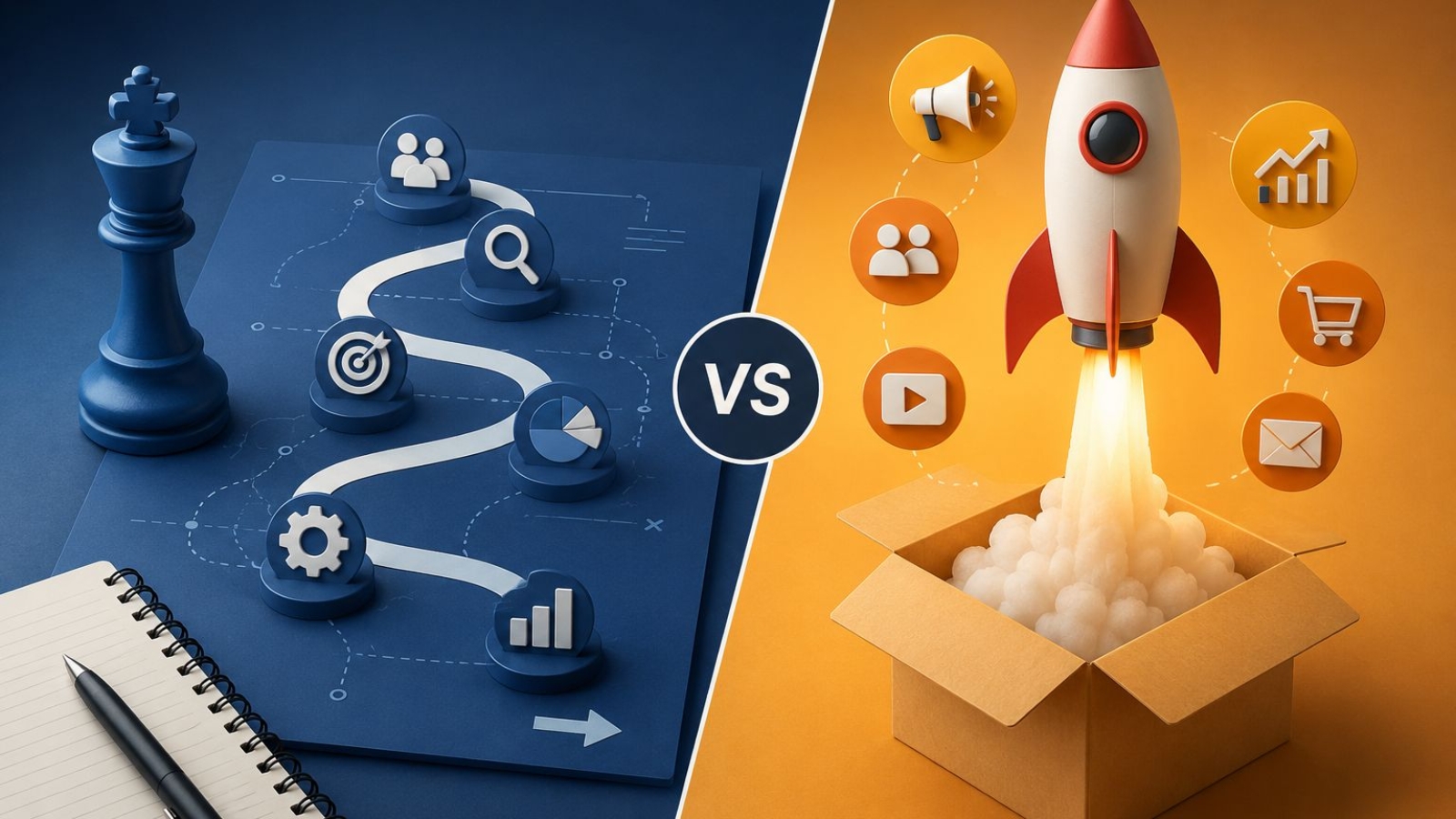
A go-to-market strategy vs product launch are closely connected, but they are not the same thing.
A go-to-market strategy defines how a company will reach the right customers, position its offering, create demand, generate revenue, and build a repeatable path to growth. A product launch is the coordinated process of introducing a specific product, service, feature, or solution to its target audience.
The easiest way to remember the difference is:
A GTM strategy is the playbook for winning a market. A product launch is one of the major plays executed from that playbook.
A product can have an impressive launch and still struggle to achieve sustainable sales if the company has weak positioning, an unclear ideal customer profile, the wrong pricing, ineffective distribution, or no post-launch customer strategy.
Likewise, a strong go-to-market strategy needs effective execution. A product launch can be one of the most visible moments when that strategy reaches the market.
This guide explains go-to-market strategy vs product launch in detail, including their differences, components, timelines, responsibilities, metrics, examples, common mistakes, and the best way to connect the two.
Go-To-Market Strategy vs Product Launch: Quick Answer
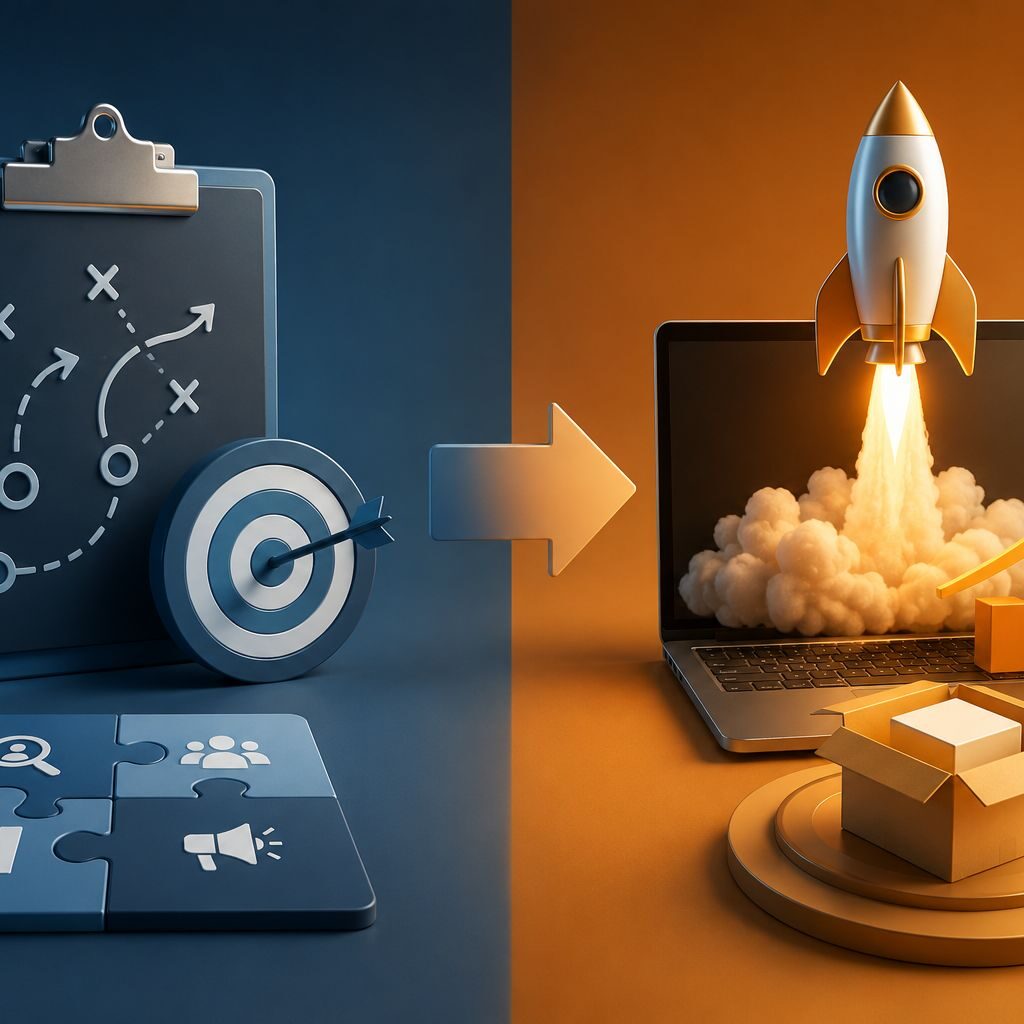
What is the difference between a go-to-market strategy vs product launch?
A go-to-market strategy is a broader strategic plan for bringing an offering to a target market and creating a sustainable customer acquisition and revenue model. It covers the target audience, market positioning, value proposition, pricing, channels, sales approach, marketing, customer journey, and measurement.
A product launch is a focused execution plan for introducing a particular product or offering to customers. It usually includes launch messaging, campaigns, content, sales enablement, announcements, promotions, events, and post-launch activities.
In simple terms:
GTM strategy = how you plan to win.
Product launch = how you introduce the offering.
A product launch can therefore be part of a Go-To-Market Strategy vs Product Launch strategy, but a launch alone is not a complete GTM strategy.
Go-To-Market Strategy vs Product Launch at a Glance
| Factor | Go-To-Market Strategy | Product Launch |
|---|---|---|
| Primary purpose | Build a path to market and revenue | Introduce a specific offering |
| Scope | Broad and strategic | Focused and execution-oriented |
| Main focus | Market, customer, positioning, channels, revenue | Awareness, interest, adoption and initial traction |
| Audience | Defined target market and customer segments | Specific launch audience |
| Timeline | Longer-term and iterative | Usually time-bound |
| Positioning | Establishes market position | Communicates launch value |
| Pricing | Defines pricing and packaging approach | Activates launch pricing |
| Channels | Determines the most effective routes to market | Uses selected channels for launch |
| Sales | Defines the sales motion | Prepares and activates sales |
| Marketing | Establishes demand-generation approach | Executes launch campaigns |
| Ownership | Cross-functional leadership | Cross-functional launch team |
| Metrics | Revenue, CAC, retention, pipeline, market penetration | Reach, leads, signups, adoption, initial sales |
| Output | GTM strategy/playbook | Launch plan and execution calendar |
| Lifecycle | Ongoing and iterative | Pre-launch, launch and post-launch |
The biggest distinction is scope.
A GTM strategy answers the larger business question:
How will we successfully reach and serve this market?
A product launch answers a more specific execution question:
How will we introduce this particular offering to the market and encourage people to try or buy it?
What Is a Go-To-Market Strategy?
A go-to-market strategy, commonly abbreviated as GTM strategy, is a structured plan for bringing a product, service, or business offering to a defined market.
It connects several business decisions that need to work together:
- Who the company wants to serve
- What problem it solves
- Why customers should choose it
- How it is positioned against alternatives
- How much it costs
- Where customers can find it
- How prospects become customers
- How sales and marketing work together
- How customers are onboarded and retained
- How performance is measured and improved
A GTM strategy is therefore much more than a marketing campaign.
For example, imagine a software company creates a new customer-support platform.
A marketing campaign might focus on:
“Reduce customer support workload by 40%.”
A GTM strategy goes much further.
It might determine that the ideal customers are mid-sized ecommerce companies with large support teams. It may establish a subscription pricing model, use a product-led sales motion, target customer-support leaders, differentiate the platform around automation and integrations, and use content marketing, paid search, LinkedIn, partnerships, and sales outreach to acquire customers.
The marketing campaign is one component.
The GTM strategy is the system connecting all those decisions.
What Does a GTM Strategy Include?
A comprehensive Go-To-Market Strategy vs Product Launch strategy typically includes the following components.
1. Market Definition
First, the company needs to understand the market it intends to enter or expand within.
This involves researching:
- Market size
- Market growth
- Customer demand
- Competitors
- Industry trends
- Buying behavior
- Existing alternatives
- Market gaps
- Barriers to entry
The objective isn’t simply to find a large market.
The objective is to identify a market where the company’s offering can create meaningful value and achieve a realistic competitive position.
2. Ideal Customer Profile
The Ideal Customer Profile (ICP) describes the type of customer most likely to benefit from the offering and become a valuable customer.
For a B2B company, an ICP might include:
- Company size
- Industry
- Revenue
- Geography
- Technology stack
- Business model
- Buying triggers
- Operational challenges
- Budget
- Decision-making structure
For B2C products, customer segmentation may instead focus on:
- Demographics
- Behaviors
- Interests
- Needs
- Purchase frequency
- Location
- Price sensitivity
A strong Go-To-Market Strategy vs Product Launch doesn’t try to sell to everyone.
It identifies who is most likely to buy, why they buy, and what influences their decision.
3. Customer Problem and Value Proposition
Once the target audience is defined, the company needs to clarify the problem being solved.
A strong value proposition explains:
Who is the product for?
What problem does it solve?
What outcome does it provide?
Why is it better or different from alternatives?
This becomes the foundation for positioning and messaging.
4. Positioning
Positioning determines how the offering should be perceived relative to competitors and alternatives.
For example, a project-management platform could position itself as:
- The simplest platform for small teams
- The enterprise solution for complex workflows
- The affordable alternative to expensive enterprise software
- The specialized platform for creative agencies
The product may have many features, but positioning tells the market which value should matter most.
5. Pricing and Packaging
Pricing is another important part of GTM planning.
A GTM strategy may determine:
- Pricing model
- Subscription tiers
- Free trial
- Freemium model
- Enterprise pricing
- Usage-based pricing
- Discounts
- Bundles
- Promotional pricing
- Packaging
The goal is not simply to choose a price.
Pricing needs to align with the perceived value, customer segment, competitive landscape, and business economics.
6. Distribution Channels
The GTM strategy determines where and how customers will acquire the product.
Possible channels include:
- Organic search
- Paid search
- Social media
- Email marketing
- Direct sales
- Partnerships
- Marketplaces
- Retail
- Resellers
- Affiliates
- Events
- Communities
- Product-led acquisition
The right channel depends on the customer and buying journey.
A channel that works well for a consumer product may be completely ineffective for an enterprise software product.
7. Sales Strategy
For products involving sales teams, the GTM strategy should define the sales motion.
Examples include:
- Self-service
- Product-led growth
- Inside sales
- Field sales
- Account-based sales
- Channel sales
- Partner-led sales
- Sales-assisted product-led growth
The sales process should match the complexity of the purchase.
A $10/month self-service product doesn’t need the same sales structure as a $100,000 enterprise contract.
8. Marketing Strategy
Marketing supports the GTM strategy by creating awareness, demand, engagement, and qualified opportunities.
Depending on the audience, the marketing mix could include:
- SEO
- Content marketing
- Social media
- Paid advertising
- Influencer marketing
- Webinars
- Events
- PR
- Video
- Case studies
- Lead nurturing
The key is that marketing activities should support the broader Go-To-Market Strategy vs Product Launch objectives rather than operate as disconnected campaigns.
9. Customer Experience
A successful GTM strategy doesn’t end when someone buys.
It should also consider:
- Onboarding
- Customer education
- Support
- Product adoption
- Retention
- Expansion
- Cross-selling
- Upselling
- Advocacy
This is especially important for subscription businesses.
Acquiring customers without retaining them creates an inefficient growth model.
10. Metrics and Feedback
A GTM strategy needs measurable objectives.
Relevant metrics can include:
- Revenue
- Pipeline
- Customer acquisition cost
- Conversion rate
- Retention
- Churn
- Customer lifetime value
- Average revenue per customer
- Win rate
- Market penetration
- Product adoption
The strategy should evolve based on actual customer behavior.
What Is a Product Launch?

A product launch is the coordinated introduction of a new product, service, feature, or major offering to a target audience.
The objective is generally to generate awareness, interest, trial, adoption, sales, or some combination of these outcomes.
A product launch can be:
- A new product
- A new software platform
- A major product version
- A new service
- A new product line
- A major feature
- A geographic launch
- A redesigned offering
A launch normally has a defined execution period.
It may involve:
Pre-launch → Launch → Post-launch
Unlike a Go-To-Market Strategy vs Product Launch, which can influence a product for months or years, a launch is usually associated with a particular market introduction or release event.
1 What Does a Product Launch Include?

A product launch plan can include many activities.
Pre-launch
- Audience research
- Messaging development
- Landing page
- Product demos
- Email sequences
- Sales training
- Content creation
- Social media campaigns
- Advertising
- PR preparation
- Influencer outreach
- Launch event planning
Launch
- Product announcement
- Website update
- Social campaigns
- Email announcement
- Paid advertising
- Product demonstration
- Webinar
- Sales outreach
- PR
- Partner activation
Post-launch
- Retargeting
- Customer follow-up
- Feedback collection
- Product education
- Onboarding
- Conversion optimization
- Adoption campaigns
- Case studies
- Performance analysis
This is why a product launch should not be treated as a single announcement.
The launch announcement may happen on one day, but effective launch execution often continues well beyond launch day.
Go-To-Market Strategy vs Product Launch: 10 Key Differences
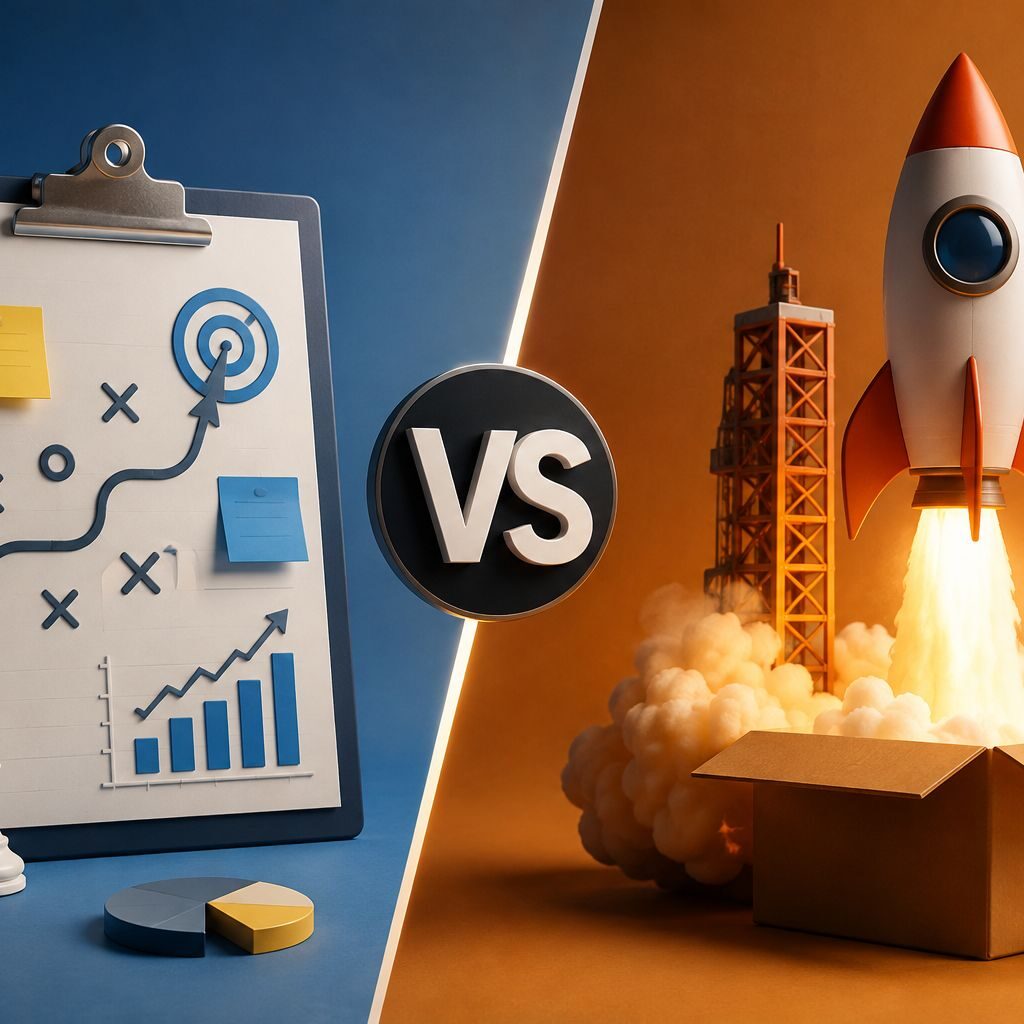
The clearest way to understand the distinction is to compare the two across several dimensions.
1. Scope
A GTM strategy has a broad scope.
It considers the entire path from market selection to customer acquisition and revenue generation.
A product launch has a narrower scope.
It focuses on introducing a specific offering.
GTM: How will we win in this market?
Launch: How will we introduce this product effectively?
2. Objective
The primary objective of GTM is to establish a sustainable route to customers and revenue.
The objective of a product launch is usually to create awareness, generate demand, drive initial adoption, or achieve a defined launch target.
A successful launch does not automatically mean the GTM strategy is successful.
A company could achieve 100,000 launch impressions and still struggle to generate profitable customers.
3. Timeline
GTM planning can begin months before a launch and continue after the launch.
The strategy may change as the company learns more about its market.
A product launch normally has a more defined timeline:
Preparation → Launch → Post-launch
Therefore:
GTM is an ongoing strategic process.
Launch is a time-bound execution process.
4. Audience
GTM starts with market segmentation and ICP definition.
The company may identify several customer groups and prioritize them.
A product launch may target a narrower audience based on launch objectives.
For example:
A GTM strategy could target small and mid-sized ecommerce companies.
The launch campaign could initially target ecommerce businesses using a particular platform because they are more likely to adopt the product quickly.
5. Positioning
GTM establishes the broader positioning.
A launch translates that positioning into campaign messages.
For example:
GTM positioning:
“An easy-to-deploy customer support platform for growing ecommerce teams.”
Launch message:
“Meet the new customer support platform built to help ecommerce teams resolve more tickets with less manual work.”
The second message is an execution of the first.
6. Pricing
GTM strategy considers the overall pricing model and packaging.
A launch may introduce a specific promotional offer, introductory price, or product tier.
For example:
GTM: Subscription model with Basic, Pro and Enterprise plans.
Launch: First 100 customers receive three months at an introductory rate.
The launch activates the commercial model established by the broader strategy.
7. Channels
A GTM strategy decides which channels make strategic sense.
A product launch activates those channels for the introduction.
For example:
GTM channels:
- SEO
- Partnerships
- Sales
- Paid search
Launch channels:
- Launch email
- LinkedIn announcement
- Webinar
- Product demo
- Paid retargeting
- Partner promotion
The launch doesn’t necessarily use every Go-To-Market Strategy vs Product Launch channel.
It prioritizes the channels most likely to support the launch objective.
8. Ownership
GTM strategy is typically cross-functional.
It can involve:
- Executive leadership
- Product
- Marketing
- Sales
- Customer success
- Finance
- Operations
A product launch also requires cross-functional coordination, but the launch team is generally focused on executing a particular release.
9. Metrics
GTM metrics tend to reflect broader business performance.
Examples:
- Revenue
- CAC
- LTV
- Pipeline
- Retention
- Churn
- Market share
- Conversion
- Expansion
Product launch metrics tend to measure initial market response.
Examples:
- Impressions
- Website visits
- Engagement
- Leads
- Signups
- Trials
- Product adoption
- Initial revenue
A useful distinction is:
Launch metrics tell you how the market responded to the introduction. GTM metrics tell you whether the business can repeatedly turn that response into sustainable growth.
10. Lifecycle
A product launch has a beginning, launch period, and post-launch phase.
A GTM strategy is more continuous.
Even after a successful launch, the company may change:
- Pricing
- ICP
- Messaging
- Channels
- Sales process
- Product packaging
- Market segments
GTM strategy therefore evolves as the company learns.
How a Product Launch Fits Into a GTM Strategy
Think of the relationship as a funnel or operating system:
Market Research
↓
Target Market
↓
Ideal Customer Profile
↓
Customer Problem
↓
Positioning
↓
Value Proposition
↓
Pricing & Packaging
↓
Distribution & Sales Channels
↓
Product Launch
↓
Customer Acquisition
↓
Activation & Adoption
↓
Retention
↓
Expansion & Growth
The product launch sits inside this larger system.
This distinction matters because companies sometimes invest heavily in the launch event while leaving the surrounding strategy underdeveloped.
For example, a company might spend months creating:
- Videos
- Social posts
- Press releases
- Email campaigns
- Paid ads
- Launch graphics
But if the company hasn’t clearly defined its ICP, positioning, pricing, distribution, or sales process, the campaign may generate attention without meaningful business results.
The launch is the visible moment.
The GTM strategy is the infrastructure behind that moment.
Go-To-Market Strategy vs Product Launch: Real-World Example
Consider a SaaS company launching an AI-powered customer support platform.
The GTM Strategy
The company identifies its target market as mid-sized ecommerce businesses.
Its ICP includes companies that:
- Receive thousands of support requests per month
- Have growing customer service teams
- Use multiple ecommerce integrations
- Want to reduce repetitive support work
- Have enough volume to justify automation
Positioning
The product is positioned as:
A customer-support automation platform designed for growing ecommerce teams.
Pricing
The company chooses a subscription model with several tiers based on support volume and functionality.
Distribution
The company chooses:
- SEO
- Partnerships
- Product demos
- Sales outreach
- Webinars
Sales motion
The company uses a combination of self-service trials and sales-assisted conversion for larger accounts.
Customer success
New customers receive onboarding resources, product education and implementation support.
That is the GTM strategy.
The Product Launch
The launch campaign could include:
Two weeks before launch
- Teaser campaign
- Waitlist
- Demo video
- Email sequence
- Partner outreach
Launch week
- Product announcement
- Landing page
- LinkedIn campaign
- Webinar
- Product demo
- Sales outreach
- Paid campaign
After launch
- Retargeting
- Customer onboarding
- Feedback interviews
- Case studies
- Conversion optimization
- Adoption campaigns
That is the product launch.
The launch executes a specific part of the broader GTM strategy.
Can You Have a Product Launch Without a GTM Strategy?
Yes.
But doing so creates significant risk.
A company can launch a product without a formal GTM strategy. It can announce the product, run advertising, publish social content, send emails, and generate initial sales.
The problem is what happens afterward.
Without a clear GTM strategy, the company may struggle to answer:
- Who is the best customer?
- Which market should we prioritize?
- Why should customers choose us?
- What makes the product different?
- Which channels should we scale?
- How should we price it?
- What sales motion should we use?
- How do we retain customers?
- How do we expand?
This creates a common pattern:
Strong launch → initial attention → weak conversion → unclear positioning → inconsistent growth
A better model is:
GTM strategy → launch → measurement → learning → optimization → repeatable growth
A launch can create attention.
A GTM strategy creates the system behind that attention.
Does Every Product Launch Need a Full GTM Strategy?
Not necessarily.
The level of GTM planning should match the scale and risk of the launch.
Tier 1: Major Product or Market Launch
Use a comprehensive GTM strategy when:
- Entering a new market
- Launching a new product category
- Targeting a new customer segment
- Expanding internationally
- Introducing a major revenue stream
This requires deeper research, positioning, pricing, channel planning and cross-functional alignment.
Tier 2: Significant Product Update
A lighter GTM framework may be enough for:
- Major feature releases
- New product tiers
- Significant packaging changes
- New integrations
- Major upgrades
The company can reuse parts of the existing GTM strategy while adapting the messaging and launch plan.
Tier 3: Minor Feature Release
A full GTM strategy may be unnecessary for:
- Small features
- Bug fixes
- Minor interface updates
- Small improvements
A simple release communication may be sufficient.
The key principle is:
Not every release deserves a major launch, and not every launch requires rebuilding the entire GTM strategy from scratch.
GTM Strategy vs Product Launch vs Marketing Strategy
These three concepts are often confused.
They overlap, but they serve different purposes.
| Area | GTM Strategy | Product Launch | Marketing Strategy |
|---|---|---|---|
| Core question | How will we win the market? | How will we introduce the offering? | How will marketing create demand and support business goals? |
| Scope | Broad | Specific | Marketing-focused |
| Audience | Target market | Launch audience | Marketing personas/segments |
| Timeline | Strategic and ongoing | Time-bound | Usually ongoing |
| Focus | Market + customer + revenue | Awareness + adoption | Awareness + demand + engagement |
| Ownership | Cross-functional | Launch team | Marketing team |
| Metrics | Revenue, CAC, retention | Reach, leads, adoption | Traffic, engagement, leads, conversions |
A simple way to distinguish them
GTM strategy:
How will the company reach and win customers?
Marketing strategy:
How will marketing attract, engage and convert the audience?
Product launch:
How will we introduce this particular offering?
Marketing strategy can therefore be part of the GTM strategy.
A product launch can also use the marketing strategy.
These are connected layers rather than interchangeable terms.
GTM Strategy vs Product Launch Plan
A GTM strategy and a product launch plan also differ in depth.
The GTM strategy defines the strategic foundation:
- Target market
- ICP
- Positioning
- Value proposition
- Pricing
- Distribution
- Sales motion
- Marketing approach
- Customer lifecycle
- Business metrics
The launch plan converts relevant parts of that strategy into execution:
- Campaign timeline
- Launch assets
- Email schedule
- Social posts
- Advertising
- Sales enablement
- Launch event
- Website updates
- PR
- Post-launch follow-up
A useful formula is:
GTM strategy = What + Why + Where + Who
Launch plan = How + When + Who executes
The launch plan should therefore be derived from the GTM strategy rather than created in isolation.
What Happens Before, During and After a Product Launch?
A successful product launch is more than launch day.
Before the Launch
The pre-launch phase builds the foundation.
Key activities include:
Validate the audience
Confirm that the target customers actually have the problem the product is designed to solve.
Finalize positioning
Determine the core message customers should remember.
Prepare sales
Give sales teams:
- Product information
- Competitive talking points
- Objection handling
- Pricing details
- Demo materials
- FAQs
Build launch assets
Create:
- Landing pages
- Videos
- Emails
- Social content
- Sales decks
- Product documentation
- Case studies
Build anticipation
Depending on the product, this could include:
- Waitlists
- Teasers
- Early access
- Beta programs
- Partner announcements
- Educational content
During the Launch
The launch phase activates the plan.
Activities may include:
- Product announcement
- Website launch
- Email campaign
- Social media
- Paid advertising
- Sales outreach
- Webinar
- Product demo
- PR
- Influencer or partner campaigns
The team should monitor performance in real time.
If one message or channel significantly outperforms another, resources can be adjusted.
After the Launch
Post-launch activity is frequently underestimated.
The company should analyze:
- Who converted?
- Who didn’t?
- Which channels performed?
- Which messages worked?
- Where did users drop off?
- What objections did sales hear?
- Are customers activating?
- Are customers retaining?
The company can then improve:
- Messaging
- Pricing
- Targeting
- Onboarding
- Product experience
- Campaigns
- Sales process
The end of launch execution should be the beginning of optimization.
How to Align a Product Launch With Your GTM Strategy
Use this seven-step framework.
Step 1: Start With the ICP
Don’t begin with:
“What should our launch campaign look like?”
Begin with:
“Who needs this product most?”
Understanding the customer should influence every launch decision.
Step 2: Validate the Value Proposition
The launch message should communicate a customer outcome, not simply a list of features.
Instead of:
“Our platform includes automated ticket routing.”
Use:
“Resolve support requests faster by automatically routing tickets to the right team.”
The second statement connects the feature to a customer benefit.
Step 3: Align Positioning and Messaging
Your launch should reinforce the positioning established by the GTM strategy.
Avoid creating a completely different message just because the launch campaign needs to sound exciting.
Consistency helps customers understand what the product stands for.
Step 4: Choose Channels Based on Customer Behavior
Don’t select channels because they are popular.
Select them because your target customers use them.
For example:
A B2B product might prioritize:
- Search
- Webinars
- Sales outreach
A visual consumer product might prioritize:
- TikTok
- Influencers
- Creator content
- Paid social
Channel selection should come from customer behavior and economics.
Step 5: Align Product, Marketing and Sales
Product knows the functionality.
Marketing knows the audience and messaging.
Sales knows customer objections.
Customer success knows adoption challenges.
A strong launch brings these perspectives together.
Step 6: Define Launch and Business KPIs
Don’t measure only attention.
Set both launch metrics and business metrics.
For example:
Launch goal: 5,000 qualified website visits.
Business goal: 250 qualified trials and 50 new paying customers.
This prevents vanity metrics from becoming the definition of success.
Step 7: Build a Feedback Loop
After launch, collect:
- Customer feedback
- Sales objections
- Conversion data
- Support questions
- Product usage
- Retention data
Then use those insights to improve the GTM strategy.
GTM Metrics vs Product Launch Metrics
The metrics should reflect the different purposes of each activity.
Product Launch Metrics
Awareness
- Reach
- Impressions
- Brand searches
- Video views
Engagement
- Social engagement
- Email opens
- Click-through rate
- Webinar attendance
- Content engagement
Acquisition
- Website traffic
- Leads
- Signups
- Trial starts
- Demo requests
Adoption
- Activation rate
- Feature usage
- Product adoption
- Onboarding completion
Initial Revenue
- New customers
- Launch revenue
- Conversion rate
- Average order value
GTM Metrics
Revenue
- New revenue
- Recurring revenue
- Average revenue per customer
Acquisition
- CAC
- Qualified leads
- Conversion rate
- Pipeline
Sales
- Win rate
- Sales cycle
- Pipeline velocity
Retention
- Churn
- Retention rate
- Customer lifetime value
Expansion
- Upsells
- Cross-sells
- Expansion revenue
Market Performance
- Market penetration
- Segment growth
- Competitive win rate
The critical distinction is that product launch metrics often measure the initial response, while GTM metrics measure the broader commercial system.
10 Common Mistakes When Companies Confuse Go-To-Market Strategy With Product Launch
1. Treating Launch Day as the GTM Strategy
A launch announcement is not a market strategy.
The strategy needs to exist before execution.
2. Targeting Everyone
A broad audience may seem attractive, but unclear targeting makes positioning and marketing less effective.
Start with a clearly defined ICP.
3. Choosing Channels Too Early
Don’t decide:
“We’ll use Instagram, LinkedIn and Google Ads.”
before understanding where your customers actually research and buy.
4. Focusing on Features Instead of Outcomes
Customers don’t purchase features simply because they exist.
They purchase outcomes.
Connect product capabilities to customer problems.
5. Ignoring Sales Enablement
Marketing may generate interest, but sales teams need the tools to convert that interest.
6. Launching Without Customer Research
Internal assumptions can be wrong.
Customer interviews, surveys, beta testing and behavioral data can reveal what actually matters.
7. Measuring Vanity Metrics
Millions of impressions don’t necessarily mean commercial success.
Connect campaign metrics to business outcomes.
8. Stopping After Launch Day
Some prospects need multiple interactions before buying.
Post-launch nurturing and retargeting can be critical.
9. Using Different Messages Across Teams
If Product says one thing, Marketing says another, and Sales uses a third explanation, customers receive a confusing message.
Align the core value proposition.
10. Treating Every Release as a Major Launch
Not every feature needs a huge campaign.
Use launch tiers based on:
- Business impact
- Customer impact
- Revenue potential
- Strategic importance
- Market significance
When Should You Build a Go-To-Market Strategy?
A GTM strategy is especially valuable when you’re:
Launching a new product
You need to establish who should buy, why they should buy, and how you’ll reach them.
Entering a new market
Existing strategies may not work for a new geography, segment or industry.
Targeting a new customer segment
A product sold to startups may require a very different approach when moving toward enterprise customers.
Changing positioning
A significant repositioning can affect messaging, channels, sales and customer perception.
Changing pricing
New packaging or pricing can alter the ideal customer, sales motion and acquisition economics.
Launching a new business model
Moving from one-time purchases to subscriptions, for example, changes customer acquisition and retention requirements.
Expanding geographically
Entering a new region may require different channels, pricing, localization, partnerships and messaging.
A Simple Framework to Remember the Difference
If you remember only one concept from this article, remember this:
GTM = MARKET
Who are we targeting?
Why should they choose us?
Where will we reach them?
How will we sell and deliver the product?
How will we create sustainable revenue?
Product Launch = MOMENT
What are we introducing?
When are we introducing it?
What message will we use?
How will we activate the audience?
How will we measure the initial response?
This makes the relationship easy to understand.
GTM determines how you win. Product launch determines how you introduce.
Frequently Asked Questions About Go-To-Market Strategy o
Is a product launch part of a Go-To-Market strategy
Yes. A product launch can be an important execution stage within a broader Go-To-Market Strategy vs Product Launch. The GTM strategy establishes the target market, customer, positioning, pricing, channels and commercial approach, while the launch activates that strategy around a specific offering.
What is the main difference between Go-To-Market Strategy and product launch?
The main difference is scope. A Go-To-Market Strategy vs Product Launch is broader and focuses on creating a repeatable path to customers and revenue. A product launch is narrower and focuses on introducing a specific product, service or feature to its target audience.
Can you launch a product without a Go-To-Market strategy?
Yes, but the company may face greater risks around targeting, positioning, pricing, distribution, conversion and retention. A launch can generate attention without creating sustainable demand or revenue.
Is a GTM strategy the same as a product launch plan?
No. A GTM strategy provides the strategic foundation for entering or growing within a market. A product launch plan translates relevant parts of that strategy into a specific launch timeline and set of activities.
Is product marketing part of a Go-To-Market strategy?
Yes. Product marketing often plays a significant role in Go-To-Market execution, particularly in areas such as market research, positioning, messaging, competitive analysis, sales enablement and product launches.
Who owns a GTM strategy?
Go-To-Market Strategy is usually a cross-functional responsibility rather than the responsibility of a single department. Product, marketing, sales, customer success, finance and leadership may all contribute, depending on the organization.
How long does a GTM strategy take?
There is no universal timeline. The complexity of the product, market, customer segment, sales cycle and company size all influence the planning period. A major enterprise or new-market launch generally requires more preparation than a small product update.
Does every product launch require a full GTM strategy?
No. Major product launches and market expansions usually justify comprehensive Go-To-Market Strategy planning. Smaller feature releases may only require a lightweight launch plan that uses the existing GTM foundation.
What are the most important GTM metrics?
Common Go-To-Market metrics include revenue, customer acquisition cost, customer lifetime value, pipeline, conversion rate, retention, churn, win rate, sales cycle and market penetration.
What are the most important product launch metrics?
Product launch metrics can include reach, website traffic, engagement, leads, signups, trials, demos, activation, adoption, initial sales and launch conversion rate.
Final Takeaway: Go-To-Market Strategy vs Product Launch
The difference between a go-to-market strategy vs product launch becomes much clearer when you look at their roles.
A GTM strategy is the broader commercial framework. It defines the market, customer, positioning, value proposition, pricing, channels, sales motion, marketing approach and path to sustainable growth.
A product launch is a focused execution process. It introduces a specific offering and activates the audience through campaigns, sales, content, announcements, promotions and other launch activities.
The two should not compete with each other.
They should work together.
A useful way to visualize the relationship is:
GTM Strategy
→ Target Market
→ ICP
→ Customer Problem
→ Positioning
→ Value Proposition
→ Pricing
→ Channels
→ Sales Motion
→ Product Launch
→ Customer Acquisition
→ Adoption
→ Retention
→ Expansion
The most important lesson is simple:
A product launch creates a market moment. A Go-To-Market Strategy creates the system that turns that moment into sustainable growth.
If you’re preparing to launch a product, don’t start by asking only, “What should our launch campaign look like?”
Start with the bigger questions:
Who exactly are we trying to reach?
What problem are we solving?
Why should customers choose us?
Where will they discover and evaluate us?
How will they buy?
What happens after they buy?
Once those answers are clear, your product launch becomes more than an announcement. It becomes a coordinated execution of a strategy designed to move the right customers from awareness to adoption—and ultimately toward long-term business value.