

Introduction
A software startup spent two years developing a project management tool with what they believed were breakthrough features. Their launch day arrived with great anticipation. Within weeks, they discovered a competitor they had barely acknowledged had already captured 60% of their target market with a simpler solution, a freemium model, and a pricing structure that made their own offering look overpriced and overcomplicated.
This scenario represents a systemic failure in business strategy—one that competitor research could have prevented. Companies often operate in strategic isolation, pouring resources into product development while remaining dangerously unaware of the competitive landscape shifting around them.
Competitor research provides the intelligence needed to make informed decisions about product development, pricing, marketing, and positioning. It reveals market gaps, customer expectations, and opportunities for meaningful differentiation. Most importantly, it prevents the costly mistake of building solutions that the market has already moved beyond.
This guide delivers a comprehensive framework for competitor research in 2027. You will learn how to identify competitors across multiple categories, analyze their strategies systematically, leverage AI for deeper insights, and transform research findings into actionable business strategies. Whether you are launching a new venture, scaling an existing business, or defending market position, this guide equips you with the tools and methodologies to conduct competitor research that drives measurable results.
What Is Competitor Research?

Competitor research is the structured process of gathering, analyzing, and interpreting information about competing businesses to inform strategic decision-making. It moves beyond casual observation to systematic investigation of competitor activities, capabilities, and market positioning.
Definition and Core Purpose
Competitor research involves collecting data about competing organizations across multiple dimensions: their products and services, pricing strategies, marketing approaches, customer relationships, operational capabilities, and financial performance. Unlike market research, which examines broad market conditions and customer needs, competitor research focuses specifically on the organizations vying for your target customers.
Primary Objectives
Understand competitive positioning: Determine where your business stands relative to competitors and how customers perceive different available options.
Identify market opportunities: Uncover gaps that competitors have overlooked or underserved segments they have neglected.
Anticipate competitive moves: Predict competitor actions to enable proactive strategy rather than reactive scrambling.
Benchmark performance: Measure your business against competitors across key metrics including pricing, features, customer satisfaction, and market share.
Inform strategic decisions: Provide data-driven insights that guide product development, pricing, marketing, and sales strategies.
Reduce business risk: Identify potential threats before they materialize, from new entrants to shifting customer preferences.
Why Organizations Need Competitor Research

Startup scenarios: A fintech startup entering the market in 2027 must understand not just traditional banks but also neobanks, crypto platforms, and technology companies expanding into financial services. Without comprehensive competitor research, they risk building a solution that is obsolete before launch.
SaaS companies: A project management software provider analyzing competitor strategies might discover that while competitors focus on enterprise features, an underserved market of creative agencies needs visual planning tools. This insight could define their entire product roadmap and go-to-market strategy.
E-commerce businesses: An online retailer studying competitor pricing and shipping strategies might identify opportunities to differentiate through superior customer service, unique product bundles, or faster delivery options that competitors do not offer.
Established enterprises: A traditional automotive manufacturer conducting competitor research might discover that a competitor’s competitive advantage lies not in battery technology but in a fundamentally different go-to-market strategy involving direct sales and over-the-air updates. This insight could reshape their entire business model.
Monitoring Versus Researching
Competitor monitoring involves continuous, lightweight tracking of competitor activities. This includes setting up alerts for competitor mentions, tracking social media posts, monitoring website changes, and following press releases. Monitoring functions as a radar system—always active but providing surface-level intelligence.
Competitor research involves deep, periodic investigation. This includes detailed analysis of competitor strategies, financial data, customer feedback, product roadmaps, and market positioning. Research requires intensive effort, significant resources, and typically occurs quarterly or annually as part of strategic planning cycles.
Both approaches are essential. Monitoring keeps you alert to immediate changes, while research provides the strategic depth needed for informed decision-making.
Competitor Research Versus Competitor Analysis Versus Competitive Intelligence

These terms are frequently used interchangeably, yet they represent distinct concepts with different purposes and scopes. Understanding these differences enables appropriate deployment of each approach.
Comparison Table
| Aspect | Competitor Research | Competitor Analysis | Competitive Intelligence |
|---|---|---|---|
| Purpose | Information gathering and discovery | Evaluation and interpretation of gathered data | Actionable intelligence for strategic advantage |
| Scope | Broad data collection about competitors, products, marketing, pricing, and customer feedback | Focused assessment of competitor strengths, weaknesses, opportunities, and threats | Strategic synthesis informing business decisions and strategy |
| Data Sources | Public information including websites, social media, review platforms, press releases, product updates | Research findings, internal data, market reports, customer feedback | All research and analysis data combined with internal business intelligence |
| Frequency | Ongoing with quarterly or annual deep-dive cycles | Typically periodic: quarterly or as needed for strategic decisions | Continuous and embedded in decision-making processes |
| Outcome | Comprehensive dataset about the competitive landscape | SWOT analysis, feature comparisons, positioning analysis | Strategic recommendations, competitive response strategies, market positioning decisions |
When to Use Each Approach
Competitor research suits entering new markets, planning product launches, building competitor databases, and conducting initial competitive assessments.
Competitor analysis suits evaluating competitive position relative to key rivals, preparing for quarterly business reviews, deciding feature prioritization, and assessing market entry decisions.
Competitive intelligence suits making major strategic decisions including pricing changes, market entry, acquisitions, responding to competitor moves, developing long-term competitive strategy, and preparing for negotiations.
Why Competitor Research Matters in 2027
The business environment in 2027 differs dramatically from previous years. Several factors make competitor research more critical than ever.
Accelerating Market Changes

Technology adoption cycles have compressed dramatically. Products that previously took years to gain traction now achieve massive scale in months. In artificial intelligence, new models and applications emerge almost daily. Competitor research enables businesses to stay ahead of these rapid shifts rather than reacting after the fact.
AI-Powered Competitors

Artificial intelligence has transformed from competitive advantage to competitive necessity. Organizations that fail to understand how competitors leverage AI for customer service, product development, marketing automation, and operational efficiency risk falling irreversibly behind. Competitor research reveals AI adoption patterns and identifies opportunities for strategic AI implementation.
Evolving Customer Expectations

Customers in 2027 expect personalized experiences, instant responses, and seamless omnichannel interactions. Competitor research reveals how rivals meet these expectations and identifies opportunities to exceed them. Understanding customer expectations through competitor analysis provides a roadmap for customer experience improvement.
Intensifying Competition

Barriers to entry have fallen across industries. AI tools lower development costs, cloud services reduce infrastructure requirements, and digital marketing makes customer acquisition accessible to any organization with budget. More competitors enter every market, making competitive intelligence essential for survival.
SEO Competition Complexity

With AI-generated content flooding the internet and Google’s Search Generative Experience changing how users find information, SEO competition has become more complex. Understanding competitor SEO strategies is crucial for maintaining visibility in search results and capturing organic traffic.
Shortened Product Innovation Cycles

The competitive advantage of new features or products now lasts months rather than years. Competitor research helps identify which innovations matter most and prioritizes development efforts accordingly. Organizations that research competitors effectively allocate resources to features that truly differentiate.
Market Disruption as Normal

Disruptors emerge in every industry, challenging established players across sectors. From fintech challenging banks to direct-to-consumer brands disrupting retail, competitor research helps organizations see disruption coming and adapt strategies accordingly.
Statistics Demonstrating Importance
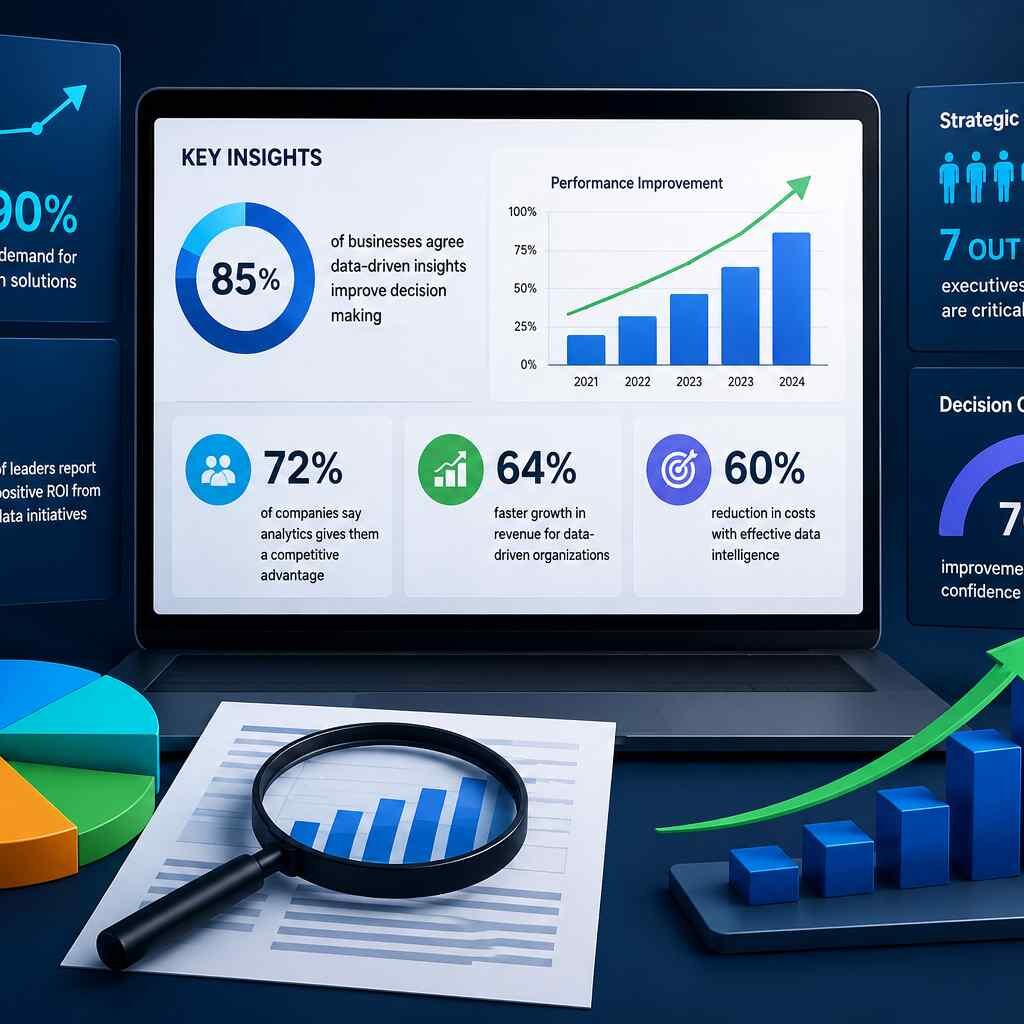
Data from industry research consistently demonstrates the value of competitor research:
Organizations conducting regular competitive research report outperforming competitors by significant margins. Companies with formal competitive intelligence programs achieve above-average revenue growth. Marketing professionals confirm that competitor research improves campaign performance. Business leaders identify competitive intelligence as critical to their business strategy.
Benefits of Competitor Research

Systematic competitor research delivers benefits across every business function.
Better Positioning
Understanding how competitors position themselves—their target audiences, value propositions, and brand messaging—enables identification of market gaps and distinctive positioning. Instead of being another competitor in a crowded field, organizations can position as the solution for specific problems facing specific customers.
Faster Product Development
Product teams conducting competitor research make faster decisions with greater confidence. They know which features to build, which to skip, and which require differentiation. This reduces development cycles and prevents building features that competitors already deliver effectively.
More Effective Marketing Campaigns
Marketing teams armed with competitor insights create campaigns highlighting genuine points of differentiation. They understand which competitor messaging works, which channels deliver results, and how to position their offerings more effectively.
Higher SEO Rankings
Competitor SEO analysis reveals keyword opportunities, content gaps, backlink opportunities, and technical optimizations that dramatically improve search rankings. In competitive verticals, understanding competitor SEO strategies often determines who captures search traffic.
Enhanced Customer Understanding
Competitors’ customers represent potential customers. Analyzing their feedback, complaints, and feature requests provides invaluable insight into what target audiences value and what problems they need to solve.
Better Pricing Decisions
Competitor pricing research reveals not just competitor charges but their pricing models, discount strategies, and perceived value. This information enables competitive pricing while maintaining healthy margins.
Lower Business Risk
Proactive competitor research identifies threats before they materialize. Whether a new market entrant, a competitor’s innovative feature, or shifting customer preferences, organizations can prepare responses rather than react in crisis mode.
Opportunity Identification
Competitor research uncovers opportunities that might otherwise go unnoticed—underserved market segments, customer needs competitors are not addressing, marketing channels they have overlooked, or business models they are not exploring.
Types of Competitors You Should Research
Most competitor research guides focus exclusively on direct competitors, missing crucial insights from other competitor types. Comprehensive research includes multiple competitor categories.
Direct Competitors
Direct competitors offer identical or highly similar products or services to the same target audience. They compete for the same customers with similar solutions.
Example: Uber and Lyft represent direct competitors—both offer ride-hailing services to the same customer base.
Research focus: Pricing, features, marketing messaging, customer satisfaction, market share, growth trajectory, and strategic moves.
Indirect Competitors
Indirect competitors offer different products or services that satisfy the same customer need or solve the same problem differently. Customers might choose them instead of your solution, even though their offering differs.
Example: Project management software faces indirect competition from collaborative documents like Notion, spreadsheets like Google Sheets, or physical task management tools like whiteboards and planners.
Research focus: Customer needs they satisfy, how they frame solutions differently, and what customers appreciate about their approach.
Replacement Competitors
Replacement competitors offer entirely different solutions that customers might choose instead of your product. They may solve the same core problem differently or offer alternatives that eliminate the need for your solution entirely.
Example: Video conferencing tools face replacement competition from in-person meetings, phone calls, or asynchronous video tools like Loom that reduce real-time video call requirements.
Research focus: Customer pain points with your solution, alternative problem-solving approaches, and trends that might reduce demand for your solution.
Emerging Competitors
Emerging competitors are new entrants or early-stage startups gaining traction in your market. They may be small now but could grow quickly and disrupt established players.
Example: An AI-driven design tool emerging as a competitor to established design software like Adobe Creative Cloud.
Research focus: Go-to-market strategy, technology stack, funding, product innovation, customer acquisition strategy, and growth rate.
Local Competitors
Local competitors operate in specific geographic regions. They may have advantages in local market knowledge, relationships, or cultural understanding.
Example: Regional banks competing with national banks in specific geographic areas.
Research focus: Local market positioning, community engagement, localized marketing, and customer loyalty.
Global Competitors
Global competitors operate across multiple countries or globally. They typically have greater resources, broader distribution networks, and ability to leverage economies of scale.
Example: Amazon as a global competitor to local retailers and e-commerce platforms in every country they serve.
Research focus: Global market share, expansion plans, localization strategies, resource allocation, and competitive positioning across markets.
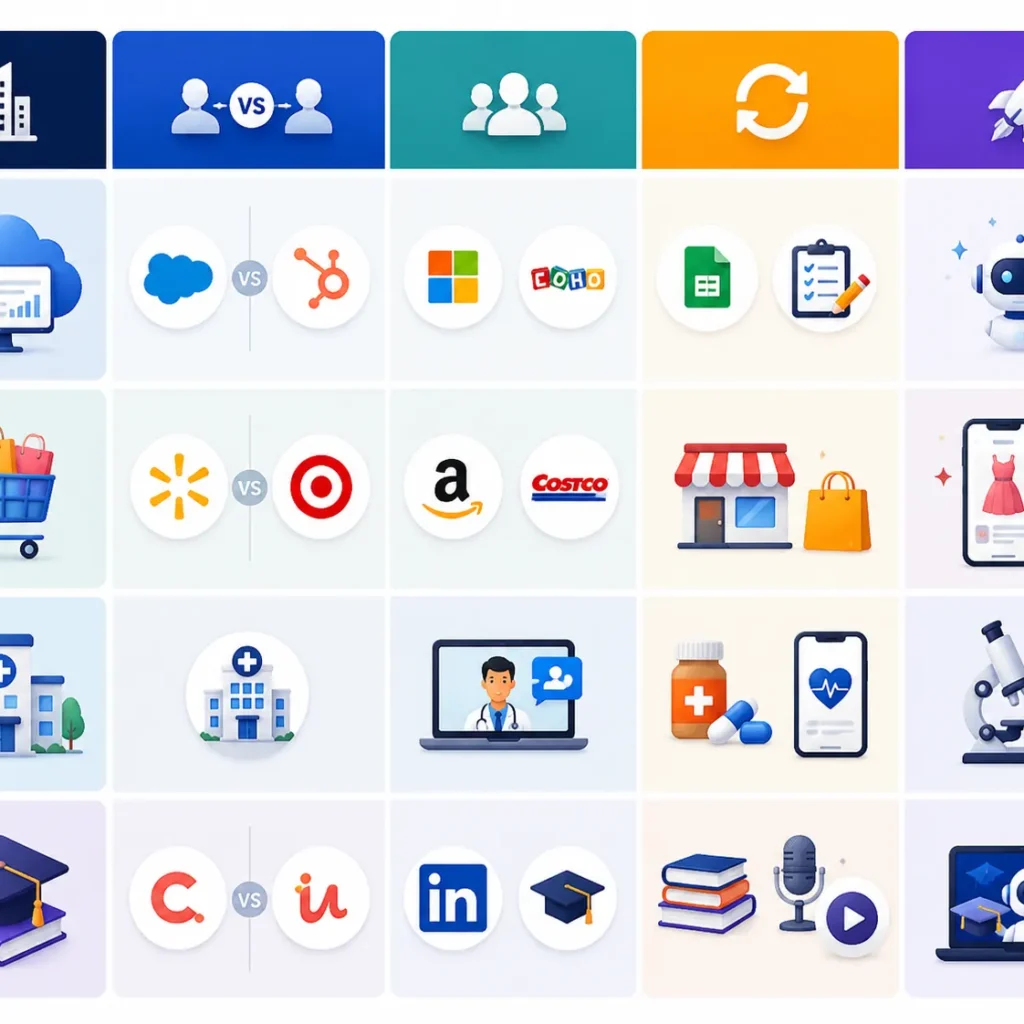
Industry Examples
| Industry | Direct Competitor | Indirect Competitor | Replacement Competitor | Emerging Competitor |
|---|---|---|---|---|
| SaaS CRM | Salesforce vs HubSpot | Microsoft Dynamics, Zoho | Spreadsheets, manual tracking | AI-powered CRM startups |
| Retail | Walmart vs Target | Amazon, Costco | Direct-to-consumer brands | AI-personalized shopping apps |
| Healthcare | Traditional hospitals | Telemedicine platforms | Home remedies, prevention apps | AI diagnostic startups |
| E-learning | Coursera vs Udemy | LinkedIn Learning, degree programs | Books, podcasts, YouTube tutorials | AI-personalized learning platforms |
The Complete Competitor Research Framework
This proprietary framework provides a systematic approach to competitor research applicable regardless of industry, team size, or budget. Each step builds upon the previous one, creating comprehensive competitive understanding.
Step 1: Identify Your Competitors
Before researching competitors, you must know who they are. Use multiple methods to build a comprehensive list:
Google searches: Search for your product category, problem-focused keywords, and customer intent keywords. Analyze organic and paid search results for consistent competitors.
Industry directories: Explore G2, Capterra, Crunchbase, and AngelList for companies in your category. Review category rankings and user comparisons.
Social media: Search LinkedIn for companies in your space. Monitor Reddit discussions about solutions. Follow industry conversations on X and other platforms.
Customer feedback: Ask customers what alternatives they considered or currently use. Survey prospects about competitors they evaluated.
Review platforms: Search G2, Trustpilot, and Google Reviews for businesses in your category. Note competitors mentioned frequently.
Competitor tools: Use Semrush or Ahrefs to identify competitors ranking for your target keywords. Analyze competitor websites for mentioned alternatives.
Expert recommendations: Consult industry analysts, consultants, and influencers for competitive landscape perspective.
Priority tip: Create a master list of all identified competitors, then prioritize based on relevance, size, and strategic importance. Tier competitors by their threat level and market position.
Step 2: Categorize Your Competitors
Once identified, categorize competitors by type and priority tier:
Tier 1: Core Competitors: Direct competitors of similar size and market position. These represent your primary competitive threat.
Tier 2: Aspirational Competitors: Market leaders you benchmark against. These set industry standards and customer expectations.
Tier 3: Niche Competitors: Smaller competitors serving specific segments. These may have deep expertise in particular areas.
Tier 4: Emerging Competitors: Startups or new entrants with growth potential. These may become significant competitors quickly.
Step 3: Collect Business Information
Gather foundational information about each competitor:
Company basics: Name, founding year, headquarters location, and legal structure.
Financial data: Annual revenue (estimated if private), funding history, investors, valuation, and key financial metrics including growth rate and profitability.
Operational scale: Employee count, recent hiring trends, office locations, global presence, and organizational structure.
Strategic information: Mission and vision statements, core values, unique selling proposition, strategic priorities from press releases and interviews, and recent acquisitions or divestitures.
Technology stack: Tools and platforms used, identified through BuiltWith or Wappalyzer analysis. Key vendors and technology partners.
Human capital: Leadership team profiles, executive backgrounds, key employee expertise, and culture indicators from employee reviews and social media.
Step 4: Analyze Products and Services
Conduct detailed product analysis:
Product portfolio: All products, services, and offerings. Product versions and tiers. Bundled offerings and packages.
Feature analysis: Features and capabilities with detailed comparison matrix. Feature depth and quality. Feature availability by package or tier. Unique features and differentiation points.
Product development: Product roadmap showing upcoming features. Recent product launches and updates. Release notes history. Patent portfolio. Product lifecycle stage.
Technical infrastructure: API availability and documentation quality. Integrations with third-party tools. Technology platform and architecture. Security certifications. Performance metrics and uptime.
Customer experience: User interface quality and design. User experience analysis. Mobile app availability and quality. Customer onboarding process. Support availability across channels.
Step 5: Analyze Pricing Strategy
Pricing represents one of the most consequential competitive decisions:
Pricing models: Subscription (monthly, annual), usage-based, one-time purchase, freemium, or enterprise custom pricing.
Specific prices: Prices for each package or tier. Price changes over time. Discounts and promotional offers. Volume-based pricing. Prepayment discounts.
Package analysis: Features included in each package. User limits and restrictions. Usage limits and thresholds. Add-ons and optional features.
Financial policies: Contract terms and commitment requirements. Refund policy and money-back guarantee. Payment terms and billing frequency. Cancellation process. Implementation and setup fees.
Step 6: Analyze Marketing Strategy
Understand how competitors attract and convert customers:
Target audience: Customer segments they target. Demographic, psychographic, and firmographic targeting. Priority customer segments.
Brand positioning: Brand positioning relative to competitors. Core value proposition. Brand voice and personality. Taglines and slogans.
Marketing channels: Channels used including search, social, email, events, and partnerships. Channel mix and resource allocation. Advertising spend estimates.
Content marketing: Content strategy and themes. Content formats used. Thought leadership positioning. Case studies and customer success stories.
Partnerships: Affiliate programs. Strategic partnerships. Co-marketing arrangements. Channel partner programs.
Step 7: Analyze SEO Strategy
Search engine optimization reveals competitors’ organic growth strategy:
Keyword gap analysis: Keywords competitors rank for that you do not. Keyword difficulty and search volume analysis. High-value keyword opportunities. Topics requiring content creation.
Content gap analysis: Topics competitors cover that you do not. Content formats competitors use. Content depth and quality comparison. Content frequency and cadence.
Backlink analysis: Competitor backlink profiles. High-authority referring domains. Link building strategies. Unlinked mentions of your brand or competitors.
Technical SEO: Site speed and performance comparison. Mobile optimization analysis. Schema markup usage. Site architecture and navigation. Indexing and crawlability.
Internal linking: How competitors structure internal links. Hub and spoke content architecture. Page authority distribution strategies.
Featured snippets and SGE visibility: Featured snippet ownership. AI Overview visibility. Voice search optimization.
EEAT analysis: Experience, Expertise, Authoritativeness, Trustworthiness signals. Content author credentials. Brand authority and trust signals.
Step 8: Analyze Customer Feedback
Customer feedback analysis provides direct insight into competitor strengths and weaknesses:
Review platforms: Google Reviews, Trustpilot, G2, Capterra, App Store, Google Play Store, Amazon customer reviews.
Social media: Comments on competitor social media posts. Mentions on X, LinkedIn, Reddit. YouTube comments.
Community platforms: Reddit discussions and AMAs. Quora questions and answers. Slack communities. Discord servers. Facebook Groups.
Extract insights about: Customer pain points and frustrations. Feature requests and desired improvements. Common complaints and issues. Buying triggers and decision drivers. Customer language and terminology. Use cases and applications. Feature gaps. Customer satisfaction levels. Loyalty and churn indicators.
Step 9: Conduct SWOT Analysis
Create comprehensive SWOT analysis for each major competitor:
Strengths: What are they good at? Strong brand recognition. Superior technology. Loyal customer base. Efficient operations. Strong financial position. Talented team.
Weaknesses: Where are they vulnerable? Customer service issues. Outdated technology. Market positioning problems. Pricing misalignment. Limited geographic presence. Lack of innovation.
Opportunities: What could they exploit? Growing market segments. New product categories. Geographic expansion. Technology improvements. Changing customer preferences.
Threats: What could damage them? New market entrants. Changing regulations. Technology disruption. Economic conditions. Changing customer preferences.
Step 10: Create Action Plan
Transform insights into action:
Immediate actions: Quick wins within weeks. Pricing adjustments. Marketing message refinements. Website improvements.
Short-term strategy: Features to develop within six months. Content to create. Marketing campaigns to launch. Customer segments to target.
Long-term strategy: New market opportunities. Product innovation directions. Strategic partnerships. Business model evolution.
Monitoring and evaluation: Key metrics to track. Research cadence. Early warning indicators. Competitive response triggers.
Step-by-Step Competitor Research Process
Finding Competitors
Google Search: Search for your core product category. Search for problem-focused keywords. Analyze search results for organic and paid listings. Note which competitors appear consistently. Search for best product category and top product category.
LinkedIn: Search for companies in your industry. Analyze job postings for insight into competitor priorities. Follow competitor employees and executives. Join industry groups to see company mentions. Monitor competitor hiring trends.
Directories: Explore G2 categories and comparisons. Review Capterra lists and user reviews. Search Crunchbase for company information and funding. Browse AngelList for startup competitors. Monitor Product Hunt for emerging products.
Community platforms: Monitor Reddit discussions in relevant subreddits. Follow Quora questions about solutions. Join Facebook Groups for customers in your space. Participate in Slack communities and Discord servers.
Expert recommendations: Consult industry analysts and consultants. Follow influencers and thought leaders. Engage with consultants in your space.
Collect Company Information
Basic information: Company name, URL, logo. Year founded and locations. Industry classification.
Financial information: Annual revenue. Funding history and investors. Valuation. Key financial metrics including growth rate and profitability.
Operational information: Employee count and hiring trends. Office locations and global presence. Organizational structure. Technology stack. Key vendors and partners.
Strategic information: Mission and vision statements. Core values. Unique selling proposition. Strategic priorities. Recent acquisitions or divestitures.
Human capital: Leadership team and executive profiles. Key employees and backgrounds. Culture indicators.
Product Research
Product portfolio: All products, services, and offerings. Product versions and tiers. Bundled offerings and packages.
Feature analysis: Features and capabilities with comparison matrix. Feature depth and quality. Feature availability by tier. Unique features and differentiation.
Product development: Product roadmap. Recent product launches and updates. Release notes history. Patent portfolio. Product lifecycle stage.
Technical infrastructure: API availability and documentation. Integrations with third-party tools. Technology platform and architecture. Security certifications. Performance metrics.
Customer experience: User interface quality. User experience analysis. Mobile app availability. Customer onboarding. Support availability.
Pricing Research
Pricing models: Subscription, usage-based, one-time purchase, freemium, enterprise custom pricing.
Pricing analysis: Specific prices for each package. Price changes over time. Discounts and promotional offers. Volume-based pricing. Prepayment discounts.
Package analysis: Features included in each package. User limits and restrictions. Usage limits and thresholds. Add-ons and optional features.
Financial policies: Contract terms. Refund policy. Payment terms. Cancellation process. Implementation fees.
Website Research
User experience: Navigation structure. Information architecture. Search functionality. Page load speed. Mobile responsiveness.
Landing pages: Homepage design and messaging. Product landing pages. Category and solution pages. Pricing page design. Demo contact page conversion.
Conversion optimization: Calls-to-action placement and design. Lead magnets. Email capture forms. Free trial sign-up process. Demo request process.
Trust signals: Customer testimonials. Case studies. Awards and certifications. Press mentions. Security badges. Enterprise logos.
Content experience: Blog and resource center. Video content. Podcasts. Webinars. Interactive tools.
Content Research
Content audit: Blog posts topics, frequency, quality, engagement. Case studies industries, use cases, results. Whitepapers and research reports. Ebooks and guides. Video content. Podcasts. Webinars.
Content strategy analysis: Content themes and topics. Content length and depth. Content quality and credibility. Content cadence. Content promotion strategy. Content syndication.
Thought leadership: Industry research and reports. Expert contributions. Speaking engagements. Media mentions. LinkedIn thought leadership.
Visual content: Design quality and consistency. Infographics. Photography. Video production quality. Brand consistency.
SEO Competitor Research
Keyword gap analysis: Keywords competitors rank for but you do not. Keyword difficulty and search volume. Prioritization by business value. Content calendar creation. Ranking tracking.
Content gap analysis: Topics competitors cover that you have missed. Content depth and quality. Content formats competitors use effectively. Search intent alignment. Buyer journey mapping.
Backlink analysis: Competitor backlink profiles. High-authority referring domains. Link building strategies. Unlinked brand mentions. Broken link building opportunities.
Internal linking analysis: Site architecture mapping. Internal linking patterns. Content silos and topic clusters. Link equity distribution.
Technical SEO comparison: Site speed and performance. Mobile optimization. Schema markup. Site architecture. Indexing and crawlability.
SGE and AI visibility: AI Overview presence. Featured snippet ownership. Voice search optimization. AI impact on visibility.
Social Media Competitor Research
Platform-Specific Analysis
LinkedIn Analysis: Company page content and posting frequency. Employee engagement and advocacy. Thought leadership from executives. Job postings and hiring signals. Follower growth. Content engagement metrics.
X Analysis: Posting frequency and timing. Content mix including text, images, video, links. Engagement rates including likes, retweets, comments. Hashtag strategy. Audience interactions. Brand personality.
YouTube Analysis: Channel performance metrics. Video categories and topics. Production quality. View counts and engagement. Subscriber growth. Comments analysis.
Instagram Analysis: Visual content quality and themes. Posting frequency and timing. Stories and Reels usage. Engagement rates. Hashtag strategy. Influencer collaborations.
Facebook Analysis: Page content and posting frequency. Community engagement. Event promotion. Ad library analysis. Group participation. Reviews and ratings.
TikTok Analysis: Content style and trends. Posting frequency and timing. Viral content analysis. Engagement patterns. Platform-specific brand personality.
Key Social Media Metrics
For each competitor and platform track:
Follower or subscriber count: Total audience size.
Posting frequency: Publication cadence.
Engagement rate: Interactions as audience percentage.
Average engagement per post: Likes, comments, shares.
Content themes: Topics and formats performing best.
Community building: Engagement with followers.
Response time: Speed of comment and message replies.
Brand sentiment: Positive versus negative sentiment.
Growth rate: Audience change over time.
Top-performing content: Highest engagement content.
Tools for Social Media Competitive Research
BuzzSumo: Content analysis and influencer identification.
Sprout Social: Social listening and competitive benchmarking.
Metricool: Cross-platform analytics.
Social Blade: Social media growth tracking.
Brandwatch: Social listening and sentiment analysis.
Customer Research Through Competitors
Review Platforms
Google Reviews: Overall rating and review volume. Common themes in positive reviews. Frequent complaints in negative reviews. Response to negative reviews. Customer language.
Trustpilot: TrustScore and rating distribution. Common compliments and complaints. Response patterns. Trends over time.
G2 and Capterra: Detailed feature ratings. Pros and cons from users. Use cases shared. Integration feedback. Customer support experiences. Feature requests.
App Store and Google Play: App ratings and downloads. App store optimization strategy. Feature feedback. Bug reports. User expectations.
Amazon Customer Reviews: Product-specific feedback. Packaging and shipping feedback. Product quality. Value assessment.
Social Listening
Reddit Analysis: Subreddit discussions about competitors. Product comparisons. Customer frustrations. Feature requests. Buying advice conversations.
Quora Analysis: Questions about competitor products. Comparisons and alternatives. Expert opinions. Implementation challenges.
LinkedIn Comments: Employee comments about company. Partner and client testimonials. Industry reaction to company news.
Customer Review Extraction
Pain points: Most frequent complaints. Product limitations. Customer service failures. Pricing frustrations. Implementation challenges.
Feature requests: Features customers ask for. Missing elements. Problems customers need to solve.
Buying triggers: What prompted competitor selection. What customers sought. What sold them.
Customer language: Problem descriptions. Feature terminology. Resonant language patterns.
Use cases: Customer applications. Problems solved. Implementation scenarios.
Desired outcomes: Customer success definition. Valued metrics. Business outcomes sought.
Competitor Positioning Analysis
Mission and Vision Analysis
Company purpose and values. Change the organization aims to create. How they frame their mission.
Target Audience Definition
Customer segments targeted. Demographic, psychographic, firmographic targeting. Priority customer segments. Needs addressed.
Unique Selling Proposition
Differentiation factors. Claims of superiority. Core differentiators. Unique value framing.
Brand Messaging
Core brand themes. Primary and secondary messages. Emotional versus rational appeal. Problem-solution framing. Value propositions by segment.
Category Positioning
Category claims. Positioning as leader, challenger, or niche player. Positioning relative to market leaders. Category creation versus convention following.
Positioning Map Creation
Identify Key Dimensions: Determine dimensions that matter most to customers including price, features, ease of use, and customer service.
Plot Competitors: Place each competitor on the map based on these dimensions.
Identify Gaps: Locate opportunities for differentiated positioning.
Define Your Position: Determine where to position for maximum differentiation.
Example Positioning Map Dimensions
Price versus Quality. Features versus Ease of Use. Enterprise versus SMB Focus. Specialization versus Generalization. Innovation versus Reliability.
Competitor Feature Comparison
Comparison Matrix Components
Core Features: Feature availability, depth, sophistication, limitations, accessibility by package.
User Experience Features: Interface quality, mobile experience, accessibility, language support.
Integration Features: Third-party integrations, API capabilities, ecosystem partnerships.
Technical Features: Security, performance specifications, scalability, data export.
Business Features: Pricing models, support channels, implementation, training, analytics.
Differentiating Features: Unique features, table stakes versus differentiators, customer-desired features.
Feature Gaps Identification
Features competitors have that you do not. Features you have that competitors do not. Customer-desired features no one provides. Features requiring improvement or differentiation.
Competitor SWOT Analysis
Strengths Analysis
Brand recognition advantages. Technology superiority. Customer loyalty. Operational efficiency. Financial position. Talent advantages.
Weaknesses Analysis
Service issues. Technology obsolescence. Positioning problems. Pricing misalignment. Geographic limitations. Innovation gaps.
Opportunities Analysis
Growing segments. New product categories. Geographic expansion. Technology improvements. Changing preferences.
Threats Analysis
New entrants. Regulatory changes. Technology disruption. Economic conditions. Preference shifts.
Competitor Benchmarking
Key Performance Indicators
Traffic metrics: Website visits, unique visitors, page views, bounce rate.
SEO metrics: Keyword rankings, organic traffic, backlinks, domain authority.
Revenue metrics: Annual revenue, growth rate, market share.
Social metrics: Follower counts, engagement rates, content reach.
Conversion metrics: Lead generation, trial sign-ups, customer acquisition.
Customer metrics: Satisfaction scores, retention rates, Net Promoter Score.
Benchmarking Implementation
Define your benchmarks. Identify competitor performance. Compare against your own metrics. Identify performance gaps. Set improvement targets. Track changes over time.
Best Competitor Research Tools
SEO Tools
Semrush: Comprehensive SEO analysis, keyword research, competitor analysis. Pricing starts at $119.95 per month. Best for all-in-one SEO competitor research.
Ahrefs: Backlink analysis, keyword research, content gap analysis. Pricing starts at $99 per month. Best for backlink and content analysis.
SE Ranking: All-in-one SEO platform with competitor research. Pricing starts at $39 per month. Best for budget-conscious organizations.
Moz: SEO tools including competitor analysis. Pricing starts at $99 per month. Best for link research and domain authority comparison.
Similarweb: Digital intelligence platform for competitive analysis. Pricing available upon request. Best for traffic analysis and market share data.
Product Research Tools
Product Hunt: Emerging product discovery. Free. Best for identifying new competitors.
BuiltWith: Technology stack analysis. Free with premium options. Best for understanding competitor technology infrastructure.
Wappalyzer: Website technology identification. Free with premium options. Best for quick technology stack analysis.
Customer Research Tools
G2: Customer reviews and software comparisons. Free. Best for customer feedback on software products.
Trustpilot: Customer reviews across industries. Free with premium options. Best for reputation analysis.
Reddit: Community discussions and customer insights. Free. Best for unfiltered customer opinions.
Social Media Tools
BuzzSumo: Content analysis and influencer identification. Pricing starts at $99 per month. Best for content performance analysis.
Sprout Social: Social listening and competitive benchmarking. Pricing starts at $249 per month. Best for comprehensive social media analysis.
Metricool: Cross-platform social media analytics. Free with premium options. Best for social media performance tracking.
AI Tools
ChatGPT: AI-powered analysis and summarization. Free with premium options. Best for quick analysis and content generation.
Claude: Advanced AI analysis capabilities. Free with premium options. Best for detailed research analysis.
Gemini: Google’s AI assistant with research capabilities. Free. Best for research queries.
Perplexity: AI-powered search and research. Free with premium options. Best for research queries.
NotebookLM: Research organization and analysis. Free. Best for organizing research findings.
Using AI for Competitor Research
AI Research Applications
Research acceleration: AI speeds competitor identification, data collection, and initial analysis.
Summarization: AI summarizes competitor websites, press releases, and financial documents.
Feature comparison: AI creates detailed feature comparison matrices from product descriptions.
SWOT creation: AI generates SWOT analyses from collected data.
Positioning analysis: AI analyzes positioning statements and identifies differentiation opportunities.
Content gap analysis: AI compares content portfolios and identifies gaps.
Pricing comparison: AI analyzes pricing models and identifies patterns.
Sentiment analysis: AI analyzes customer reviews for sentiment patterns.
Ready-to-Use ChatGPT Prompts for Competitor Research
- Identify direct competitors in my industry based on this product description.
- Create a comprehensive list of indirect competitors for my solution.
- Analyze this competitor’s website and summarize their value proposition.
- Create a SWOT analysis based on this competitor’s public information.
- Compare pricing models across these five competitors.
- Identify content gaps between my website and this competitor.
- Analyze the featured snippets this competitor ranks for.
- Summarize customer reviews and identify common complaints.
- Create a positioning map based on these competitor descriptions.
- Identify backlink opportunities from this competitor’s profile.
- Analyze this competitor’s social media strategy.
- Compare product features across these competitors.
- Identify keyword opportunities based on competitor rankings.
- Create a content strategy to address competitor content gaps.
- Analyze this competitor’s brand messaging.
- Identify customer pain points from competitor reviews.
- Suggest pricing strategy improvements based on competitor analysis.
- Create a competitive response strategy for this competitor move.
- Analyze industry trends from competitor activity patterns.
- Generate a competitor research report summary.
Competitor Research Templates
Available Downloadable Resources
Competitor Research Spreadsheet: Master tracker for all competitor information including company details, products, pricing, marketing, and SEO data.
SWOT Template: Structured format for strength, weakness, opportunity, and threat analysis for each competitor.
Feature Matrix: Comparison grid for feature-by-feature analysis across competitors.
Pricing Comparison Sheet: Detailed comparison of pricing models, packages, and financial policies.
Customer Review Tracker: System for capturing and categorizing customer feedback insights.
Content Gap Worksheet: Template for identifying content opportunities.
SEO Audit Template: Checklist for technical and content SEO analysis.
Positioning Canvas: Framework for analyzing and defining market positioning.
Real Competitor Research Examples
Example 1: Apple versus Samsung
Research focus: Product features, pricing, brand positioning, innovation cycles.
Key findings: Apple maintains premium positioning through ecosystem lock-in and superior customer experience. Samsung competes through product variety, hardware innovation, and competitive pricing across segments.
Strategic implications: Competitors should understand whether to compete on innovation, price, or ecosystem experience.
Example 2: Netflix versus Amazon Prime
Research focus: Content libraries, pricing strategy, original content, user experience.
Key findings: Netflix invests heavily in original content as primary differentiator. Amazon Prime bundles video with shopping benefits as value anchor.
Strategic implications: Competitors should evaluate subscription model, content investment strategy, and bundling opportunities.
Example 3: Nike versus Adidas
Research focus: Brand positioning, celebrity partnerships, product innovation, sustainability.
Key findings: Nike leads in brand strength and athlete endorsements. Adidas competes through style, celebrity partnerships, and sustainability positioning.
Strategic implications: Competitors should determine whether to compete on performance, style, or brand affiliation.
Example 4: HubSpot versus Salesforce
Research focus: Target audience, pricing model, ecosystem, feature depth.
Key findings: Salesforce targets enterprises with comprehensive, customizable CRM. HubSpot targets SMBs and mid-market with user-friendly inbound marketing and sales tools.
Strategic implications: Competitors should choose between enterprise depth and SMB accessibility.
Example 5: Canva versus Adobe Express
Research focus: Target audience, ease of use, feature depth, pricing.
Key findings: Canva dominates with approachable design tools for non-designers. Adobe Express offers professional capabilities in an accessible interface.
Strategic implications: Competitors should compete on design accessibility versus professional capabilities.
Common Competitor Research Mistakes
Copying Competitors
Duplicating competitor strategies ignores unique organizational strengths and misses differentiation opportunities. Research should inform strategy, not copy it.
Researching Once
Competitive landscapes evolve continuously. Research represents an ongoing process, not a one-time project. Regular updates prevent outdated intelligence.
Ignoring Customer Reviews
Customer feedback directly reveals competitor strengths and weaknesses. Ignoring reviews means missing valuable market intelligence.
Ignoring Pricing
Pricing strategy significantly impacts market position and customer acquisition. Competitor pricing analysis provides essential market intelligence.
Only Comparing Features
Competition extends beyond features to include customer experience, brand trust, relationships, and ecosystem value. Feature-only comparisons provide incomplete intelligence.
Ignoring Indirect Competitors
Indirect competitors can capture market share through different approaches. Comprehensive research includes all competitor types.
Using Outdated Data
Competitor intelligence deteriorates rapidly in fast-moving markets. Data currency directly impacts strategic decision quality.
Ignoring AI Insights
AI tools dramatically accelerate and enhance research capabilities
Add a Comment