

Table of Contents
You just launched a new product. Your ad spend is high, your content is polished, but conversions remain flat. The culprit isn’t your product or your messaging—it’s your audience targeting.
Most marketing and sales teams use the terms Buyer Persona vs ICP vs Target Audience, and Buyer Persona interchangeably. This confusion leads to wasted budget, misaligned sales efforts, and campaigns that fail to resonate.
Understanding the distinct roles of these three concepts is the foundation of any successful go-to-market (GTM) strategy. This comprehensive guide breaks down exactly what each term means, how they differ, and how to build a strategic framework that turns audience insights into measurable revenue growth.
The Core Definitions: What Are We Actually Talking About?
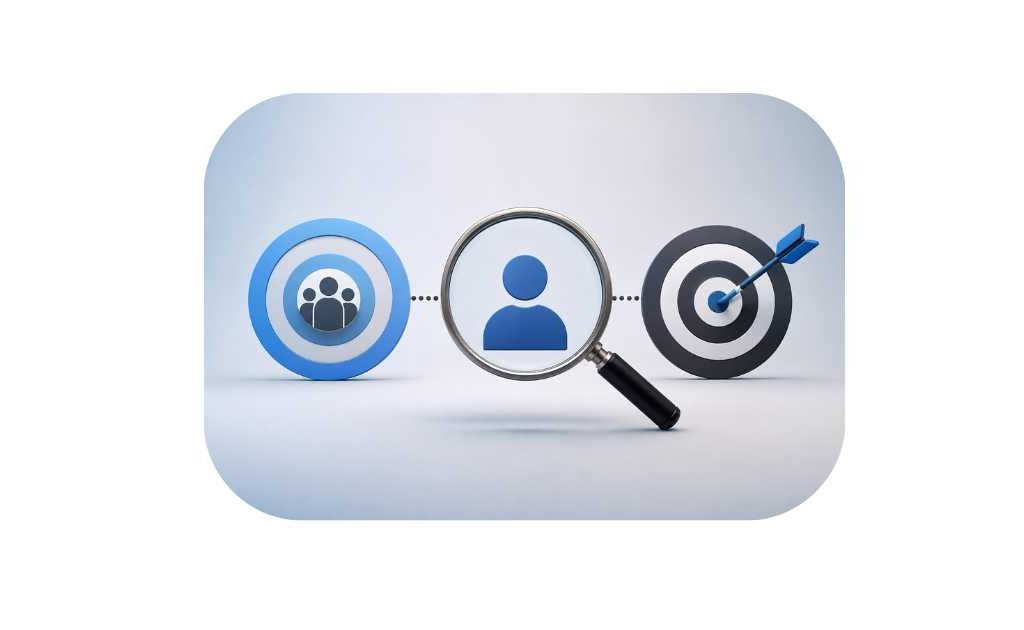
To build a robust strategy, we must first establish clear, universally understood definitions. Here is the foundational breakdown of each concept.
1. Target Audience: Who Can Buy From You
A target audience is the broadest segment of consumers who could potentially benefit from your product or service. It is defined by general demographic, geographic, and psychographic characteristics.
Think of your target audience as the “ocean” of potential buyers. It represents your Total Addressable Market (TAM) or Serviceable Available Market (SAM). At this stage, you are not looking at specific companies or individual decision-makers; you are looking at macro-level trends and broad consumer behaviors.
Key Characteristics:
- Scope: Broad and inclusive.
- Data Type: Primarily demographic (age, gender, location) and psychographic (interests, lifestyle).
- Primary Goal: Brand awareness, top-of-funnel reach, and market sizing.
- Who Uses It: Brand marketers, social media managers, and PR teams.
2. Ideal Customer Profile (ICP): Who Should Buy From You
An Ideal Customer Profile (ICP) is a detailed description of the type of company or organization that derives immense value from your product while simultaneously providing high lifetime value (LTV) to your business.
Unlike the target audience, the ICP is highly specific and usually applies to B2B (Business-to-Business) or high-ticket B2C models. It focuses on firmographic, technographic, and behavioral data at the organizational level. If your target audience is the ocean, your ICP is the specific “school of fish” you want to catch.
Key Characteristics:
- Scope: Narrow and highly focused (Account-level).
- Data Type: Firmographic (industry, revenue, company size), technographic (current software stack), and behavioral (buying triggers).
- Primary Goal: Lead qualification, sales efficiency, and resource allocation.
- Who Uses It: Sales development reps (SDRs), account-based marketing (ABM) teams, and sales leaders.
3. Buyer Persona: Who Makes the Buying Decision
A buyer persona is a semi-fictional, detailed representation of the individual human beings who make purchasing decisions within your ICP. It focuses on the psychological and behavioral traits of the people you are trying to convince.
While the ICP tells you which companies to target, the buyer persona tells you how to talk to the humans inside those companies. It includes their job titles, daily challenges, motivations, fears, and information consumption habits. If the ICP is the school of fish, the Buyer Persona vs ICP vs Target Audience is the specific fish you are trying to hook.
Key Characteristics:
- Scope: Individual-level (Human-centric).
- Data Type: Qualitative and psychographic (pain points, goals, objections, communication preferences).
- Primary Goal: Message resonance, content creation, and conversion optimization.
- Who Uses It: Content marketers, product marketers, copywriters, and UX designers.
The Ultimate Comparison: Side-by-Side Breakdown
To eliminate any lingering confusion, here is a direct comparison of how these three concepts operate within your organization.
| Feature | Target Audience | Ideal Customer Profile (ICP) | Buyer Persona |
|---|---|---|---|
| Primary Focus | Broad market segments | Specific companies/organizations | Individual decision-makers |
| Level of Specificity | Low (Macro) | High (Account-level) | Very High (Individual-level) |
| Core Data Points | Age, location, interests | Revenue, industry, tech stack | Job title, pain points, goals |
| Main Objective | Awareness & Reach | Qualification & Efficiency | Resonance & Conversion |
| Typical User | Brand & Social Media Teams | Sales & ABM Teams | Content & Product Marketing |
| Creation Method | Market research & analytics | Customer data & CRM analysis | Customer interviews & surveys |
The “Company vs. Human” Rule of Thumb
If you ever get stuck, apply this simple rule: The ICP describes the company; the Buyer Persona describes the human inside that company.
You cannot have a Buyer Persona vs ICP vs Target Audience, and you cannot have an effective ICP without understanding the broader target audience. They are not mutually exclusive; they are a hierarchy.
The Strategic Funnel: How They Work Together
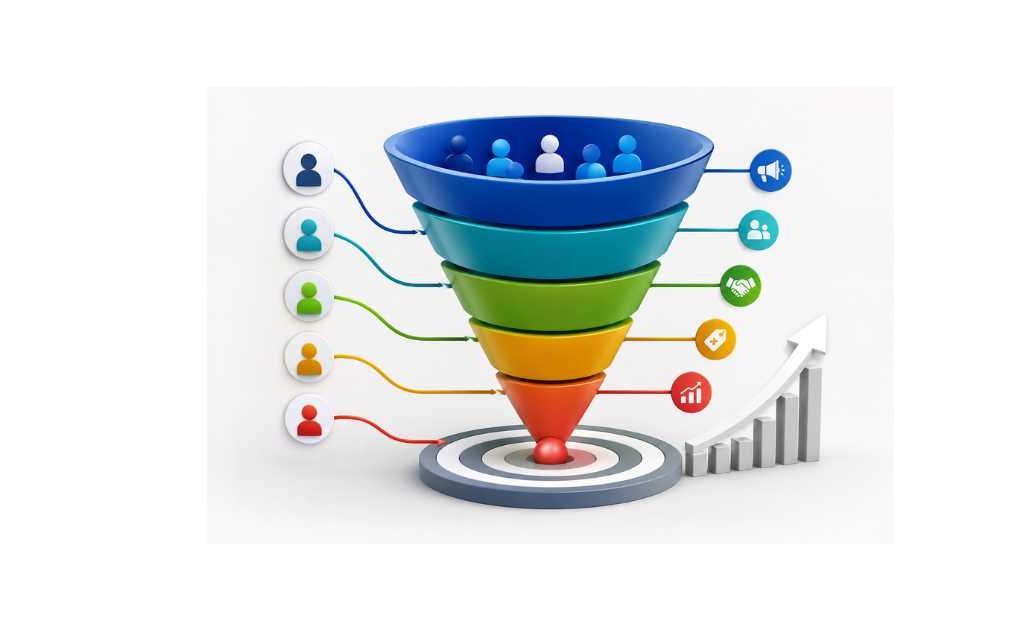
Understanding the definitions is only half the battle. The real magic happens when you integrate these concepts into a cohesive “Strategic Funnel.” This funnel dictates how you move a prospect from initial awareness to closed-won deal.
Layer 1: Market Mapping (Target Audience)
At the top of the funnel, you cast a wide net. You use your target audience parameters to run broad awareness campaigns, sponsor industry events, and publish thought leadership content. The goal here is not immediate conversion, but visibility. You are letting the market know you exist.
Layer 2: Strategic Focus (ICP)
As leads enter your ecosystem, you apply your ICP filters. Marketing automation tools and SDRs score these leads based on firmographic data. Does this company have 50-200 employees? Are they in the fintech space? Do they use a competing legacy tool? If yes, they match your ICP. Resources are now concentrated on these high-fit accounts.
Layer 3: Personal Engagement (Buyer Persona)
Once an ICP-matched account is identified, you deploy your buyer personas. You aren’t just sending a generic pitch to “[email protected].” You are crafting specific messaging for “VP of Sales Sarah” (who cares about ROI and team efficiency) and “IT Director David” (who cares about security and integration).
The Handoff Process:
- Marketing uses the Target Audience to generate broad awareness.
- Marketing/Sales Ops uses the ICP to filter and score leads.
- Sales/Content Teams use Buyer Persona vs ICP vs Target Audience to personalize outreach and close deals.
Step-by-Step: How to Create Your Framework

Building this framework requires a mix of quantitative data analysis and qualitative human research. Follow this step-by-step guide to build your Buyer Persona vs ICP vs Target Audience from scratch.
Phase 1: Defining Your Target Audience
Your target audience is your starting point. You need to understand the macro-environment of your market.
Step 1: Analyze Your Total Addressable Market (TAM)
Use industry reports (Gartner, Forrester, Statista) to determine the total number of potential buyers in your space.
Step 2: Identify Broad Demographics and Psychographics
Map out the general characteristics of the people who experience the problem your product solves.
- Demographics: Age range, gender, income level, education, geographic location.
- Psychographics: Values, interests, lifestyle choices, and general behaviors.
Step 3: Assess Market Accessibility
Not all target audiences are reachable. Evaluate which segments you can actually reach with your current budget and channels.
Phase 2: Building Your Ideal Customer Profile (ICP)
Now, we narrow down from the broad audience to the specific companies that will drive your revenue.
Step 1: Analyze Your Best Current Customers
Pull data from your CRM (Salesforce, HubSpot). Look at your top 20% of customers based on Lifetime Value (LTV), retention rate, and profitability. What do they have in common?
Step 2: Define Firmographic Parameters
Establish the hard criteria for your ICP.
- Industry/Niche: (e.g., B2B SaaS, Healthcare, Manufacturing)
- Company Size: (e.g., 50-500 employees)
- Annual Revenue: (e.g., $10M – $100M)
- Geography: (e.g., North America, EMEA)
Step 3: Map Technographics and Behavioral Signals
What tools are they currently using? (e.g., “Uses Salesforce but not Marketo”). What behavioral triggers indicate they are ready to buy? (e.g., “Recently raised Series B funding,” “Hiring for VP of Marketing”).
Step 4: Create an ICP Scorecard
Assign point values to different criteria. A company that matches all your core firmographics gets 100 points. This scorecard helps sales and marketing objectively qualify leads.
Phase 3: Developing Buyer Persona vs ICP vs Target Audience
With your ICP locked in, it’s time to humanize the data. You need to understand the individuals driving the purchase.
Step 1: Conduct Customer Interviews
Quantitative data tells you what is happening; qualitative data tells you why. Interview 10-15 of your best customers. Ask them:
- What was your life like before you found our product?
- What specific problem were you trying to solve?
- What other solutions did you try, and why did they fail?
- Who else was involved in the buying decision?
Step 2: Identify Common Pain Points and Goals
Look for patterns in your interview transcripts. Group these into core themes. For example, “Lack of time,” “Fear of making a bad decision,” or “Desire for career advancement.”
Step 3: Map the Information Journey
Where do these individuals go for information? Do they listen to specific podcasts? Read niche newsletters? Attend specific conferences? This dictates your content and distribution strategy.
Step 4: Draft the Persona Profile
Create a one-page document for each persona. Include:
- Name and Photo: (e.g., “Marketing Mary”)
- Job Title and Demographics:
- Core Responsibilities:
- Top 3 Pain Points:
- Primary Goals and KPIs:
- Common Objections: (e.g., “It’s too expensive,” “Implementation will take too long”)
- Preferred Channels:
Real-World Examples Across Industries
To truly grasp how these concepts apply in the real world, let’s look at three distinct business models.
Example 1: B2B SaaS (Project Management Tool)
- Target Audience: Knowledge workers, team leaders, and project managers across all industries who struggle with task delegation.
- ICP: Mid-market tech companies (50-200 employees) with distributed/remote teams, generating $10M-$50M in ARR, currently using disjointed tools like Trello and Slack.
- Buyer Persona 1 (The Decision Maker): “Director Dan.” Cares about ROI, team velocity, and reporting. Objection: “Will my team actually adopt this?”
- Buyer Persona 2 (The End User): “Coordinator Chloe.” Cares about ease of use, mobile access, and reducing manual data entry. Objection: “This is just another tool to check.”
Example 2: B2C E-Commerce (Premium Ergonomic Office Chairs)
- Target Audience: Adults aged 25-60 who work from home or in office environments, interested in health, wellness, and productivity.
- ICP: (In B2C, the ICP often blends with the persona, but focuses on purchasing power). High-income earners ($100k+ household income), living in urban or suburban areas, who have previously purchased premium home goods.
- Buyer Persona: “Remote Worker Rachel.” Works 10 hours a day at a desk. Experiences lower back pain. Values aesthetics as much as comfort. Researches products via YouTube reviews and Reddit threads.
Example 3: Professional Services (B2B Financial Consulting)
- Target Audience: Small to medium-sized business owners and founders who lack internal financial expertise.
- ICP: Service-based businesses (agencies, law firms) with 10-50 employees, $2M-$10M in revenue, experiencing cash flow bottlenecks or preparing for a sale.
- Buyer Persona: “Founder Frank.” Overwhelmed by financial jargon. Needs a trusted advisor, not just a spreadsheet. Values long-term relationships and clear, jargon-free communication.
2026 Trends: AI, Intent Data, and Privacy
The landscape of audience targeting is evolving rapidly. Relying on static, outdated profiles will leave you behind. Here is how modern trends are reshaping ICP and persona creation.
1. AI-Powered Persona Generation
Artificial Intelligence is no longer just a buzzword; it’s a practical tool. AI platforms can now analyze thousands of customer support tickets, sales call transcripts (via Gong or Chorus), and CRM notes to identify hidden patterns in buyer behavior. AI can help you draft persona hypotheses, but human validation remains critical. AI gives you the data; humans provide the empathy.
2. The Rise of Intent Data
Traditional ICPs rely on firmographics (who they are). Modern ICPs rely on intent data (what they are doing). Platforms like Bombora, 6sense, and ZoomInfo track digital body language. If a company matching your ICP suddenly starts researching “best CRM migration tools,” they are exhibiting high purchase intent. Layering intent data onto your ICP allows you to strike when the iron is hot.
3. Privacy-First Targeting
With the deprecation of third-party cookies and stricter data privacy laws (GDPR, CCPA), targeting based on broad demographic tracking is becoming less effective. This makes first-party data (data you collect directly from your audience via newsletters, webinars, and community interactions) the gold standard. Your ICP and personas must be built on owned data, not rented data.
4. Dynamic vs. Static Personas
The days of creating a buyer persona and putting it in a PDF drawer for three years are over. Modern personas are dynamic. They are updated in real-time based on behavioral shifts, market changes, and product updates. Your CRM and marketing automation tools should automatically tag and segment users based on their current behavior, not just their initial demographic profile.
7 Mistakes That Kill ICP and Buyer Persona Projects
Even with the best intentions, teams often sabotage their own targeting efforts. Avoid these common pitfalls.
Mistake 1: Creating Personas Without Customer Research
Guessing your personas based on internal assumptions is a fatal flaw. Your sales team’s “gut feeling” is not data. If you don’t have the budget for formal research, start by interviewing your last 5 closed-won deals and your last 5 churned customers.
Mistake 2: Too Many Personas (Analysis Paralysis)
Creating 12 different buyer personas dilutes your focus. You cannot write 12 distinct email sequences and 12 landing pages. Stick to 2 to 4 primary personas. Focus on the individuals who hold the budget and those who use the product daily.
Mistake 3: ICP is Too Broad or Too Narrow
If your ICP is “Any company with a website,” it’s useless. If your ICP is “A 50-employee vegan bakery in Austin, Texas that uses Mailchimp,” you will run out of leads. Find the sweet spot where the market is large enough to sustain growth, but specific enough to allow targeted messaging.
Mistake 4: Ignoring the “Negative” ICP
Knowing who you don’t want is just as important as knowing who you do. Define your Negative ICP (e.g., “Companies with less than $1M in revenue,” or “Customers who demand heavy customizations”). This helps sales disqualify bad-fit leads faster.
Mistake 5: Lack of Sales Team Buy-In
If marketing creates the personas in a silo, sales will ignore them. Involve your sales team in the interview process. Show them how using the ICP and personas will make their jobs easier by bringing them higher-quality, more qualified leads.
Mistake 6: Treating Them as One-Time Projects
Markets shift. Your product evolves. Your ICP and personas must evolve with them. Schedule a quarterly review of your ICP criteria and an annual deep-dive into your buyer personas.
Mistake 7: Failing to Measure Impact
If you aren’t tracking the ROI of your targeting framework, you can’t prove its value. Tie your ICP and persona efforts directly to pipeline generation and win rates.
Measurement and ROI: Proving the Value
How do you know if your Target Audience, ICP, and Buyer Persona strategy is working? You need to track specific Key Performance Indicators (KPIs).
Metrics for Target Audience (Awareness)
- Website Traffic Volume: Are you reaching a larger pool of potential buyers?
- Social Media Reach & Impressions: Is your broad messaging resonating?
- Share of Voice (SOV): How much of the market conversation do you own?
Metrics for ICP (Efficiency & Qualification)
- Lead-to-MQL Conversion Rate: Are more of your leads matching your ICP criteria?
- Sales Cycle Length: Deals with ICP-matched accounts should close faster.
- Customer Acquisition Cost (CAC): Targeting the right companies should lower your overall CAC.
- Win Rate: The percentage of ICP-matched opportunities that result in a closed deal.
Metrics for Buyer Persona (Resonance & Conversion)
- Email Open and Click-Through Rates (CTR): Are your personalized subject lines and copy working?
- Content Engagement: Time on page, video completion rates, and download rates for persona-specific content.
- MQL-to-SQL Conversion Rate: Are marketing-qualified leads actually turning into sales-accepted opportunities?
Pro Tip: Create a simple dashboard in your BI tool (like Tableau, Looker, or HubSpot) that segments pipeline and revenue by “ICP Fit” (High, Medium, Low). This will visually prove to your leadership team the financial impact of strict ICP targeting.
Frequently Asked Questions (AEO & GEO Optimized)
This section is designed to provide direct, concise answers for search engine featured snippets and AI answer engines.
What is the main difference between an ICP and a buyer persona?
The main difference is the level of focus. An Ideal Customer Profile (ICP) describes the type of company or organization that is the best fit for your product (firmographics, revenue, industry). A buyer persona describes the individual human decision-makers within that company (job title, pain points, motivations, behaviors).
How many buyer personas should a company have?
Most companies should have between 2 and 4 primary buyer personas. Having too many personas dilutes marketing focus and creates operational inefficiencies. Focus on the key decision-makers, influencers, and end-users within your Ideal Customer Profile.
Can I use AI to create buyer personas?
Yes, AI can be used to analyze large datasets (like CRM records, call transcripts, and survey responses) to identify patterns and draft initial buyer persona profiles. However, AI should not replace human customer interviews, which are necessary to capture the emotional and nuanced aspects of buyer behavior.
What is a negative ICP?
A negative ICP (or anti-persona) is a detailed description of the type of customer or company that is a bad fit for your business. These are prospects who are likely to churn, demand excessive support, or have unrealistic expectations. Defining a negative ICP helps sales teams disqualify bad leads early in the process.
How often should I update my ICP and buyer personas?
You should review your ICP criteria quarterly to ensure alignment with current sales data and market conditions. Buyer personas should undergo a comprehensive review and refresh annually, or whenever you launch a major new product or enter a new market.
Do B2C companies need an ICP?
While ICPs are primarily a B2B concept, high-ticket B2C companies (like luxury automotive, premium real estate, or high-end e-commerce) can use a modified ICP. In B2C, the ICP focuses on the household or individual profile (income level, lifestyle, purchasing history) rather than company firmographics.
Conclusion: Building Your Audience Architecture
Confusing your Target Audience, ICP, and Buyer Persona is a silent revenue killer. It leads to broad, untargeted ad spend, sales teams chasing bad-fit leads, and content that fails to connect with the people who actually sign the checks.
By clearly defining your Target Audience for broad reach, your ICP for strategic focus, and your Buyer Personas for deep resonance, you build an audience architecture that drives predictable, scalable growth.
Your Next Steps:
- Audit your current data: Look at your CRM and identify your top 20% of customers.
- Draft your ICP: Define the firmographic and behavioral traits of those top customers.
- Interview your buyers: Talk to 5-10 of them to uncover the human motivations behind the purchase.
- Align your teams: Share these profiles with sales, marketing, and customer success to ensure everyone is speaking the same language.
Stop firing arrows in the dark. Define your audience, refine your profile, and personalize your message. The market is waiting for you to speak directly to them.