

Table of Contents
Most B2B companies have buyer personas gathering digital dust in a forgotten Google Drive folder. These documents describe “Marketing Mary” or “IT Ian” with demographic details that sound impressive but don’t help close deals. Your sales team ignores them. Your marketing campaigns miss the mark. Revenue targets slip away.
The problem isn’t the concept of buyer personas—it’s that most B2B organizations build marketing personas when they should be building commercial buyer personas.
A marketing persona tells you that Sarah is 35, works at a mid-size tech company, and enjoys reading industry blogs on LinkedIn. A commercial buyer persona reveals that Sarah controls a $250K budget, needs to reduce customer acquisition costs by 15% before Q4, faces pressure from her CFO to justify every software purchase, and typically requires three stakeholder approvals before signing.
Which persona helps you close the deal?
This guide walks you through building B2B Buyer Persona Development that drive revenue, not just engagement. You’ll learn how to identify commercial intent signals, map buying committees, integrate demand intelligence, and create sales-ready persona profiles that your team will actually use.
What is a Commercial Buyer Persona? (The Missing Link)
Traditional B2B Buyer Persona Development focuses on the end user—the person who interacts with your product daily. Commercial buyer personas shift the focus to the economic buyer, the decision-maker, and the influencers who control budget, approve purchases, and measure ROI.
Marketing Persona vs. Commercial Persona: The Critical Difference
| Marketing Persona | Commercial Persona |
|---|---|
| Job title and demographics | Budget authority and approval process |
| Content consumption habits | Buying triggers and timeline |
| Pain points and challenges | Business outcomes and ROI requirements |
| Preferred communication channels | Objections and risk concerns |
| Professional goals | Competitive evaluation criteria |
The B2B buying process involves 6-10 decision-makers, according to Gartner research. Each person has different priorities, concerns, and influence levels. A VP of Sales cares about quota attainment. A CFO cares about cash flow and total cost of ownership. An IT director cares about security and integration complexity.
Commercial B2B Buyer Persona Development accounts for this complexity. It maps the entire buying committee, not just one stakeholder.
The Three Essential Commercial Personas
Every B2B transaction requires alignment between three distinct commercial personas:
1. The Champion (User Buyer)
This person experiences the problem daily and advocates for your solution internally. They don’t control the budget, but they influence the evaluation. Your champion needs ammunition to build internal consensus—case studies, ROI calculators, and implementation timelines.
2. The Economic Buyer (Decision Maker)
This person signs the check. They care about business outcomes, financial impact, and risk mitigation. Your economic buyer persona requires detailed information about budget cycles, approval thresholds, and competitive alternatives they’re evaluating.
3. The Technical Buyer (Evaluator)
This person validates feasibility. They assess security, compliance, integration requirements, and technical debt. Your technical buyer persona needs detailed documentation, API specifications, and proof of enterprise-grade reliability.
CommercialB2B Buyer Persona Development creates distinct profiles for each role, then maps how they interact throughout the buying journey.
The 4-Step Framework for B2B Buyer Persona Development

Building commercial buyer personas requires moving beyond assumptions and surveys. You need behavioral data, transactional insights, and intent signals that reveal how buyers actually make decisions.
Step 1: Quantitative Data Mining (The “What”)
Start with what buyers do, not what they say they do. Your CRM, marketing automation platform, and analytics tools contain patterns that reveal commercial intent.
Data Sources to Analyze:
- Won/Lost Deal Analysis: Extract patterns from your last 50 closed deals. What characteristics do won deals share? What objections appear in lost deals? Look for patterns in deal size, sales cycle length, and stakeholder involvement.
- Website Behavior Analytics: Track which pages prospects visit before requesting a demo. Do they spend time on pricing pages? ROI calculators? Case studies? Technical documentation? These signals indicate commercial intent versus research-mode browsing.
- Email Engagement Metrics: Which content drives replies and meetings versus just opens? A prospect who forwards your ROI case study to their CFO demonstrates commercial intent. A prospect who downloads an ebook might just be researching.
- Product Usage Data: If you offer a free trial or freemium product, analyze which features correlate with conversion to paid plans. This reveals what commercial buyers actually value versus what they claim to want.
Quantitative Persona Indicators:
For each persona, identify 3-5 measurable behaviors that signal buying readiness:
Example for CFO Persona:
- Visits pricing page 3+ times within 7 days
- Downloads ROI calculator template
- Attends demo with VP-level colleagues
- Requests security compliance documentation
- Engages with case studies from similar company sizes
These behaviors matter more than demographic details because they predict commercial action.
Step 2: Qualitative Discovery (The “Why”)
Quantitative data tells you what buyers do. Qualitative research reveals why they do it. This step requires direct conversations with customers, prospects, and even lost deals.
The Customer Interview Framework:
Don’t ask generic questions like “What are your challenges?” Instead, use the Jobs-to-be-Done framework to uncover the specific circumstances that triggered their purchase.
Five Essential Questions for Commercial B2B Buyer Persona Development:
- “What changed in your organization that made this purchase a priority now versus six months ago?”
- Reveals trigger events (new leadership, funding rounds, competitive threats, compliance deadlines)
- “Who else needed to approve this purchase, and what were their main concerns?”
- Maps the buying committee and identifies objections by role
- “What alternatives did you evaluate, and why did you choose us?”
- Uncovers competitive positioning and decision criteria
- “What would have killed this deal at the last minute?”
- Identifies deal-breakers and risk factors
- “How do you measure success with this purchase, and who reports on those metrics?”
- Reveals ROI expectations and accountability structures
Interview Best Practices:
- Record and transcribe conversations (with permission) to capture exact language buyers use
- Interview customers 90 days post-purchase when the decision is fresh but emotions have settled
- Include lost deals—these reveal objections and competitive weaknesses
- Talk to sales and customer success teams who hear unfiltered buyer concerns daily
Extracting Persona Insights:
After conducting 10-15 interviews per persona segment, look for patterns:
- Common trigger events: “We just raised Series B and needed to scale the sales team”
- Recurring objections: “Our CFO worried about vendor lock-in”
- Decision criteria: “Integration with Salesforce was non-negotiable”
- Timeline pressures: “We needed to implement before Q4 budget freeze”
These patterns become the foundation of your commercial buyer persona profiles.
Step 3: Integrating Intent Data (The “When”)
Intent data reveals when buyers are actively researching solutions, even before they visit your website. This layer transforms static personas into dynamic, actionable profiles.
Types of Intent Data:
First-Party Intent Data:
Signals from your own digital properties—website visits, content downloads, email engagement, product usage. This data is highly accurate but limited to prospects already aware of your brand.
Second-Party Intent Data:
Data shared directly from partner companies. For example, a complementary software vendor might share which accounts are evaluating solutions in your category.
Third-Party Intent Data:
Aggregated behavioral data from platforms like Bombora, 6sense, G2, and Gartner. These providers track content consumption across thousands of B2B websites to identify accounts in active buying cycles.
Layering Intent Data onto Personas:
For each commercial buyer persona, define intent signals that indicate buying stage:
Awareness Stage Signals:
- Searching for educational content (“what is account-based marketing”)
- Visiting competitor comparison pages
- Downloading industry reports
Consideration Stage Signals:
- Viewing pricing pages
- Attending webinars
- Requesting demos
- Reading case studies
Decision Stage Signals:
- Multiple stakeholders visiting your site
- Requesting security documentation
- Engaging with ROI calculators
- Contract negotiation activities
Intent-Driven Persona Activation:
When an account shows intent signals matching your commercial buyer persona, trigger personalized outreach:
Example: If a target account’s CFO visits your pricing page and downloads an ROI case study, alert your sales team to reach out with financial justification materials rather than product features.
This approach moves beyond “spray and pray” marketing to commercial conversations timed with buyer readiness.
Step 4: The Commercial Layer (Your Unique Angle)
This step separates commercial buyer personas from traditional marketing personas. You’re mapping the business context that drives purchasing decisions.
Commercial Persona Components:
Budget Authority:
- What’s their typical budget range?
- Do they control the budget or need approval?
- What’s their approval threshold?
- When does their fiscal year end?
Business Outcomes:
- What KPIs are they measured on?
- What happens if they don’t solve this problem?
- What’s the cost of inaction?
- How do they define ROI?
Risk Tolerance:
- Are they risk-averse or innovative?
- What compliance requirements apply?
- What’s their vendor evaluation process?
- How many stakeholders must approve?
Competitive Landscape:
- Who are their direct competitors?
- What pressures do they face in the market?
- How does your solution provide competitive advantage?
Buying Timeline:
- What’s their typical sales cycle?
- What events accelerate or delay decisions?
- Are there seasonal budget constraints?
- What’s their implementation timeline expectation?
Example: Commercial CFO Persona
Role: Chief Financial Officer, B2B SaaS companies 100-500 employees
Budget Authority: Controls technology budget up to $100K; requires board approval above $250K
Business Outcomes:
- Reduce customer acquisition cost by 15%
- Improve gross margin by 5%
- Achieve SOC 2 compliance before Series C
Risk Tolerance:
- Low tolerance for vendor lock-in
- Requires 99.9% uptime SLA
- Demands data portability guarantees
- Needs SOC 2 Type II compliance
Competitive Pressures:
- Competitors raising larger funding rounds
- Investor pressure to extend runway
- Need to demonstrate efficient growth metrics
Buying Timeline:
- Evaluates 3-4 vendors over 60-90 days
- Requires procurement and legal review
- Implementation must complete before fiscal year-end (December 31)
This level of commercial specificity enables your sales team to have informed conversations about business impact, not just product features.
How to Build a Sales-Ready Persona (Actionable Guide)
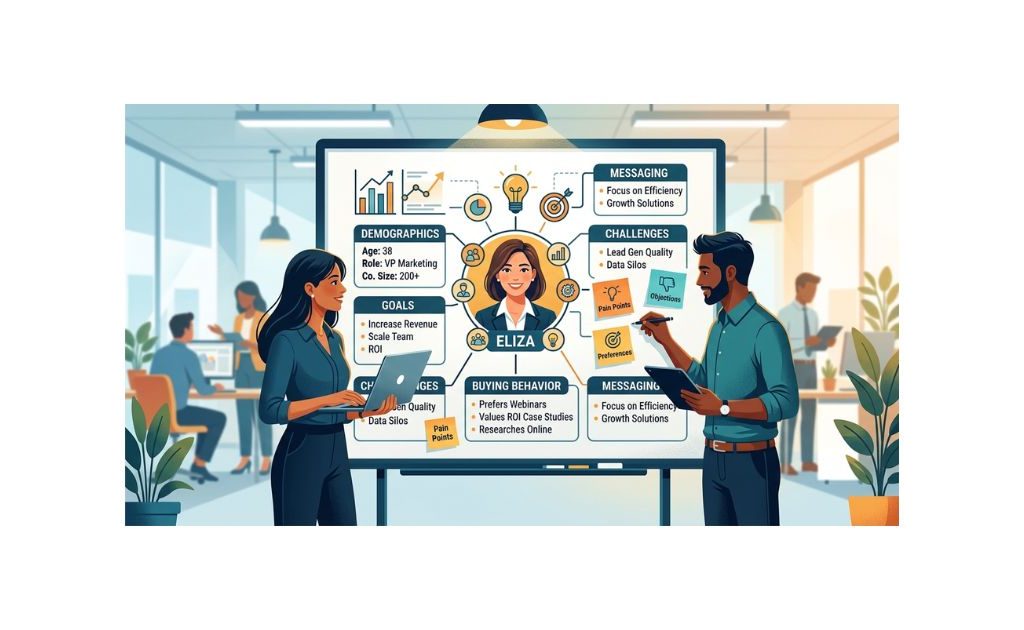
A persona document that sits in a PDF folder helps no one. Sales-ready personas live where deals happen—in your CRM, sales enablement platform, and conversation intelligence tools.
The Persona Canvas: One-Page Sales Tool
Create a single-page reference that sales reps can review before every call. Include these sections:
Section 1: Persona Snapshot
- Name and role (use a memorable name like “CFO Carl” for easy reference)
- Company profile (size, industry, growth stage)
- Primary business objective
- Top 3 KPIs they’re measured on
Section 2: Buying Triggers
List the specific events that make this persona evaluate solutions:
- “Just raised Series B funding”
- “New CEO hired with digital transformation mandate”
- “Competitor launched threatening product”
- “Regulatory compliance deadline approaching”
Section 3: Conversation Starters
Provide opening questions that resonate with this persona’s priorities:
For CFO Persona:
- “How are you measuring ROI on your current marketing technology stack?”
- “What’s your timeline for achieving [specific business outcome]?”
- “How do you balance innovation investments with cost control?”
For VP Sales Persona:
- “What’s your quota attainment looking like this quarter?”
- “How much time does your team spend on non-selling activities?”
- “What’s your biggest obstacle to hitting next quarter’s number?”
Section 4: Objection Handling (The Kill Sheet)
Document the top 5 objections this persona raises and provide battle-tested responses:
Objection: “Your solution is too expensive compared to [competitor].”
Response Framework:
- Acknowledge: “I understand budget is a key consideration.”
- Reframe: “Let me show you how our customers typically see ROI within 90 days.”
- Prove: Share specific case study with similar company profile
- Quantify: “Based on your team size, you’d save approximately $X in [specific metric]”
Objection: “We’re happy with our current solution.”
Response Framework:
- Validate: “That’s great—it means you recognize the importance of [problem area].”
- Probe: “What made you choose that solution originally, and has anything changed since then?”
- Differentiate: “Our customers who switched from [competitor] typically cite [specific advantage].”
- Risk-Reversal: “What would it cost you to explore whether there’s a better option?”
Section 5: Proof Points
List 3-5 case studies, testimonials, or data points that resonate with this persona:
- “Company X (similar size/industry) achieved 40% reduction in [metric] within 6 months”
- “Rated #1 for ROI by G2 in [category]”
- “SOC 2 Type II certified with 99.99% uptime SLA”
Section 6: Stakeholder Map
Show who else influences this persona’s decision:
For CFO:
- CEO (final approval)
- Department heads (budget allocation)
- IT/Security (technical validation)
- Procurement (contract negotiation)
Include messaging tips for each stakeholder so your champion can build internal consensus.
Embedding Personas in Sales Workflows
Sales-ready personas only work if reps use them. Integration is key:
CRM Integration:
- Add persona fields to contact records
- Create persona-based deal stages
- Trigger persona-specific email templates
- Surface persona insights on opportunity pages
Conversation Intelligence:
- Use tools like Gong or Chorus to identify which persona you’re speaking with
- Get real-time coaching based on persona-specific objections
- Analyze win rates by persona type
Sales Enablement Platform:
- Organize content library by persona
- Recommend persona-specific case studies during deal progression
- Track which persona assets drive pipeline
Using AI to Accelerate B2B Buyer Persona Development (2027 Update)
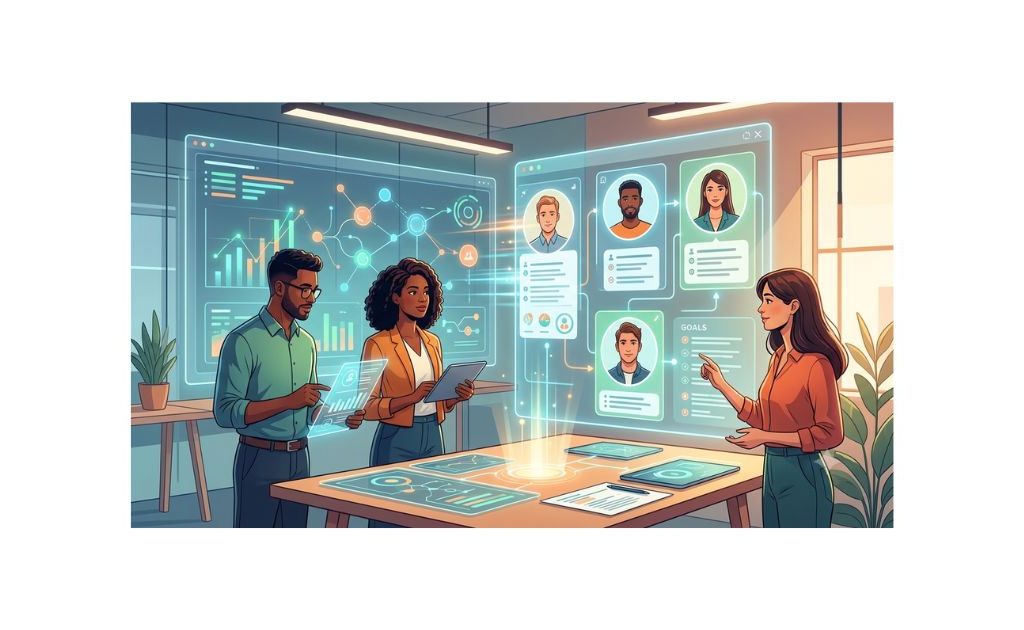
Manual B2B Buyer Persona Development takes weeks. AI can compress this to days while improving accuracy through pattern recognition at scale.
AI-Powered Data Synthesis
Transcript Analysis:
Feed 50-100 sales call recordings into AI tools like Gong, Chorus, or custom GPT models with this prompt:
*”Analyze these sales call transcripts and identify:
- The top 5 objections raised by CFO-level buyers
- Common trigger events that initiated their evaluation
- Decision criteria they mention most frequently
- Language they use to describe their business challenges
- Competitive alternatives they reference
Group findings by company size (50-200 employees, 200-500 employees, 500+ employees) and provide specific quotes for each pattern.”*
The AI extracts patterns humans would miss across hours of conversation, revealing persona nuances buried in unstructured data.
Survey Response Analysis:
Instead of manually reviewing 200 survey responses, use AI to cluster open-ended answers:
*”Analyze these customer survey responses and group them into distinct persona segments based on:
- Primary business objectives
- Buying motivations
- Evaluation criteria
- Implementation concerns
For each segment, provide a persona name, key characteristics, and representative quotes.”*
Competitive Intelligence Gathering:
Use AI to monitor competitor positioning and buyer sentiment:
*”Review these G2 reviews, Reddit discussions, and industry forums mentioning [competitor names]. Identify:
- What buyers praise about each competitor
- What frustrations drive buyers to seek alternatives
- Feature gaps buyers consistently mention
- Pricing concerns by company size
Summarize findings by buyer persona type.”*
AI Prompt Library for B2B Buyer Persona Development
Prompt 1: Persona Profile Generator
*”Based on the following customer data [paste interview transcripts, survey responses, CRM data], create a detailed commercial buyer persona including:
- Role and responsibilities
- Key performance indicators
- Budget authority and approval process
- Primary business challenges
- Buying triggers
- Decision criteria
- Common objections
- Preferred content formats
- Influencers and stakeholders
- Timeline expectations
Format as a structured profile with specific examples and quotes from the data.”*
Prompt 2: Objection Prediction
“Analyze these lost deal records [paste data] and identify patterns in why deals failed. For each persona type, predict the top 5 objections they’ll raise and provide evidence-based response strategies.”
Prompt 3: Message Testing
*”Here’s our value proposition for [persona type]: [paste message]. Generate 5 alternative versions optimized for:
- CFO focused on ROI and risk
- VP Sales focused on quota attainment
- IT Director focused on security and integration
Each version should use language that resonates with that persona’s priorities and include specific proof points.”*
Prompt 4: Content Gap Analysis
*”Review our existing content library [list assets] against this persona profile [paste persona]. Identify gaps in:
- Awareness stage content
- Consideration stage content
- Decision stage content
- Objection handling resources
- Competitive differentiation materials
Recommend specific content pieces to create, prioritized by impact on deal velocity.”*
AI-Driven Persona Validation
Personas decay as markets shift. Set up AI monitoring to keep profiles current:
Automated Signal Detection:
- Monitor industry news for trigger events (funding announcements, leadership changes, regulatory updates)
- Track competitor pricing and positioning shifts
- Analyze win/loss data monthly for emerging patterns
- Survey customer sentiment changes quarterly
Alert System:
When AI detects significant shifts—like a new competitor gaining traction or economic conditions changing buying criteria—it flags persona updates needed.
Activating Personas in the Commercial Flow
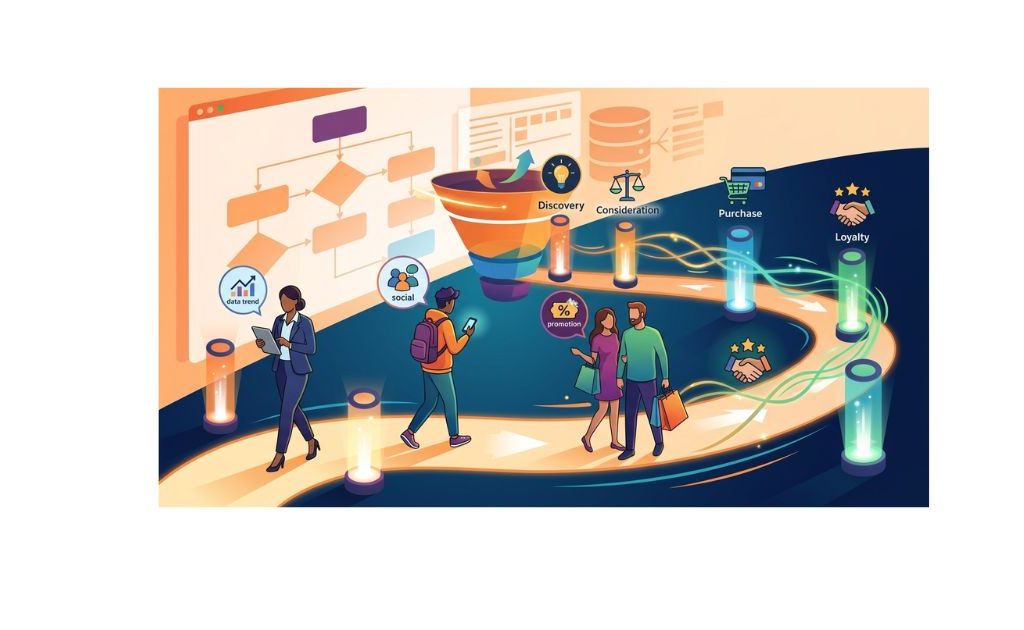
Personas only create value when they influence commercial outcomes. Here’s how to activate them across marketing, sales, and customer success.
Marketing Activation: Intent-Based Campaigns
Account-Based Marketing (ABM):
Map personas to target accounts and create persona-specific campaigns:
Example Campaign for CFO Persona:
- Trigger: Target account shows intent by visiting pricing page and downloading ROI calculator
- Action: Serve LinkedIn ads featuring CFO case studies with specific ROI metrics
- Content: Send personalized email with industry-specific financial benchmarking report
- Event: Invite to exclusive “CFO Roundtable: Measuring Marketing ROI” webinar
- Sales Handoff: Alert SDR when CFO engages with 3+ assets within 7 days
Content Personalization:
Dynamic website content that adapts based on persona signals:
- Visitors from target accounts see persona-specific case studies
- Pricing page shows ROI calculators relevant to their role
- Chatbot asks qualifying questions and routes to persona-specialized reps
- Resource library highlights content matching their buying stage
Paid Media Targeting:
Layer persona data onto advertising platforms:
- LinkedIn: Target by job title + company size + intent signals
- Google Ads: Bid on competitor comparison keywords with persona-specific landing pages
- Retargeting: Show different creative based on content consumed (technical buyer sees security docs, economic buyer sees ROI case studies)
Sales Activation: Conversation Intelligence
Pre-Call Research:
Before every meeting, sales reps review:
- Which persona they’re meeting (from LinkedIn and CRM data)
- That persona’s typical objections and triggers
- Relevant case studies and proof points
- Stakeholder map to identify missing decision-makers
Real-Time Coaching:
Conversation intelligence tools analyze calls and provide persona-specific guidance:
“You’re speaking with a CFO persona. They just mentioned budget concerns. Recommended response: Share the [specific case study] showing 6-month payback period. Avoid technical feature details—focus on business outcomes.”
Deal Strategy Sessions:
Weekly pipeline reviews organized by persona:
- Which personas are engaged in this deal?
- Which personas are missing?
- What persona-specific content will move this forward?
- What objections are we anticipating from each stakeholder?
Customer Success Activation: Expansion and Retention
Onboarding Personalization:
Tailor implementation based on buyer persona:
- Economic buyers receive monthly ROI reports
- Technical buyers get detailed usage analytics and integration support
- Champions receive enablement materials to drive internal adoption
Expansion Identification:
Monitor persona-specific signals for upsell opportunities:
- Champion persona: Increased usage, positive sentiment in support tickets
- Economic buyer persona: Company growth, new funding, leadership changes
- Technical buyer persona: New integration requests, security compliance needs
Renewal Strategy:
90 days before renewal, activate persona-specific engagement:
- Schedule business review with economic buyer focusing on ROI achieved
- Provide technical documentation updates to IT stakeholders
- Equip champion with success stories to share internally
Common Mistakes in B2B Buyer Persona Development
Even with the best framework, teams make predictable errors that undermine persona effectiveness.
Mistake #1: Relying on Assumptions Instead of Data
The Problem: Marketing creates personas based on “ideal customer” fantasies rather than actual buyer behavior.
The Fix: Ground every persona attribute in evidence:
- Interview 10+ customers per persona segment
- Analyze won/lost deal data
- Review conversation intelligence transcripts
- Validate with sales team feedback
If you can’t point to data supporting a persona characteristic, remove it.
Mistake #2: Creating Too Many Personas
The Problem: Teams build 8-10 personas trying to cover every possible buyer, then can’t prioritize messaging or content creation.
The Fix: Focus on the “Big 3” commercial personas:
- Economic Buyer (controls budget)
- Champion (drives evaluation)
- Technical Buyer (validates feasibility)
Within each, segment by company size or industry only if buying behavior differs significantly. Three well-activated personas outperform ten ignored ones.
Mistake #3: Treating Personas as One-Time Projects
The Problem: Companies invest heavily in B2B Buyer Persona Development, create beautiful PDF documents, then never update them as markets evolve.
The Fix: Build persona maintenance into quarterly business reviews:
- Analyze win/loss data for emerging patterns
- Interview 3-5 new customers per quarter
- Review conversation intelligence for shifting objections
- Update personas based on competitive landscape changes
- Retire personas that no longer represent viable segments
Personas are living documents, not museum pieces.
Mistake #4: Ignoring the Buying Committee
The Problem: Personas focus on individual roles without mapping how they influence each other.
The Fix: Create stakeholder influence maps for each persona:
- Who does this person need approval from?
- Who do they rely on for technical validation?
- Who can veto this purchase?
- How do these stakeholders communicate with each other?
Arm your champion with messaging for each stakeholder to build internal consensus.
Mistake #5: Failing to Measure Persona Impact
The Problem: Teams can’t prove personas drive revenue, so they lose executive support.
The Fix: Track persona-specific metrics:
- Win rate by persona type
- Sales cycle length by persona
- Average deal size by persona
- Content engagement by persona
- Pipeline velocity when persona data is complete vs. incomplete
Report these metrics monthly to demonstrate ROI and secure resources for ongoing B2B Buyer Persona Development.
Free Template: The Commercial B2B Buyer Persona Development Canvas
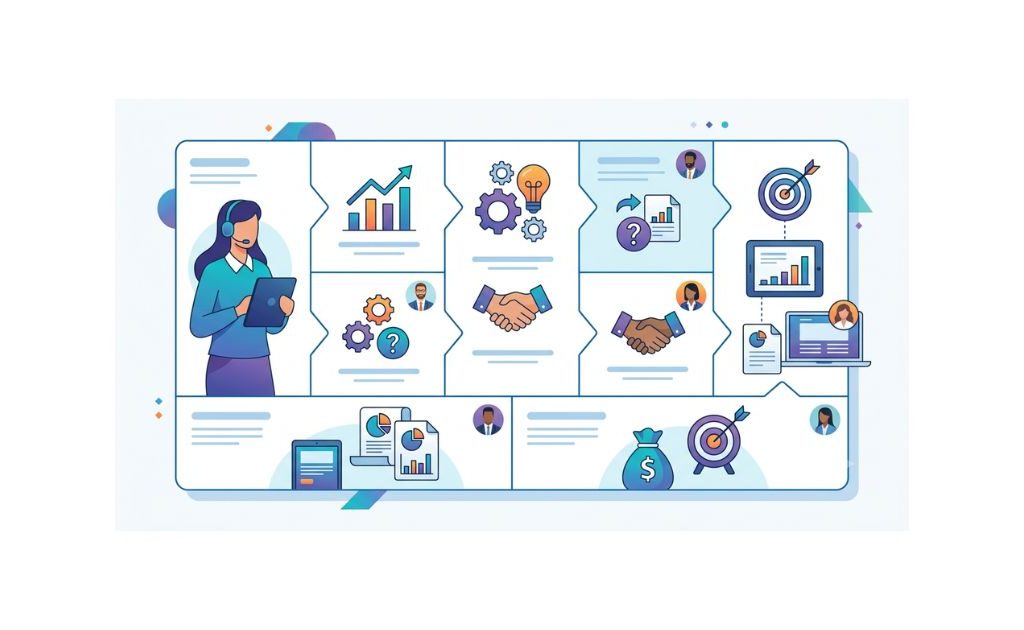
Don’t start from scratch. Use this framework to build sales-ready personas in hours, not weeks.
Commercial B2B Buyer Persona Development Canvas
Section 1: Identity
- Persona Name: _________________
- Role/Title: _________________
- Company Profile (size, industry, stage): _________________
- Reports To: _________________
Section 2: Commercial Context
- Primary Business Objective: _________________
- Key Performance Indicators: _________________
- Budget Authority Range: _________________
- Approval Process: _________________
- Fiscal Year End: _________________
Section 3: Buying Triggers
List 3-5 events that initiate evaluation:
Section 4: Decision Criteria
Rank top 5 factors in order of importance:
Section 5: Objections & Risks
Top 3 objections with evidence-based responses:
Objection 1: _________________
Response: _________________
Objection 2: _________________
Response: _________________
Objection 3: _________________
Response: _________________
Section 6: Stakeholder Map
- Economic Buyer: _________________
- Technical Evaluator: _________________
- End User Champion: _________________
- Potential Blocker: _________________
Section 7: Content & Proof Points
- Case Studies (company, result): _________________
- ROI Metrics: _________________
- Competitive Differentiators: _________________
- Compliance/Certifications: _________________
Section 8: Conversation Starters
3 opening questions that resonate:
Section 9: Buying Timeline
- Typical Evaluation Period: _________________
- Decision-Making Process: _________________
- Implementation Expectations: _________________
Section 10: Success Metrics
How does this persona measure ROI?
Download the Interactive Template:
Get the fillable Notion template with AI prompts, interview scripts, and persona examples at [YourWebsite.com/commercial-persona-template].
Conclusion: From Personas to Pipeline
Commercial B2B Buyer Persona Development isn’t a marketing exercise—it’s a revenue strategy. When you understand who controls the budget, what triggers their evaluation, which objections derail deals, and how to prove ROI in their language, you stop guessing and start closing.
The companies winning in 2026 aren’t those with the most personas. They’re the ones with the deepest commercial understanding of their buyers, the most actionable persona insights embedded in sales workflows, and the discipline to update profiles as markets evolve.
Start with your best customer. Interview them using the framework in this guide. Build one commercial buyer persona canvas. Train your sales team to use it on their next five calls. Measure the difference in conversion rates, deal size, and sales cycle length.
Then scale what works.
Your competitors are still creating “Marketing Mary” profiles that gather digital dust. You’re building commercial weapons that drive revenue. That’s the difference between B2B Buyer Persona Development that look good in presentations and personas that close deals.
Ready to activate commercial buyer personas?
- Download the Commercial Buyer Persona Canvas template
- Schedule 5 customer interviews this week using the Jobs-to-be-Done questions
- Analyze your last 20 won deals for commercial patterns
- Build your first sales-ready persona in 48 hours
- Train your sales team on activation before next quarter begins
The market rewards companies that understand their buyers better than the competition. Commercial buyer B2B Buyer Persona Development is how you build that advantage.