

Table of Contents
Brand Messaging vs Product Messaging: Key Differences, Frameworks, and How They Work Together
A company can have an excellent product and still struggle to explain why people should care about it.
The problem is often not the product itself. It is the message surrounding it.
A strong brand message tells people who you are, what you stand for, and why your company matters. Strong product messaging tells them what your product does, who it is for, what problem it solves, and why they should choose it over alternatives.
These two types of messaging are closely connected, but they are not the same.
Understanding the difference between brand messaging vs product messaging is especially important for B2B SaaS companies, technology companies, startups, and organizations with multiple products. When the distinction is unclear, websites become inconsistent, sales teams use different talking points, product pages become feature-heavy, and customers struggle to understand the company’s real value.
The simplest way to understand the relationship is:
Brand messaging creates context and trust. Product messaging creates relevance and buying motivation.
This guide explains the difference between brand messaging and product messaging, how brand positioning and product positioning fit into the picture, how to build both messaging frameworks, and how to connect them into one consistent messaging hierarchy.
Brand Messaging vs Product Messaging: The Short Answer
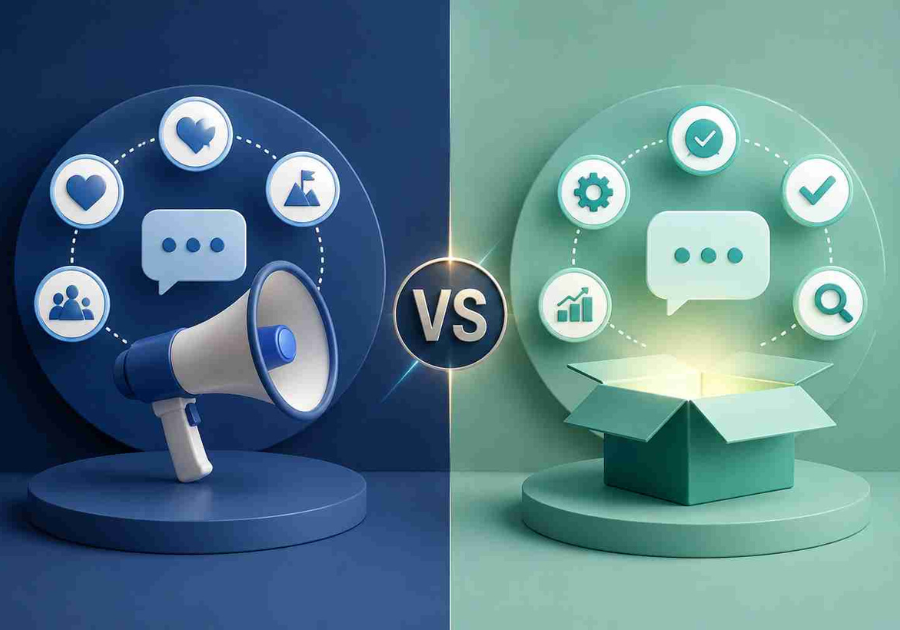
Brand messaging communicates what a company stands for, who it serves, and why it matters. Product messaging communicates why a specific product is valuable, relevant, and different for a particular audience.
Brand messaging operates primarily at the company level, while product messaging operates at the product or solution level.
For example, imagine a fictional SaaS company called RevenueFlow.
Its Brand Messaging vs Product Messaging might communicate:
RevenueFlow helps modern revenue teams make growth more predictable.
Its product message could be:
RevenueFlow’s forecasting platform helps sales leaders identify pipeline risk and understand forecast changes before the end of the quarter.
The first message establishes the company’s broader role and promise.
The second explains how a particular product delivers value.
A useful messaging hierarchy looks like this:
Brand → Audience → Problem → Product → Benefit → Differentiator → Proof → CTA
Each level answers a different customer question.
| Messaging Level | Customer Question |
|---|---|
| Brand | Why should I care about this company? |
| Audience | Is this relevant to me? |
| Problem | Do they understand my challenge? |
| Product | What are they offering? |
| Benefit | What will I get from it? |
| Differentiator | Why this solution? |
| Proof | Why should I believe the claim? |
| CTA | What should I do next? |
The strongest companies do not choose between brand messaging and product messaging. They make the two work together.
What Is Brand Messaging?

Brand messaging is the collection of core ideas, statements, narratives, and communication principles that explain what a company represents and why its target audience should care about it.
It creates a consistent way for an organization to communicate its identity, value, positioning, personality, and promise across different channels.
Brand messaging is broader than a slogan.
A slogan might be one expression of a brand idea, but a complete Brand Messaging vs Product Messaging system can include:
- Brand positioning
- Brand promise
- Value proposition
- Purpose
- Mission
- Audience definition
- Differentiation
- Messaging pillars
- Brand narrative
- Tone of voice
- Proof points
- Key claims
- Communication principles
The purpose is consistency.
Whether someone discovers the company through its homepage, LinkedIn profile, advertising, sales presentation, PR coverage, or an event, the underlying Brand Messaging vs Product Messaging idea should remain recognizable.
What Questions Does Brand Messaging Answer?
A strong brand messaging framework should answer questions such as:
- Who are we?
- Who do we serve?
- What problem do we care about solving?
- What do we believe?
- What makes our approach different?
- What value do we create?
- Why should customers trust us?
- What should customers remember about us?
- What position should we occupy in the customer’s mind?
These questions operate above the individual product level.
For example, a company may sell several SaaS products, but its brand messaging should still communicate a coherent reason for existing.
What Is Product Messaging?

Product messaging explains how a specific product solves a customer’s problem, creates value, and differs from available alternatives.
While brand messaging answers “Why us?”, product messaging answers a more specific question:
“Why this product for my particular problem?”
Product messaging connects customer needs with product capabilities.
It typically covers:
- Target customer
- Customer problem
- Product category
- Value proposition
- Product benefits
- Features
- Differentiators
- Use cases
- Competitive alternatives
- Proof points
- Objection handling
- Calls to action
Good Brand Messaging vs Product Messaging does not simply describe what a product contains.
It explains why those capabilities matter.
For example:
Feature-focused message:
Automated reporting dashboard with real-time analytics.
Outcome-focused product message:
See changing revenue performance in one place so your team can identify problems before they affect the quarter.
The second message connects the capability to a business outcome.
That is the central role of product messaging.
Brand Messaging vs Product Messaging: What’s the Difference?
The difference between brand messaging and product messaging becomes clearer when you compare their purpose, audience, scope, and buying role.
| Dimension | Brand Messaging | Product Messaging |
|---|---|---|
| Primary focus | Company | Product or solution |
| Main question | Why us? | Why this product? |
| Scope | Organization-wide | Product-specific |
| Main goal | Build recognition, trust, and preference | Drive consideration and conversion |
| Audience | Broader priority audiences | Specific buyers and users |
| Core elements | Promise, purpose, positioning, values | Benefits, features, differentiation, proof |
| Time horizon | Longer-term | More dynamic |
| Emotional role | Often stronger | Usually more functional |
| Functional role | Supporting | Central |
| Common owners | Brand and marketing leadership | Product marketing and product teams |
| Common channels | Corporate website, PR, social, campaigns | Product pages, demos, sales decks, ads |
| Typical CTA | Learn, explore, connect | Demo, trial, buy, upgrade |
| Main outcome | Brand preference | Product action |
The important point is that these differences do not mean the messages should contradict one another.
Instead, they should form a hierarchy.
Your Brand Messaging vs Product Messaging should feel like a natural expression of your brand.
Brand Messaging vs Product Messaging vs Positioning
One of the most common sources of confusion is treating positioning and messaging as the same thing.
They are related, but they perform different jobs.
What Is Brand Positioning?
Brand positioning defines the place a company wants to occupy in the minds of its target customers relative to alternatives.
It establishes the strategic perception the company wants to create.
For example:
We are the revenue intelligence platform designed for fast-growing B2B companies that need reliable forecasting without complex enterprise infrastructure.
That is a positioning idea.
What Is Brand Messaging?
Brand messaging translates that strategic position into communication.
It may include:
- Headlines
- Brand narratives
- Key messages
- Messaging pillars
- Campaign themes
- Website copy
- Corporate statements
In simple terms:
Positioning = strategic place you want to own.
Messaging = how you communicate that position.
Product Positioning vs Product Messaging
The same distinction exists at the product level.
Product positioning
Defines how the product should be perceived relative to alternatives.
Product messaging
Communicates that position to the customer.
For example:
Product positioning:
A forecasting solution for mid-market revenue teams that need enterprise-level visibility without enterprise-level complexity.
Product messaging:
Forecast revenue with a clearer view of pipeline risk, deal movement, and changing sales signals.
Positioning is the strategic foundation.
Messaging is the communication layer built on top of it.
How Brand Messaging and Product Messaging Work Together
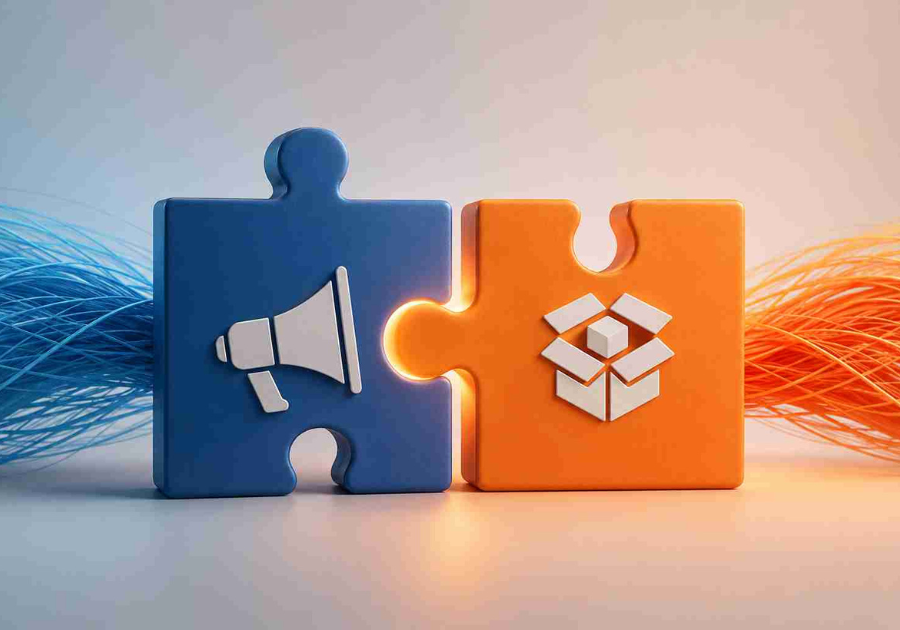
Brand messaging and product messaging should not exist as separate islands.
Think of them as different levels of the same system.
A strong messaging hierarchy can look like this:
Brand
↓
Brand Promise
↓
Target Audience
↓
Customer Problem
↓
Product
↓
Product Value Proposition
↓
Messaging Pillars
↓
Features and Benefits
↓
Proof
↓
CTA
This structure prevents a common problem: creating product messaging that sounds completely disconnected from the brand.
Layer 1: Brand Narrative
The brand narrative explains the broader problem or opportunity the company wants to address.
It answers:
“Why does this company exist?”
Layer 2: Brand Promise
The brand promise communicates the consistent value customers should associate with the organization.
It answers:
“What can customers expect from us?”
Layer 3: Audience
Define exactly who the company is trying to help.
A broad audience statement such as “businesses” is usually insufficient.
You may need to identify:
- Industry
- Company size
- Job role
- Business maturity
- Use case
- Buying situation
Layer 4: Customer Problem
Identify the problem the company wants to own.
This should be more specific than a generic pain point.
Instead of:
Businesses struggle with data.
Use:
Revenue leaders struggle to identify which pipeline changes will materially affect their quarterly forecast.
Specific problems create stronger messaging.
Layer 5: Product
Now introduce the Brand Messaging vs Product Messaging as the solution.
The product should feel like a logical response to the problem established above.
Layer 6: Product Value Proposition
Explain the meaningful outcome the customer receives.
A useful structure is:
For [audience], [product] helps [solve problem] by [mechanism], resulting in [outcome].
Layer 7: Messaging Pillars
Choose three to five major reasons the product is valuable.
For example:
- Faster decision-making
- Better visibility
- Reduced manual work
- More predictable outcomes
Each pillar should have supporting evidence.
Layer 8: Features and Benefits
Features explain what the product does.
Benefits explain why that capability matters.
The two should work together.
Layer 9: Proof
Proof makes the message credible.
Examples include:
- Customer results
- Case studies
- Testimonials
- Product demonstrations
- Data
- Certifications
- Expert validation
- Customer logos
- Research
- Before-and-after comparisons
Layer 10: CTA
Finally, tell the customer what to do.
Examples:
- Book a demo
- Start a trial
- See the platform
- Explore the solution
- Talk to an expert
A Practical Example of Brand Messaging vs Product Messaging
Consider a fictional B2B SaaS company called RevenueFlow.
The company provides tools for revenue forecasting and sales performance management.
Brand messaging
RevenueFlow helps revenue teams make growth more predictable.
This is broad enough to represent the company.
Product messaging
RevenueFlow Forecast gives sales leaders a real-time view of pipeline movement, forecast risk, and revenue changes.
This is more specific.
Feature message
Automated pipeline monitoring tracks changes across active opportunities.
Benefit message
Sales leaders can identify forecast risk earlier without manually reviewing every deal.
Proof
Customers can demonstrate measurable improvements through forecast accuracy, reporting efficiency, or reduced manual analysis.
CTA
See RevenueFlow Forecast in action.
Notice how each layer builds on the previous one.
That is what a Brand Messaging vs Product Messaging hierarchy is supposed to accomplish.
When Should You Use Brand Messaging?
Brand messaging is most important when the customer needs to understand the company before evaluating a specific product.
Use brand messaging when you want to:
Build brand awareness
People need a reason to recognize and remember your company.
Establish differentiation
Brand Messaging vs Product Messaging can help you occupy a distinct position rather than sounding interchangeable with competitors.
Build trust
Especially for high-consideration purchases, customers need confidence in the organization behind the product.
Enter a new category
If customers do not understand your category, your brand may need to establish the broader problem before presenting the solution.
Launch a new company
Early-stage organizations need a coherent narrative that can guide their website, sales conversations, marketing campaigns, and investor communications.
Change market perception
A company repositioning itself needs Brand Messaging vs Product Messaging that reflects its new strategic direction.
Where Is Brand Messaging Used?
Brand messaging can appear across almost every customer-facing channel.
Common examples include:
- Homepage
- About page
- Corporate website
- LinkedIn company page
- Social media
- PR
- Thought leadership
- Brand advertising
- Corporate presentations
- Events
- Employer branding
- Company videos
- Partnerships
The exact wording can change by channel, but the underlying message should remain consistent.
When Should You Use Product Messaging?
Brand Messaging vs Product Messaging becomes particularly important when customers are evaluating a specific solution.
Use product messaging when:
- Launching a new product
- Entering a new market segment
- Creating a product landing page
- Launching a new feature
- Running paid campaigns
- Creating sales enablement materials
- Improving website conversion
- Creating comparison pages
- Training sales teams
- Addressing competitive objections
- Supporting product-led growth
- Expanding into enterprise sales
Product messaging should help the buyer understand not only what the Brand Messaging vs Product Messaging does but also why the product deserves consideration.
Where Is Product Messaging Used?
Product messaging commonly appears in:
- Product landing pages
- Feature pages
- Pricing pages
- Sales presentations
- Demo scripts
- Product tours
- Paid advertisements
- Email campaigns
- Case studies
- Comparison pages
- Sales proposals
- Product videos
- Onboarding experiences
- Sales enablement documents
This is why Brand Messaging vs Product Messaging needs to be practical.
A messaging framework is valuable only when teams can actually use it.
How to Build a Brand Messaging Framework
Creating a brand messaging framework requires more than brainstorming attractive phrases.
Follow a structured process.
Step 1: Define Your Target Audience
Start with the people you want to influence.
Identify:
- Primary audience
- Secondary audience
- Buyer
- User
- Decision-maker
- Influencer
- Economic buyer
For B2B organizations, the person using a product may not be the person approving the purchase.
Your Brand Messaging vs Product Messaging should account for that difference.
Step 2: Identify the Problem You Want to Own
Ask:
What important problem should customers associate with our company?
The answer should be specific.
Weak:
We help companies work better.
Stronger:
We help growing revenue teams replace fragmented forecasting processes with a clearer view of pipeline risk.
Specificity makes positioning easier.
Step 3: Define Your Brand Positioning
Determine:
- What category are you in?
- Who are you for?
- What alternative are you replacing?
- What makes you different?
- Why should customers believe you?
Positioning gives your messaging a strategic foundation.
Step 4: Create the Brand Promise
Your brand promise should express the meaningful value customers can expect.
Avoid making promises that are impossible to prove.
Step 5: Create Messaging Pillars
Choose three to five themes that support the brand promise.
For example:
Pillar 1: Clarity
We simplify complex revenue information.
Pillar 2: Control
We help teams identify risks earlier.
Pillar 3: Predictability
We help organizations make better revenue decisions.
Each pillar should be supported with evidence.
Step 6: Define Your Voice
Determine how your company should sound.
Consider:
- Formal vs conversational
- Technical vs simple
- Bold vs measured
- Expert vs approachable
- Emotional vs analytical
Also define words your company should avoid.
Step 7: Create Proof Requirements
Every major brand claim should have supporting evidence.
If you say your company is:
trusted
Ask:
Trusted by whom?
If you say:
faster
Ask:
Faster by how much?
Proof makes messaging credible.
How to Build a Product Messaging Framework
A Brand Messaging vs Product Messaging framework should connect customer problems to product value.
Step 1: Define the Product Audience
Do not assume the company-wide audience is automatically the product audience.
A particular product may serve:
- Marketing leaders
- Sales managers
- Finance teams
- Developers
- Operations teams
- HR departments
- Executives
The more clearly you define the buyer, the more relevant the product message becomes.
Step 2: Identify the Job to Be Done
Ask:
What is the customer actually trying to accomplish?
For example:
A customer may not want “forecasting software.”
They may want:
A reliable way to know whether the sales team will hit its quarterly target.
That distinction changes the messaging.
Step 3: Identify Existing Alternatives
Your biggest competitor is not always another software company.
Alternatives may include:
- Spreadsheets
- Manual processes
- Internal tools
- Consultants
- Legacy systems
- Doing nothing
- Existing vendors
Brand Messaging vs Product Messaging should explain why your approach is better than the alternatives customers actually consider.
Step 4: Translate Features Into Benefits
Use this progression:
Feature → Capability → Benefit → Business Outcome
Example:
Feature: Automated pipeline monitoring
Capability: Tracks changes across opportunities
Benefit: Reduces manual pipeline review
Business outcome: Helps sales leaders identify forecast risk earlier
This is significantly stronger than listing features alone.
Step 5: Identify Differentiators
A differentiator should be meaningful and defensible.
Avoid relying on vague claims such as:
- Innovative
- Powerful
- Seamless
- Next-generation
- Revolutionary
- Easy-to-use
Instead, explain what specifically makes the product different.
Step 6: Create Product Messaging Pillars
Choose three to five primary reasons a customer should consider the product.
Every pillar should connect:
Customer problem → Product capability → Customer benefit → Proof
Step 7: Map Objections
Strong product messaging also addresses reasons customers may hesitate.
Common objections include:
- Too expensive
- Too difficult to implement
- Takes too long to learn
- We already have a solution
- We don’t have enough data
- Switching is risky
- Our team won’t adopt it
Your messaging should anticipate these concerns rather than waiting for sales representatives to handle them manually.
Step 8: Adapt Messaging by Channel
The core Brand Messaging vs Product Messaging should remain consistent, but the expression can change.
A homepage headline should not sound exactly like a sales deck.
A paid advertisement should not contain the same amount of information as a product page.
Consistency does not mean repetition.
The Unified Brand + Product Messaging Framework
The strongest approach is to combine brand and product messaging into one system.
Consider this framework:
| Level | Purpose | Example |
|---|---|---|
| Brand | Establish company meaning | Make revenue growth more predictable |
| Audience | Identify who matters | B2B revenue teams |
| Problem | Define the challenge | Unreliable forecasting |
| Product | Present the solution | Revenue forecasting platform |
| Benefit | Explain value | Identify revenue risks earlier |
| Differentiator | Explain why you | Real-time revenue signals |
| Proof | Establish credibility | Customer results and evidence |
| CTA | Encourage action | Book a demo |
This structure creates a clear line between strategic messaging and conversion messaging.
It also helps different teams work from the same foundation.
Marketing can use the brand layer.
Product marketing can use the product layers.
Sales can use the benefits, differentiators, and proof.
Demand generation can turn the messages into campaigns.
Content teams can develop educational material around the same customer problems.
Brand Messaging and Product Messaging Across the Buyer Journey
Messaging should remain consistent while becoming more specific as the buyer moves closer to a decision.
| Buyer Stage | Brand Messaging Role | Product Messaging Role |
|---|---|---|
| Awareness | Establish relevance | Introduce the problem |
| Consideration | Build trust | Explain the solution |
| Evaluation | Reinforce differentiation | Demonstrate value |
| Decision | Reduce perceived risk | Address objections |
| Adoption | Reinforce relationship | Explain product value |
| Expansion | Strengthen loyalty | Introduce additional use cases |
At the awareness stage, customers may not even know your company.
At the evaluation stage, they want to know exactly why your product is different.
At the decision stage, proof becomes increasingly important.
This means your messaging system needs both a consistent foundation and enough flexibility to address different buying questions.
Brand Messaging vs Product Messaging for B2B SaaS
The distinction becomes particularly important for B2B SaaS companies.
A SaaS company often has to communicate with several audiences simultaneously.
For example:
- CEO
- CFO
- CTO
- Sales leader
- Marketing leader
- Operations manager
- End user
Each person may care about different outcomes.
The CEO may care about growth.
The CFO may care about financial efficiency.
The operational leader may care about process visibility.
The user may care about ease of use.
Your brand message can establish a common company-level idea.
Brand Messaging vs Product Messaging can then emphasize the specific value relevant to each audience.
Example
Brand message
Helping modern companies operate with greater clarity.
Product message for a CFO
Monitor operational costs and identify inefficient processes before they affect margins.
Product message for an operations leader
Centralize operational data so teams can identify bottlenecks faster.
Product message for an end user
Find the information you need without switching between multiple systems.
The underlying product remains the same.
The emphasis changes according to the audience.
Brand Messaging vs Product Messaging for Multi-Product Companies
The challenge becomes even greater when a company sells several products.
Imagine a technology company with three solutions:
Master Brand
Helping businesses make smarter decisions with connected data.
↓
Product A
Revenue intelligence
↓
Product B
Customer intelligence
↓
Product C
Operations intelligence
Each product needs its own messaging.
However, the Brand Messaging vs Product Messaging should still feel connected to the master brand.
A useful hierarchy is:
Master Brand → Product Family → Individual Product → Feature → Use Case
Without this structure, every product may develop a completely different voice and value proposition.
Customers then struggle to understand the relationship between the products.
Common Brand Messaging and Product Messaging Mistakes
1. Treating a Tagline as the Entire Brand Message
A tagline is not a Brand Messaging vs Product Messaging framework.
It is one communication asset.
A complete brand messaging system needs strategic substance behind the words.
2. Making Product Messaging Feature-Heavy
A list of features does not automatically communicate value.
Customers care about what those features help them accomplish.
Instead of:
Automated analytics dashboard.
Try:
See changing performance trends without manually combining reports.
3. Using One Message for Every Audience
Different buyers have different priorities.
The core value can remain consistent while the emphasis changes.
4. Making Unsupported Brand Claims
Claims such as “the most trusted” or “the leading solution” require evidence.
Without proof, they become generic marketing language.
5. Creating Product Messaging That Contradicts the Brand
If your Brand Messaging vs Product Messaging promises simplicity but your product page communicates unnecessary complexity, customers experience a credibility gap.
6. Using Generic Differentiators
“Powerful,” “flexible,” and “innovative” are not strong differentiators by themselves.
Explain what makes your Brand Messaging vs Product Messaging meaningfully different.
7. Ignoring Customer Research
Internal teams often describe Brand Messaging vs Product Messaging differently from customers.
Your messaging should reflect customer language and customer priorities.
Useful sources include:
- Customer interviews
- Sales calls
- Support tickets
- Reviews
- Win/loss interviews
- Search queries
- Product feedback
- Competitor research
8. Ignoring Competitive Alternatives
Customers compare you with more than direct competitors.
They may compare you with spreadsheets, internal processes, legacy software, or simply maintaining the status quo.
9. Connecting Claims to No Proof
A strong message makes the claim.
A stronger message demonstrates it.
10. Never Updating the Messaging Framework
Messaging should evolve when:
- The product changes
- The audience changes
- The category changes
- New competitors enter the market
- Customer expectations shift
- The company changes positioning
However, updating Brand Messaging vs Product Messaging does not mean changing the brand voice every few months.
The foundation should remain stable while relevant messages evolve.
How to Measure Whether Your Messaging Works
Good messaging should eventually produce measurable business results.
Brand Messaging Metrics
Consider tracking:
- Branded search activity
- Direct website traffic
- Brand awareness
- Brand recall
- Share of voice
- Engagement quality
- Organic visibility
- Audience sentiment
These indicators help determine whether your broader brand message is becoming recognizable.
Product Messaging Metrics
For product messaging, track:
- Landing page conversion rate
- Demo requests
- Trial registrations
- Product-qualified leads
- Sales-qualified leads
- Win rate
- Sales-cycle length
- Product adoption
- Expansion revenue
- Conversion from campaign to opportunity
However, metrics should not be viewed in isolation.
A Brand Messaging vs Product Messaging change may improve clicks but reduce qualified leads.
The objective is not simply to generate more attention.
It is to generate better-fit attention and stronger commercial outcomes.
How to Test Brand and Product Messaging
Brand Messaging vs Product Messaging should be tested with real audiences rather than judged only by internal teams.
Customer Interviews
Ask customers:
What do you think we do?
What problem do you think we solve?
What makes us different?
What would you tell another company about us?
If customers consistently describe your company differently from your intended positioning, your messaging may need work.
Sales Call Analysis
Review sales calls to identify:
- Questions prospects repeatedly ask
- Confusing terminology
- Common objections
- Competitor comparisons
- Benefits that generate interest
- Features that receive little attention
Sales conversations provide valuable evidence about how the market interprets your message.
Win/Loss Interviews
Ask customers why they chose or rejected your solution.
This can reveal whether your intended differentiator actually influences buying decisions.
Website Testing
Test alternative headlines, value propositions, benefits, and calls to action.
Measure meaningful outcomes rather than clicks alone.
Competitive Message Audits
Compare your messaging with competing companies.
Look for repeated language.
If every competitor claims:
Simple, powerful, flexible, innovative
then those words are probably not helping you stand out.
How to Create a Messaging Hierarchy
A messaging hierarchy organizes your most important messages from broadest to most specific.
A practical hierarchy can look like this:
Level 1: Brand Message
What the company stands for.
Level 2: Audience Message
Who the company helps.
Level 3: Problem Message
What problem matters to the audience.
Level 4: Product Message
How the product addresses that problem.
Level 5: Benefit Message
What outcome the customer receives.
Level 6: Differentiator
Why the product is different.
Level 7: Proof
Why the customer should believe the claim.
Level 8: CTA
What the customer should do next.
This hierarchy helps prevent teams from jumping directly from a feature to a CTA without explaining why the Brand Messaging vs Product Messaging matters.
A Simple Formula for Strong Product Messaging
A useful product messaging formula is:
Audience + Problem + Product + Benefit + Differentiator + Proof
For example:
For revenue leaders struggling with unreliable forecasts, RevenueFlow provides a centralized forecasting platform that identifies pipeline risks earlier, using real-time revenue signals and automated monitoring.
Then add proof.
Finally, add the appropriate CTA.
This formula can be adapted for:
- SaaS
- Professional services
- Technology
- Healthcare
- Financial services
- E-commerce
- Manufacturing
- Education
- Consumer products
Brand Messaging vs Product Messaging: Which Comes First?
A common question is whether companies should develop brand messaging or product messaging first.
In most cases, brand strategy and positioning should provide the broader strategic context, while product messaging is developed from that foundation.
However, the process is rarely perfectly linear.
A company may discover during product research that its existing brand positioning is too broad.
For example:
Original brand idea:
Helping businesses become more efficient.
Product research may reveal a stronger opportunity:
Helping revenue teams eliminate uncertainty from forecasting.
That insight could influence the broader brand strategy.
Therefore, messaging development should be iterative.
Brand and product teams should continuously share customer and market insights.
Can Brand Messaging and Product Messaging Use the Same Words?
Yes, but they should not necessarily communicate the same level of information.
Shared terminology can improve consistency.
For example, if a brand owns the idea of clarity, its products can demonstrate that idea through specific benefits.
But simply repeating the same phrase everywhere does not create strong messaging.
The brand establishes the idea.
The product proves and operationalizes the idea.
Think of it this way:
Brand = promise
Product = delivery
Proof = evidence
How Often Should Brand Messaging Be Updated?
Brand messaging should not be changed simply because a new marketing trend appears.
Consider revisiting it when:
- The company changes direction
- The target audience changes
- The category changes
- The company’s differentiation changes
- The portfolio expands
- Research shows confusion
- Customers describe the company differently
- Competitive dynamics shift
The goal is to maintain strategic consistency while keeping the message relevant.
How Often Should Product Messaging Be Updated?
Product messaging can change more frequently than brand messaging.
Review it when:
- A new product launches
- Major features are introduced
- Pricing changes
- The target audience changes
- A new competitor emerges
- A new use case becomes important
- Customer objections change
- Product-market fit improves
- Sales feedback reveals confusion
A mature company should treat product messaging as a living system rather than a one-time document.
Brand Messaging vs Product Messaging: A Quick Decision Framework
When deciding what type of message to use, ask one question:
Are you explaining the company or the solution?
If you are explaining:
Who we are → Brand messaging
What we believe → Brand messaging
Why we exist → Brand messaging
Why customers should trust us → Brand messaging
If you are explaining:
What the product does → Product messaging
Who should use it → Product messaging
What problem it solves → Product messaging
Why it is different → Product messaging
Why someone should buy it → Product messaging
If you are explaining:
How the company wants to be perceived → Positioning
How the product should be perceived → Product positioning
This simple distinction can prevent a great deal of messaging confusion.
Frequently Asked Questions About Brand Messaging vs Product Messaging
What is the difference between brand messaging and product messaging?
Brand messaging communicates a company’s identity, positioning, promise, and broader value to its target audience. Product messaging focuses on a specific product and explains the problem it solves, the benefits it provides, how it is different, and why a particular buyer should consider it.
Is product messaging part of brand messaging?
Product messaging can be considered a downstream layer of a broader brand messaging system. It should reflect the company’s positioning and brand promise while becoming more specific about a particular product, customer problem, benefit, and buying decision.
What is the difference between brand positioning and brand messaging?
Brand positioning defines the strategic place a company wants to occupy in the customer’s mind. Brand messaging communicates that position through language, narratives, claims, messaging pillars, headlines, and other communication assets.
What is the difference between product positioning and product messaging?
Product positioning defines how a product should be perceived relative to competitors and alternatives. Product messaging communicates that position by explaining the product’s value, benefits, differentiation, and proof to specific audiences.
Which comes first: brand messaging or product messaging?
Brand positioning and broader brand strategy typically provide the foundation for product messaging. However, the process is iterative. Customer and product insights can also influence and refine the broader brand strategy.
What should a product messaging framework include?
A product messaging framework should typically include the target audience, customer problem, product value proposition, benefits, features, differentiators, use cases, competitive alternatives, proof points, objections, and calls to action.
What should a brand messaging framework include?
A brand messaging framework can include brand positioning, audience definition, brand promise, value proposition, messaging pillars, brand narrative, differentiation, proof points, tone of voice, and communication principles.
How many messaging pillars should a company have?
There is no universal number, but three to five strong messaging pillars are usually easier for teams to understand and apply than a long list of competing themes. Each pillar should have a clear customer benefit and supporting proof.
Can a company have different product messaging for different audiences?
Yes. Different audiences can care about different benefits. The core product positioning should remain consistent, but messaging can emphasize the outcomes most relevant to each buyer, user, or decision-maker.
What is the relationship between brand messaging and product messaging?
Brand messaging establishes the broader company-level context, while product messaging translates that context into a specific customer and product conversation. Strong organizations connect both through a clear messaging hierarchy.
Brand Messaging vs Product Messaging: The Key Takeaway
Brand messaging and product messaging solve different communication problems.
Brand messaging tells people who you are.
Product messaging tells them what you can do for them.
Positioning determines the place you want to occupy in their minds.
Proof explains why they should believe your claims.
A CTA tells them what to do next.
The most effective messaging systems connect these pieces instead of treating them as separate exercises.
A simple framework to remember is:
Brand → Audience → Problem → Product → Benefit → Differentiator → Proof → CTA
When these layers are aligned, customers can move naturally from understanding your company to understanding your product and finally to taking action.
When they are disconnected, even an excellent product can sound generic.
That is why the goal is not to choose between brand messaging vs product messaging.
The goal is to build a system in which both work together.
Your brand creates the promise.
Your product demonstrates the promise.
Your proof validates the promise.
And your messaging turns all three into a reason for the customer to act.
If you’d like, I can also turn this into a publication-ready SEO version with an SEO title, meta description, URL slug, featured-snippet answers, schema FAQ questions, internal-link anchor text, and image/alt-text recommendations.