

Table of Contents
The concept of a single “Decision-Maker” in enterprise B2B sales is a dangerous myth.
When selling to small and mid-sized businesses (SMBs), you might identify a founder or a department head, pitch your solution, and close the deal. Enterprise sales do not work this way. In the Enterprise Buyer Personas space, purchases are rarely made by one individual; they are the result of a complex, multi-threaded consensus involving a B2B Buying Committee.
If your go-to-market strategy relies on building a single “Enterprise Buyer Persona” based on demographics like age, job title, and hobbies, you are setting your sales team up for failure. Enterprise buyer personas must be built around roles, business risks, and organizational influence.
This comprehensive guide will dismantle the traditional approach to persona building. We will explore how to construct accurate enterprise buyer personas, how to identify the actual humans occupying these roles, and how to map them to your sales process to accelerate deal velocity.
Why Enterprise Personas Are Fundamentally Different from SMB Personas
To build an effective enterprise buyer persona, you must first understand why the rules change when you move upmarket. The primary difference lies in the Decision-Making Unit (DMU).
In an SMB, the DMU is often one person. In an enterprise, the DMU is a committee of 6 to 10 stakeholders, each with distinct motivations, KPIs, and risk tolerances.
Here is a breakdown of how Enterprise Buyer Personas differ from traditional SMB personas:
| Feature | SMB Buyer Persona | Enterprise Buyer Persona |
|---|---|---|
| Primary Focus | Demographics (Age, Location, Education) | Firmographics & Psychographics (Role, Risk Tolerance, KPIs) |
| Buying Motivation | Convenience, Speed, Basic ROI | Risk Mitigation, Compliance, Enterprise ROI, Scalability |
| Decision Process | Linear (1-2 people) | Non-Linear (Buying Committee of 6-10 people) |
| Key Objection | Price / Budget | Security, Integration, Change Management, Procurement |
| Sales Cycle | Weeks | Months to Quarters |
The Core Insight: Enterprise buyers are not just buying a product; they are buying career safety. A VP of Engineering at a Fortune 500 company isn’t looking for the “coolest” new software; they are looking for a solution that won’t cause a data breach, won’t fail during a board meeting, and will make them look like a strategic leader. Your enterprise buyer personas must reflect this psychological reality.
The 4 Core Enterprise Buyer Personas You Must Identify

While every organization is unique, Gartner and Forrester research consistently show that Enterprise Buyer Personas committees fall into four distinct archetypes. To rank your outreach and tailor your messaging, you must build a specific persona for each of these four roles.
1. The Economic Buyer (The Budget Holder)
Typical Titles: CFO, VP of Finance, CEO, COO, Board Members.
The Economic Buyer holds the purse strings. They rarely care about the granular features of your product. Their primary concern is how your solution impacts the company’s bottom line, mitigates financial risk, and aligns with overarching corporate strategy.
- Primary Motivation: ROI, cost reduction, revenue generation, and risk mitigation.
- Key KPIs: EBITDA, Customer Acquisition Cost (CAC), Lifetime Value (LTV), operational efficiency.
- How to Identify Them: Look for titles with “VP,” “Chief,” or “Head of” followed by a business unit (e.g., Head of Operations). On LinkedIn, check if they have a history of managing P&L (Profit and Loss) statements.
- Messaging Strategy: Speak in terms of financial outcomes. Do not talk about “time saved”; talk about “labor cost reduction.” Do not talk about “features”; talk about “competitive advantage.”
2. The Technical Buyer (The Blocker / Gatekeeper)
Typical Titles: CISO, CTO, VP of IT, Director of Security, Chief Compliance Officer.
The Technical Buyer rarely initiates the purchase, but they have the power to veto it. Their job is to ensure that whatever the company buys is secure, compliant, and integrates seamlessly with the existing tech stack. They are inherently risk-averse.
- Primary Motivation: Security, compliance, data privacy, system stability, and ease of integration.
- Key KPIs: Uptime, security incidents, compliance audit pass rates, technical debt reduction.
- How to Identify Them: Look for titles containing “Security,” “IT,” “Architecture,” or “Compliance.” They often have technical certifications (CISSP, AWS Certified) listed on their profiles.
- Messaging Strategy: Lead with trust. Provide SOC 2 reports, GDPR compliance documentation, and detailed API documentation early in the process. Never try to “sell” a Technical Buyer with marketing fluff; they will see right through it.
3. The Champion (The Internal Seller)
Typical Titles: Director of Marketing, VP of Sales, Head of Product, Senior Manager.
The Champion is the person who feels the pain of the problem most acutely. They are your biggest advocate inside the organization. However, they usually do not have the final signing authority. Your job is to arm them with the data, slides, and business cases they need to sell your solution to the Economic and Technical buyers.
- Primary Motivation: Solving a specific operational pain point, getting a promotion, making their team more efficient, looking innovative to leadership.
- Key KPIs: Team productivity, campaign performance, quota attainment, project delivery speed.
- How to Identify Them: They are often the first to respond to your outreach, the most eager to book a demo, and the most vocal about their current frustrations.
- Messaging Strategy: Be a partner. Provide them with ROI calculators, executive summary decks, and case studies. Make them look like a hero to their boss.
4. The End User (The Daily Operator)
Typical Titles: Marketing Manager, Sales Development Rep (SDR), Software Engineer, HR Coordinator.
The End User is the person who will actually log into your software every day. If they hate your product, adoption will fail, and the contract will not be renewed at the end of the term. While they don’t sign the contract, their feedback heavily influences the Champion and the Economic Buyer.
- Primary Motivation: Ease of use, saving time, reducing manual work, making their daily job less frustrating.
- Key KPIs: Daily active usage, task completion rate, individual productivity metrics.
- How to Identify Them: Look for individual contributor (IC) titles. They usually report to the Champion.
- Messaging Strategy: Focus on user experience (UX), onboarding, and customer support. Show them exactly how many clicks it takes to complete a task.
The 3-Step Framework to Identify Real Decision-Makers
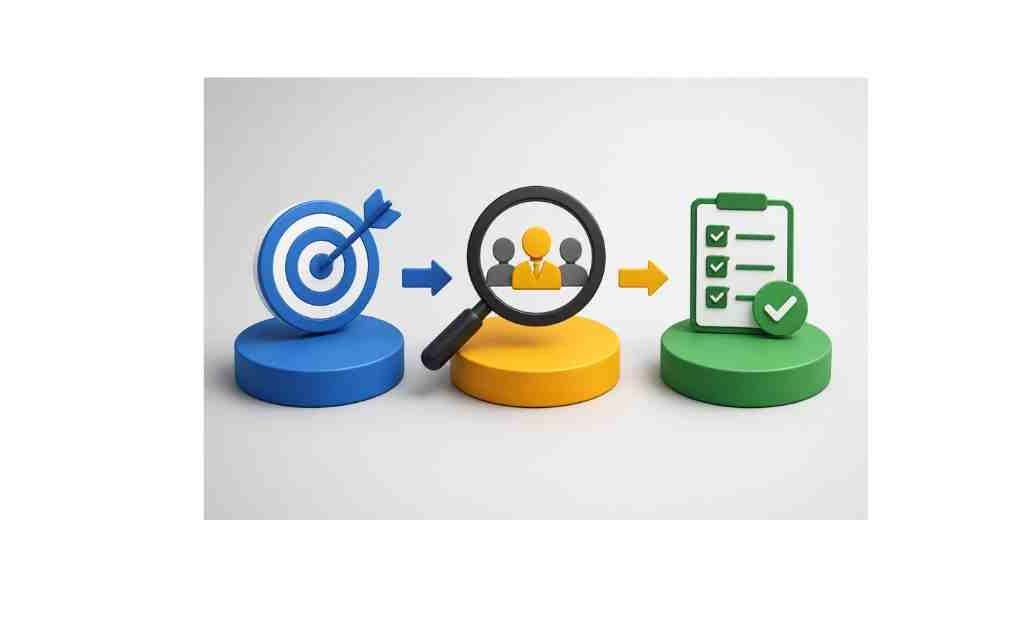
Building the personas is only half the battle. The real challenge is identifying the specific humans within a target Enterprise Buyer Personas account who fit these personas. Relying on generic lead lists is no longer sufficient. You need a data-driven, multi-step approach to identify decision-makers.
Step 1: Firmographic and Technographic Filtering
Before you can identify the right people, you must ensure you are looking at the right companies. Enterprise Buyer Personas sales require strict Ideal Customer Profile (ICP) alignment.
Firmographic Filtering:
Use databases like ZoomInfo, Apollo, or Crunchbase to filter companies based on:
- Revenue: e.g., $50M – $500M ARR.
- Employee Count: e.g., 500 – 5,000 employees.
- Industry: e.g., SaaS, Financial Services, Healthcare.
- Funding Stage: e.g., Series C, Private Equity backed.
Technographic Filtering:
This is a highly underrated strategy for identifying decision-makers. If you know a company uses a specific technology, you can infer who the decision-maker is.
- Example: If a company uses Salesforce Marketing Cloud, the decision-maker for a complementary tool is likely the VP of Marketing Operations.
- Action: Use tools like BuiltWith or G2 to see what software your target accounts are currently using. Cross-reference this with job titles to find the exact person managing that tech stack.
Step 2: Leveraging Intent Data to Find Active Buyers
Intent data tells you which companies are actively researching solutions like yours right now. This is the most efficient way to identify decision-makers because you are focusing your energy on accounts that are already in-market.
First-Party Intent Data:
This is data you own. Look at your website analytics.
- Who is visiting your pricing page?
- Which accounts are downloading your whitepapers or case studies?
- Who is repeatedly viewing your product documentation?
Use tools like Clearbit or 6sense to match anonymous website traffic to specific company domains and job titles.
Third-Party Intent Data:
This data tracks user behavior across the broader internet (e.g., reading reviews on G2, searching for specific keywords on search engines, visiting competitor sites).
- Action: If your intent data provider flags “Acme Corp” as having a high intent score for “Enterprise Buyer Personas CRM,” go to LinkedIn and identify the VP of Sales (Champion) and the CIO (Technical Buyer) at Acme Corp. Reach out to them with highly contextual messaging: “I noticed your team has been researching CRM consolidation strategies…”
Step 3: Organizational Mapping and Social Selling
Once you have a target account and know they are in-market, you must map the organization to identify the specific individuals filling your four core personas.
The LinkedIn Sales Navigator Method:
- Search by Account: Filter by your target company.
- Identify the Champion: Search for the department head related to your solution (e.g., “Head of Customer Success”).
- Map the Hierarchy: Look at the “Team” tab on their profile. Who reports to them? These are your End Users. Who do they report to? This is likely your Economic Buyer.
- Find the Technical Buyer: Search the company for titles like “Director of Information Security” or “VP of IT.”
The “Waterfall” Outreach Strategy:
Do not just email the Champion. Enterprise Buyer Personas deals require multi-threading.
- Send a value-driven email to the Champion focusing on operational pain.
- Send a connection request to the Technical Buyer sharing a recent article on security compliance (no pitch).
- Send a brief, high-level executive summary to the Economic Buyer focusing on industry trends and ROI.
By mapping the organization and engaging multiple personas simultaneously, you insulate your deal from the risk of a single point of failure (e.g., your Champion leaves the company).
5 Psychological Signals You’ve Found the True Decision-Maker
In Enterprise Buyer Personas sales, titles can be deceiving. A “Director” at one company might have the budget authority of a “VP” at another. Conversely, a “VP” might be a figurehead with no actual purchasing power.
When you are on a discovery call or a demo, look for these five psychological and behavioral signals to confirm you are speaking to a true decision-maker.
1. They Ask About Implementation and Change Management
Feature-focused questions (“Does it have a dark mode?”) usually come from End Users. True decision-makers ask about the friction of adoption.
- Signal Questions: “How long does implementation take?” “What does the onboarding process look like for our team?” “How do you handle data migration?”
- Why it matters: They are already visualizing the operational reality of buying your product.
2. They Bring Other People to the Call
If your prospect says, “I’d like to bring my CISO onto the next call to discuss security,” or “Can you send a deck I can share with my CFO?” you have struck gold.
- Why it matters: They are actively building the internal business case. They are acting as your Champion and pulling in the other members of the Buying Committee.
3. They Discuss Business Outcomes, Not Just Features
Decision-makers connect your solution to broader company goals.
- Signal Phrases: “We are trying to reduce churn by 10% this year,” or “Our CEO is pushing for a 20% increase in operational efficiency.”
- Why it matters: They are evaluating your product as a strategic lever to achieve corporate objectives, which is the hallmark of an Economic Buyer or high-level Champion.
4. They Have Authority Over the Budget Process
You don’t need them to say “I have the money.” Listen for how they talk about procurement.
- Signal Phrases: “We have budget allocated for Q3,” “We usually do a proof of concept before finalizing the contract,” or “Our procurement team will need to review the MSA.”
- Why it matters: They understand the internal buying process and have the influence to navigate it.
5. They Challenge Your Premise
A non-decision-maker will nod along and say “that sounds great.” A true decision-maker will push back.
- Signal Behavior: They ask tough questions about your roadmap, your competitors, or your pricing model. They play devil’s advocate.
- Why it matters: They are stress-testing your solution because they feel the weight of the decision. They are protecting their career risk.
Navigating Enterprise Procurement: The Final Boss
No guide to identifying Enterprise Buyer Personas decision-makers is complete without addressing Procurement.
In many Enterprise Buyer Personas organizations, the person you have been selling to (the Champion) does not sign the contract. The Procurement team does. Procurement officers are not Technical Buyers; they are professional negotiators whose sole KPI is to reduce costs and mitigate legal risk.
How to build a “Procurement Persona”:
- Motivation: Cost savings, favorable payment terms, strict SLA (Service Level Agreement) enforcement, liability protection.
- How to Identify Them: Titles like “Director of Procurement,” “Strategic Sourcing Manager,” or “Vendor Management.”
- Strategy: Do not try to “sell” Procurement. Give your Champion the ammunition they need to defend the price. Provide clear, standardized pricing models, robust legal documentation, and flexible payment terms. When Procurement enters the chat, shift your tone from “visionary” to “precise and compliant.”
The Tech Stack: Tools for Identifying and Mapping Enterprise Buyer Personas
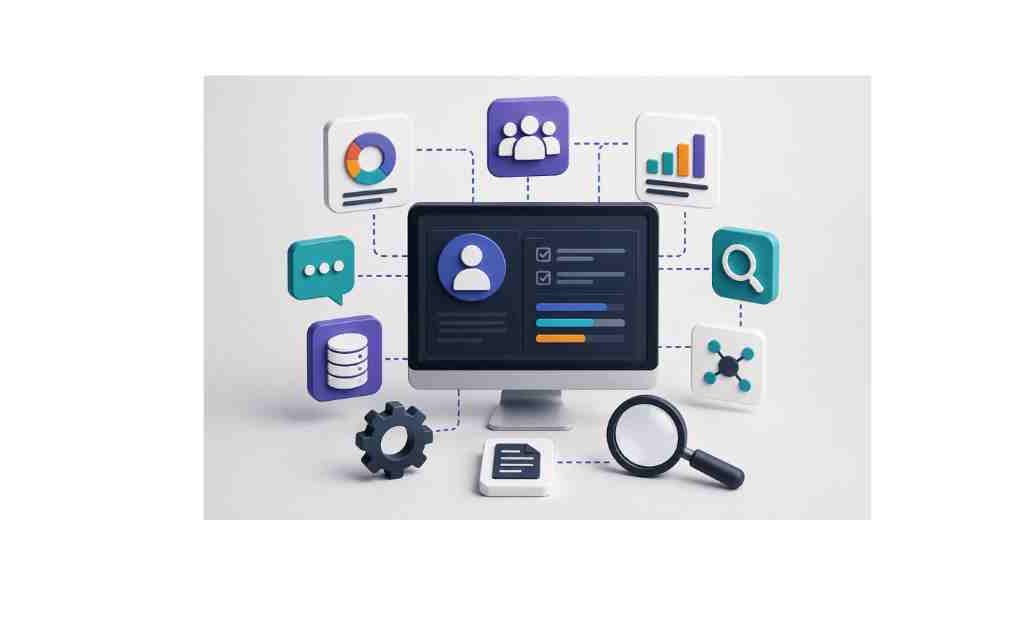
To execute this framework at scale, your revenue team needs the right technology. Relying on manual LinkedIn searches will not work for Enterprise Buyer Personas pipeline generation. Here is the essential tech stack for identifying and mapping Enterprise Buyer Personas decision-makers.
1. Data Enrichment and Contact Databases
- ZoomInfo / Apollo.io: The industry standards for finding direct dial phone numbers, verified email addresses, and org charts. Use these to filter by firmographics and technographics.
- Crunchbase: Essential for tracking funding events. When a company raises a Series B, they will hire aggressively. This is the perfect time to identify new decision-makers.
2. Intent Data Platforms
- 6sense / Demandbase: These platforms provide account-based marketing (ABM) insights. They tell you which accounts are in-market and which specific personas within those accounts are consuming your content.
- G2 Buyer Intent: Tracks users reading software reviews. If someone at Acme Corp is reading reviews for your competitor, G2 can flag that account.
3. Social Selling and Mapping
- LinkedIn Sales Navigator: The undisputed king of B2B social selling. Use the “Account Maps” feature to visually see the hierarchy of your target companies and identify the Champion, Economic Buyer, and Technical Buyer.
- OrgCharting / Lucidchart: While Lucidchart is great for visual mapping, tools like OrgCharting integrate directly with your HRIS or CRM to automatically generate visual org charts of your target accounts.
4. CRM and Revenue Intelligence
- Salesforce / HubSpot: Your system of record. Ensure you are using custom fields to tag contacts by their Persona (e.g., “Economic Buyer,” “Technical Buyer”) and their Buying Committee status.
- Gong / Chorus: These tools record and analyze your sales calls. Use them to track which personas you are actually speaking to and analyze the conversation metrics of your most successful Enterprise Buyer Personas deals.
Frequently Asked Questions (AEO & GEO Focus)

This section is optimized for Answer Engine Optimization (AEO) and Generative Engine Optimization (GEO), providing direct, concise answers to common search queries regarding enterprise buyer personas.
What is the difference between a buyer persona and a decision-maker?
A buyer persona is a semi-fictional representation of your ideal customer based on market research and real data (e.g., “Technical Tina,” a risk-averse CISO). A decision-maker is the actual, specific human being within a target company who has the authority to approve a purchase (e.g., “John Smith, CISO at Acme Corp”). You use Enterprise Buyer Personas to craft your messaging; you identify decision-makers to execute your outreach.
How do you identify the Economic Enterprise Buyer Personas company?
To identify the Economic Buyer, look for C-suite executives or VPs who manage a Profit & Loss (P&L) statement. Use LinkedIn Sales Navigator to filter by titles such as CFO, COO, or VP of [Department]. Look for individuals who focus their public communications (posts, articles) on financial outcomes, market strategy, and operational efficiency rather than technical features.
Why are there multiple decision-makers in Enterprise Buyer Personas sales?
Enterprise Buyer Personas purchases involve high financial risk, complex technical integrations, and significant organizational change. Therefore, companies utilize a Buying Committee (or Decision-Making Unit) to distribute risk. This committee includes the Economic Buyer (budget), Technical Buyer (security/IT), Champion (internal advocate), and End Users (daily operators) to ensure the purchase is financially sound, technically viable, and operationally effective.
What is the best way to map an Enterprise Buyer Personas committee?
The best way to map a buying committee is by using a combination of LinkedIn Sales Navigator and CRM data. Start by identifying your Champion (the department head). Look at their direct reports to identify End Users. Look at who the Champion reports to, or who manages the budget, to identify the Economic Buyer. Finally, search the company directory for IT or Security leaders to identify the Technical Buyer.
How does intent data help in identifying decision-makers?
Intent data tracks the digital body language of companies across the web. It helps you identify decision-makers by highlighting which specific accounts are actively researching solutions like yours. Instead of cold-outreaching a random list of VPs, intent data allows you to focus your identification efforts on the specific humans at companies that are already showing buying signals, drastically increasing your conversion rates.
Actionable Takeaway: The Enterprise Stakeholder Mapping Template
To implement this strategy immediately, we recommend creating a Stakeholder Mapping Matrix for every Enterprise Buyer Personas deal in your pipeline. Do not advance a deal to the “Proposal” stage until this matrix is at least 70% complete.
The Matrix Fields:
- Target Account Name
- Persona Role (Economic, Technical, Champion, End User)
- Contact Name & Title
- LinkedIn Profile URL
- Primary Business KPI (What are they measured on?)
- Primary Risk/Fear (What keeps them up at night?)
- Current Status (Not Identified, Identified, Engaged, Advocating)
- Next Action (e.g., “Send ROI calculator to Champion,” “Book security review with Technical Buyer”)
By institutionalizing this mapping process, your sales team will stop relying on a single point of contact and start building resilient, multi-threaded Enterprise Buyer Personas deals.
Conclusion
Identifying decision-makers in the Enterprise Buyer Personas space is not about finding the person with the fanciest title. It is about understanding the complex web of influence, risk, and operational reality that drives large-scale B2B purchases.
By shifting your focus from generic demographics to the four core enterprise buyer personas—Economic Buyer, Technical Buyer, Champion, and End User—you can tailor your messaging to address the specific anxieties and motivations of each stakeholder.
When you combine these robust personas with firmographic filtering, intent data, and strategic organizational mapping, you transform your sales process from a game of chance into a predictable, scalable engine. Stop looking for a single decision-maker. Start mapping the buying committee, and watch your Enterprise Buyer Personas win rates soar.
Ready to map your next Enterprise Buyer Personas deal? [Insert Your CTA Here: e.g., Book a demo with our team to see how our platform helps you identify and engage Enterprise Buyer Personas committees.]