
Quick answer:
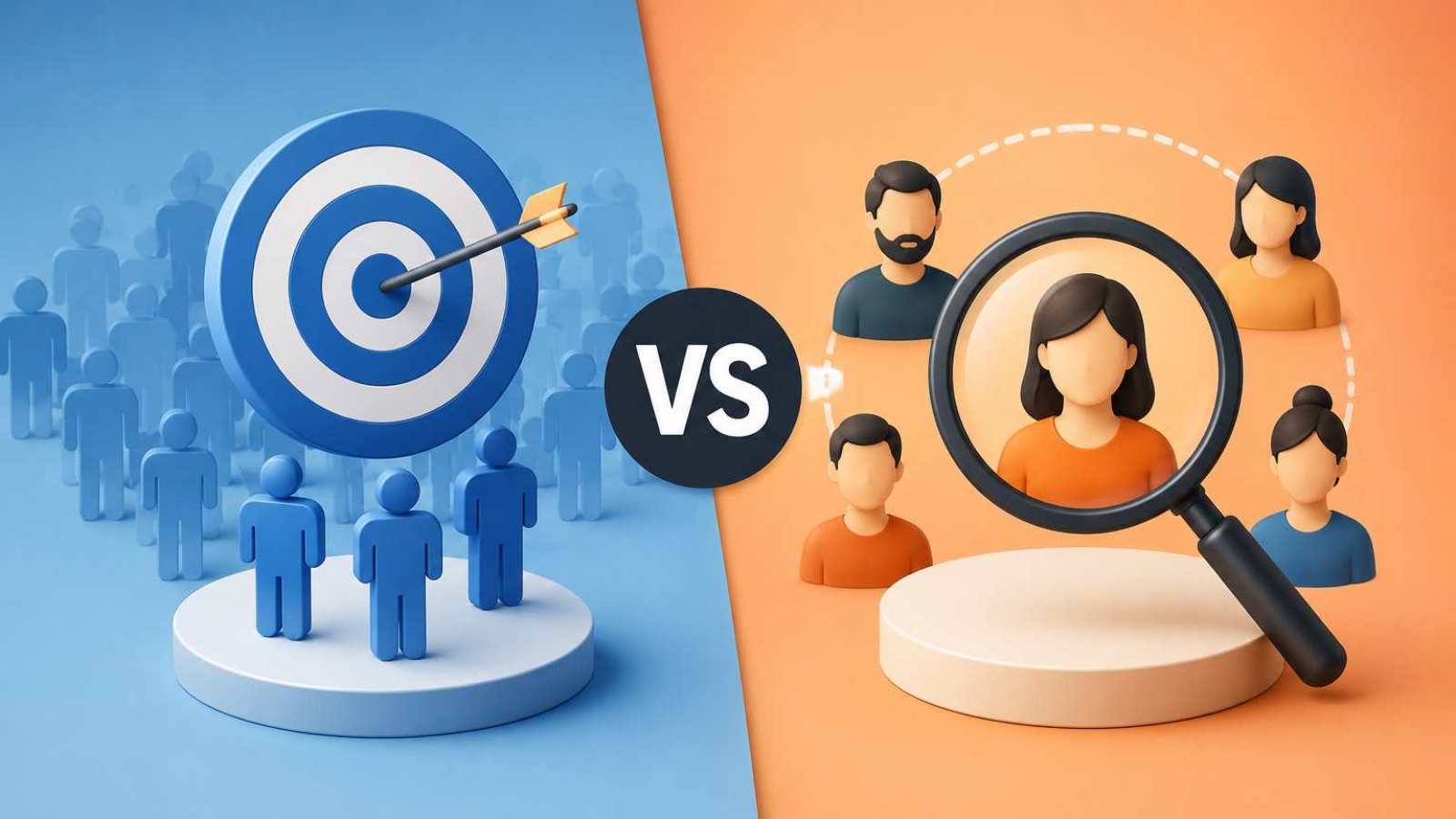
An ICP (Ideal Customer Profile) describes the companies most likely to buy from you and stay — defined by firmographics, technographic, behavior, and intent. A buyer persona describes the people inside those companies — their roles, goals, pains, triggers, and objections. The ICP decides which accounts you pursue; the personas decide how each person inside them gets convinced.
Key takeaways
- ICP is the account-level target; buyer persona is the person-level target. They answer different questions.
- Build the ICP first. Personas built without an ICP produce great messaging aimed at the wrong companies.
- ICPs are mined from CRM, technographic, and intent data. Personas are mined from customer and lost-deal interviews.
- ABM targeting, ad audiences, and territory planning lean on the ICP. Copy, content, and sales sequencing lean on personas.
- Both decay. Teams that refresh them on a cadence outperform teams that treat them as one-off workshop artifacts.
Why “ICP vs Buyer Persona” Is the Wrong Fight
Ask five marketers to explain the difference between an ICP and a buyer persona and you’ll get six answers — usually delivered mid-meeting, while a live campaign waits on the decision. The confusion shows up in predictable ways: persona decks with no account list behind them, an “ICP” that’s actually a job title, or an ABM program targeting 4,000 accounts because nobody could define who didn’t qualify.
The terms aren’t synonyms, and they aren’t rivals either. They’re two layers of the same targeting system, and the difference between ICP and buyer persona comes down to one word: unit. The ICP’s unit is the company. The persona’s unit is the human.
This guide defines both, compares them side by side, shows you how to build each one with real data sources, and maps exactly which to use for ABM, content, ads, and sales. By the end you’ll have a working system — not just definitions.
ICP vs Buyer Persona: The 60-Second Comparison
| Dimension | ICP (Ideal Customer Profile) | Buyer Persona |
|---|---|---|
| What it defines | The companies worth pursuing | The people inside those companies |
| Core question | “Which accounts should we target?” | “Who needs to be convinced, and how?” |
| Unit of analysis | Account / company | Individual / role |
| Primary data sources | CRM win-loss, technographics, intent data | Interviews, surveys, call reviews |
| Main output | Tiered account list, scoring model | Messaging map, content angles, objection handling |
| Works hardest in | ABM selection, ad audiences, territories | Copy, content, sales sequencing |
| Typical owner | RevOps / marketing ops | Product marketing / content |
| Refresh cadence | Quarterly | Every 6–12 months |
| Example | “US logistics firms, 500–2,000 employees, on SAP, hiring finance ops roles” | “Maya, finance controller: needs to cut close time by 5 days, fears audit findings” |
One-line summary: the ICP picks the battlefield; the personas win the conversations on it. If you remember nothing else from this ICP vs buyer persona breakdown, remember that row pair: account vs. individual, data vs. dialogue.
What Is an ICP (Ideal Customer Profile)?

An Ideal Customer Profile (ICP) is a data-backed description of the type of company that gets the most value from your product and returns the most revenue in return. It combines firmographic, technographic, behavioral, and intent attributes so teams can rank accounts worth pursuing — and confidently skip the ones that aren’t.
The Four Data Layers of a Strong ICP
Most weak ICPs fail because they use one layer (“companies with 500+ employees”). Strong ICPs stack four:
| Layer | What it captures | Example attributes |
|---|---|---|
| Firmographics | The company’s skeleton | Industry, employee count, revenue, geography, org structure, funding stage |
| Technographics | The tools they run | CRM is Salesforce, ERP is NetSuite, cloud on AWS, security stack |
| Behavior & intent | What they do now | Research topics, content consumed, events attended, hiring signals |
| Fit & outcomes | Why they win with you | Use-case match, implementation speed, expansion rate, retention by segment |
The fourth layer is the one everyone skips — and it’s the most important. Your CRM already knows which companies succeed with you. An ICP built only from “who we want” instead of “who wins with us” is a wish list, not a profile.
A Worked ICP Example
Fictional company: LedgerLine, a bookkeeping-automation platform for mid-market firms.
LedgerLine’s ICP (Tier 1):
- Industry: retail, distribution, or light manufacturing
- Size: 200–2,000 employees; $50M–$500M revenue
- Geography: US and Canada
- Tech: NetSuite or SAP Business One; Excel-heavy close process today
- Signals: hired a controller, finance ops, or assistant controller role in the past 90 days
- Pain evidence: mentioned a 10+ day monthly close in discovery calls
- Outcome fit: past customers in this band onboarded in under six weeks and expanded in year two
Notice what this ICP does not contain: a single human being. The moment we start describing a person — “the controller who hates Excel” — we’ve left ICP territory and entered persona territory. That handoff point is exactly where the ICP vs buyer persona confusion lives.
ICP Tiers: Because Reality Isn’t Binary
Real pipelines don’t only contain perfect-fit accounts. Tiering keeps the model honest:
- Tier 1 — Bullseye. Matches every layer. Highest ACV, fastest close, best retention. Gets 60–70% of outbound and ABM budget.
- Tier 2 — Strong fit, one gap. Right industry but smaller, or right size but missing a tech signal. Gets lighter-touch campaigns.
- Tier 3 — Opportunistic. Inbound only. You don’t chase these, but you don’t turn them away.
Tiering converts the ICP from a description into a budget decision. That’s the test of whether your ICP is real: if it can’t tell you where not to spend, it isn’t doing its job.
What Is a Buyer Persona?
A buyer persona is a research-based profile of an individual who influences or decides a purchase — capturing their role, goals, pain points, buying triggers, objections, and information habits. In B2B, a single deal usually involves several personas: the champion, the economic buyer, the skeptic, the end user.
The Anatomy of a Persona That Actually Sells
Skip the coffee-preference cosplay. A persona earns its keep when it changes what you say. Useful fields:
- Role & scope: what they own, what they’re judged on
- Goals: the two or three outcomes that make them look good
- Pains: what keeps those outcomes at risk
- Triggers: the events that make them start looking for a solution now
- Objections: the specific reasons they’d say no — and the evidence that changes their mind
- Information habits: where they research, whom they trust, which formats they consume
- Win themes: messages that have actually closed deals with people like them
If a field in your persona template can’t change a headline, an email line, or a demo flow, delete it.
A Worked Persona Example
Back to LedgerLine. One of its core personas:
Maya — The Finance Controller
- Role: owns the monthly close at an 800-employee retailer; judged on accuracy and speed
- Goal: cut the close from 12 days to 7 before the annual audit
- Pain: reconciliations live in spreadsheets owned by people who are on vacation
- Trigger: the CFO just asked, in writing, “why does our close take so long?”
- Objection: “we don’t have time to implement anything this quarter” — countered with phased onboarding and a parallel-run guarantee
- Habits: reads controller newsletters, trusts peer controllers over vendors, watches two-minute demos, skips webinars
- Win theme: “close the books without chasing spreadsheets”
Now watch what happens when ICP and persona meet: LedgerLine’s Tier 1 account list says which companies get the campaign; Maya’s persona says the landing page leads with close-time reduction, the email subject references the CFO’s question, and the demo opens on reconciliation — not dashboards.
That’s the entire ICP vs buyer persona relationship in one paragraph: the account list aims; the persona speaks.
The Four Types of Buyer Personas (B2B Buying Committee)
When people search “types of buyer personas,” the most useful B2B answer is the four committee roles you must convince in any deal:
- Economic buyer: controls budget; cares about ROI, risk, payback period. Often a CFO or VP.
- Champion: feels the pain personally and pushes for you internally. Needs ammunition to build the case.
- Influencer: shapes requirements — security, legal, IT, consultants. Asks the checklist questions.
- End user: lives with the tool daily; cares about workflow, not strategy. Can quietly kill adoption.
(Personality-style frameworks — analytical, amiable, expressive, driver — also exist, but for pipeline work, committee roles map more directly to messaging.)
Each type needs different evidence: the economic buyer wants payback math, the champion wants a case study they can forward, the influencer wants a compliance one-pager, the end user wants to see their Tuesday morning inside the product. One message cannot serve all four — which is precisely why personas exist.
The Four Types of Customer Personas
A related question deserves its own clean answer. Customer personas (more common in B2C and lifecycle marketing) are usually grouped by what drives the purchase:
- Price-driven: compares options on cost; responds to transparent pricing and value framing.
- Convenience-driven: buys on speed and ease; responds to frictionless checkout and fast support.
- Loyalty-driven: stays with brands that recognize them; responds to programs and community.
- Novelty/impulse-driven: chases the new; responds to drops, launches, and limited windows.
In B2B you’ll see the same currents inside committees — the economic buyer is often the price-driven voice, the end user the convenience-driven one. The labels matter less than the habit: segment by what drives the decision, not by demographics.
ICP vs Buyer Persona: The Key Differences, Explained Properly
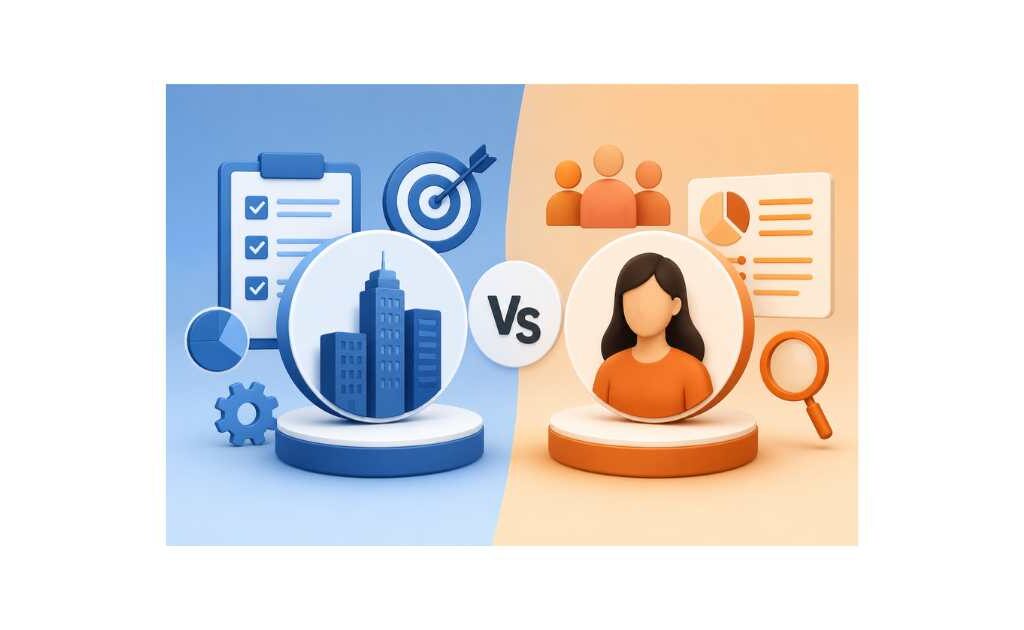
The comparison table above gives you the quick scan. Here are the three differences that actually change decisions:
1. Direction of data. ICPs are mostly quantitative — they emerge from CRM, technographic, and intent data at account level. Personas are mostly qualitative — they emerge from conversations. You cannot interview your way to an ICP, and you cannot SQL-query your way to a persona. Teams that try either produce fiction.
2. Point of leverage. The ICP multiplies efficiency: better close rates, lower CAC, cleaner pipeline. The persona multiplies resonance: higher reply rates, better conversion, shorter cycles because objections get answered before they’re raised.
3. Failure mode. A bad ICP wastes budget at scale — you target thousands of wrong accounts, efficiently. A bad persona wastes creativity — you reach the right people and say nothing that moves them.
The Analogy That Ends the Debate
Your ICP is the list of houses worth knocking on. Your buyer personas are the people who might open the door — and the reasons each of them actually listens. Knocking on the right house with the wrong pitch gets you a polite no. Knocking on the wrong house with the perfect pitch gets you an equally polite no. You need both, in that order.
Is ICP the Same as Buyer Persona?
No. An ICP describes a company; a buyer persona describes a person inside a company. They overlap in purpose (both exist to focus go-to-market effort) but never in content. The fastest sanity check: if your “ICP” contains job titles, it’s a persona. If your “persona” contains revenue ranges, it’s an ICP. Most teams’ documents fail that check — which is why the question keeps getting asked.
How They Work Together: The 3-Layer Targeting Model
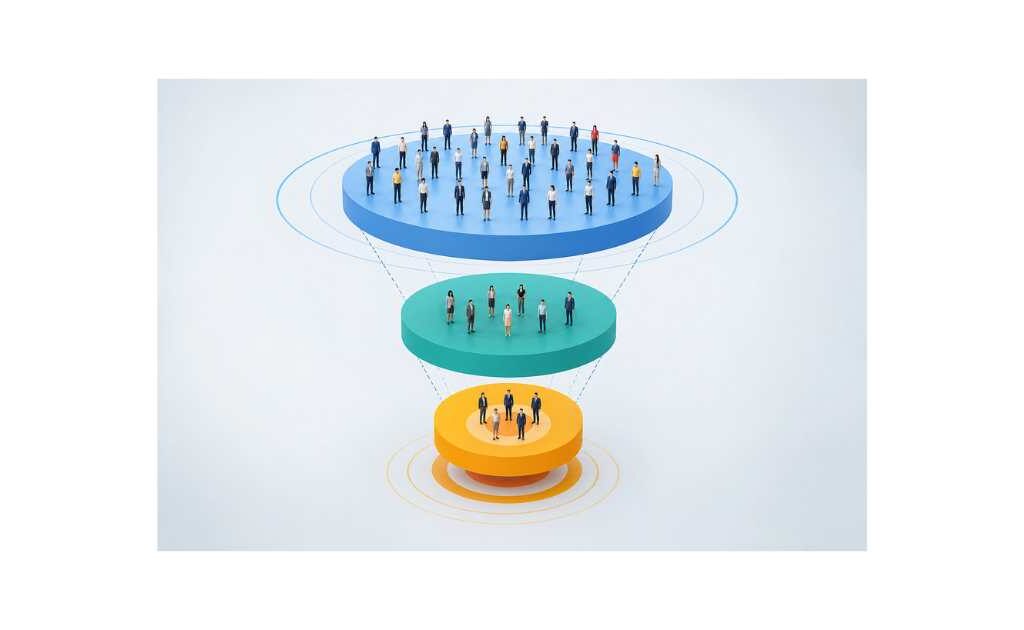
The best teams stop asking “ICP vs buyer persona” and start treating the two as layers of one system:
- Layer 1 — Market. The broad space you play in. (Too big to act on.)
- Layer 2 — ICP. The accounts inside that market worth pursuing, tiered. (This is your target.)
- Layer 3 — Personas. The humans inside those accounts who decide, influence, and use. (This is your audience.)
Message and channel sit on top: personas shape the message; ICP tier shapes the channel mix and the spend.
Which Comes First?
The ICP. Always. Three reasons:
- Personas need an address. A persona built without an ICP describes people you may not reach profitably.
- Interview samples need a frame. You build personas by interviewing customers — and “customers” should mean ICP-shaped customers, or your personas will eloquently describe the wrong people.
- Budget needs a map first. You can’t allocate spend across tiers until tiers exist.
Sequence it: mine data → draft ICP → tier accounts → interview inside tiers → build personas → wire messaging → review quarterly.
How to Build an ICP in 5 Steps (With Real Data Sources)
Step 1 — Mine won and lost deals. Pull 12–24 months of opportunities. Compare won vs. lost on industry, size, tech, use case, ACV, cycle length, and 12-month retention. Look for attributes that appear disproportionately in wins. That disproportion is your ICP’s raw material.
Step 2 — Layer technographics and intent. Enrich account data: what do winning accounts run, and which intent topics or hiring signals appeared before they bought? Hiring for a role your product replaces or augments is one of the strongest intent signals that exists.
Step 3 — Draft and weight the attribute table. Not all attributes matter equally. Weight them (e.g., tech fit 30%, size 25%, intent 25%, industry 20%) so accounts can be scored rather than vibe-checked.
Step 4 — Tier the account list. Score your universe and cut tiers. Tier 1 gets heavy outbound and ABM; Tier 2 gets targeted campaigns; Tier 3 stays inbound-only.
Step 5 — Validate with sales and set a cadence. Run the tiers past your top AEs — they’ll spot fiction instantly. Then put a quarterly review on the calendar: win rate by tier is your feedback loop.
Data-source cheat sheet: CRM reports, call recordings, tech-lookup tools, intent providers, job boards, customer-success notes.
How to Build Buyer Personas in 5 Steps
Step 1 — Interview 8–10 people per persona. Mix recent wins, recent losses, and churned customers. Losses and churn tell you the objections and unmet expectations that wins politely hide.
Questions that work:
- “What was happening when you started looking for a solution?” (trigger)
- “What almost stopped you from buying?” (objection)
- “Whose opinion mattered most, and why?” (committee map)
- “What would have made you stick with the spreadsheet?” (status-quo competitor)
Step 2 — Cluster by role and pain, not demographics. You’re segmenting by what people care about and what they can block or accelerate. Two controllers at similar companies can be different personas if their pains differ.
Step 3 — Map triggers, objections, and win themes. This is the working core of the persona — the fields your copywriters and AEs will actually open on a Tuesday.
Step 4 — Write the one-pager. One page, one screen. If it needs a deck, it’s a biography, not a tool.
Step 5 — Wire it into the machine. Attach each persona to ICP tiers, landing pages, email sequences, and demo flows. A persona that isn’t referenced by live assets is decoration.
When to Use Which: The Use-Case Matrix
| Use case | Lean on | Why |
|---|---|---|
| ABM account selection | ICP | It’s an account-level decision by definition |
| Paid ad audiences | ICP (+ persona for creative) | Platforms target companies/attributes; personas shape the ad itself |
| Landing page copy | Persona | People convert when their pain is named in their words |
| Outbound sequencing | Persona + ICP tier | Tier sets effort; persona sets angle |
| Content strategy | Both | ICP defines account context; personas define hooks |
| Territory & capacity planning | ICP | Account math, not people math |
| Objection handling & battle cards | Persona | Objections live in humans, not in logos |
Rule of thumb: if the decision is about accounts, open the ICP; if it’s about words, open the persona.
How to Measure Whether Your ICP and Personas Are Working

Tracking keeps both documents honest:
- Tier-1 share of pipeline: should rise quarter over quarter once the ICP goes live.
- Close rate and cycle length by tier: Tier 1 should clearly beat Tier 2; if it doesn’t, your weights are wrong.
- Reply and conversion rates by persona angle: persona-based sequencing should beat generic sequencing; kill angles that don’t.
- CAC by segment: the ICP’s ultimate report card.
- Objection frequency: if the same objection keeps appearing, the persona is missing a field.
5 Mistakes That Make ICPs and Personas Useless
- Personas before ICP. You message the right humans at the wrong companies — high engagement, no pipeline.
- Demographic cosplay. “Likes coffee, reads business books” changes nothing. Pains, triggers, and objections are the job.
- One persona for the whole committee. A single “Decision-Maker Dan” ignores the economic buyer, influencer, and end user who can each kill the deal differently.
- Set-and-forget. Markets shift, tools change, buying committees rotate. Stale profiles quietly tax every campaign.
- ICP as poster, not score. If the ICP never changes a budget line or an account list, it’s wall art.
ICP vs Buyer Persona in 2026: What’s Changed
Three shifts matter this year:
Intent data grew up. Account-level intent signals — research spikes, hiring patterns, tech changes — turned the ICP into a living scoring model instead of a static PDF. The best teams refresh tiers monthly.
Buying committees got bigger and darker. More stakeholders, less visible contact. Persona work now has to cover roles you never meet — which raises the value of objection-mining from public reviews and call intelligence.
Answer engines changed discovery. Buyers (and AI assistants) summarize vendors before anyone books a demo. That makes persona-precise language a ranking asset: the exact phrases your economic buyer uses must appear verbatim on your pages, or the machines will paraphrase you into blandness. This is where ICP and persona work now feeds SEO, AEO, and GEO directly.
FAQ: ICP vs Buyer Persona
What is the difference between an ICP and a buyer persona?
An ICP defines the companies worth pursuing (firmographics, tech, intent); a buyer persona defines the people inside those companies (roles, goals, pains, triggers). ICP drives targeting; personas drive messaging.
Is ICP the same as buyer persona?
No. They’re complementary: ICP is account-level, persona is person-level. Quick test — if the document mentions job titles, it’s a persona; if it mentions revenue ranges, it’s an ICP.
What are the four types of buyer personas?
In B2B: economic buyer (budget and ROI), champion (feels the pain, pushes internally), influencer (shapes requirements), and end user (lives with the tool). Each needs different evidence to convince.
What are the four types of customer personas?
Commonly: price-driven, convenience-driven, loyalty-driven, and novelty/impulse-driven — grouped by what drives the purchase decision rather than demographics.
Should I build an ICP or buyer persona first?
ICP first. Personas built without an ICP describe people you may not reach profitably, and your interview sample needs ICP-shaped customers to stay honest.
How often should I update my ICP and buyer personas?
Score and tier the ICP quarterly against win-rate data; revisit personas every 6–12 months, or after any major market, pricing, or product shift.
Conclusion: Stop Choosing, Start Layering
The question “ICP vs buyer persona” assumes a competition that doesn’t exist. The ICP decides which accounts deserve your budget; buyer personas decide which words deserve their attention. Build the ICP from your data, tier it, then interview inside the tiers to build personas that carry real triggers and objections. Layer them, wire them into live campaigns, and review them on a cadence — and the debate ends the only way it should: with a shorter sales cycle.
Ready to build yours? Grab the free ICP + Buyer Persona template — one page each, with the attribute table, tier scoring, and interview script included — and run your next planning session on real structure instead of vibes.
Post-publish checklist: add FAQPage + HowTo JSON-LD; internal-link from 3–5 related posts with varied anchors (“ideal customer profile vs buyer persona,” “ICP meaning”); submit for indexing; pitch the template as link bait to 10 niche newsletters; refresh the “2026” section and tier benchmarks every 6 months.